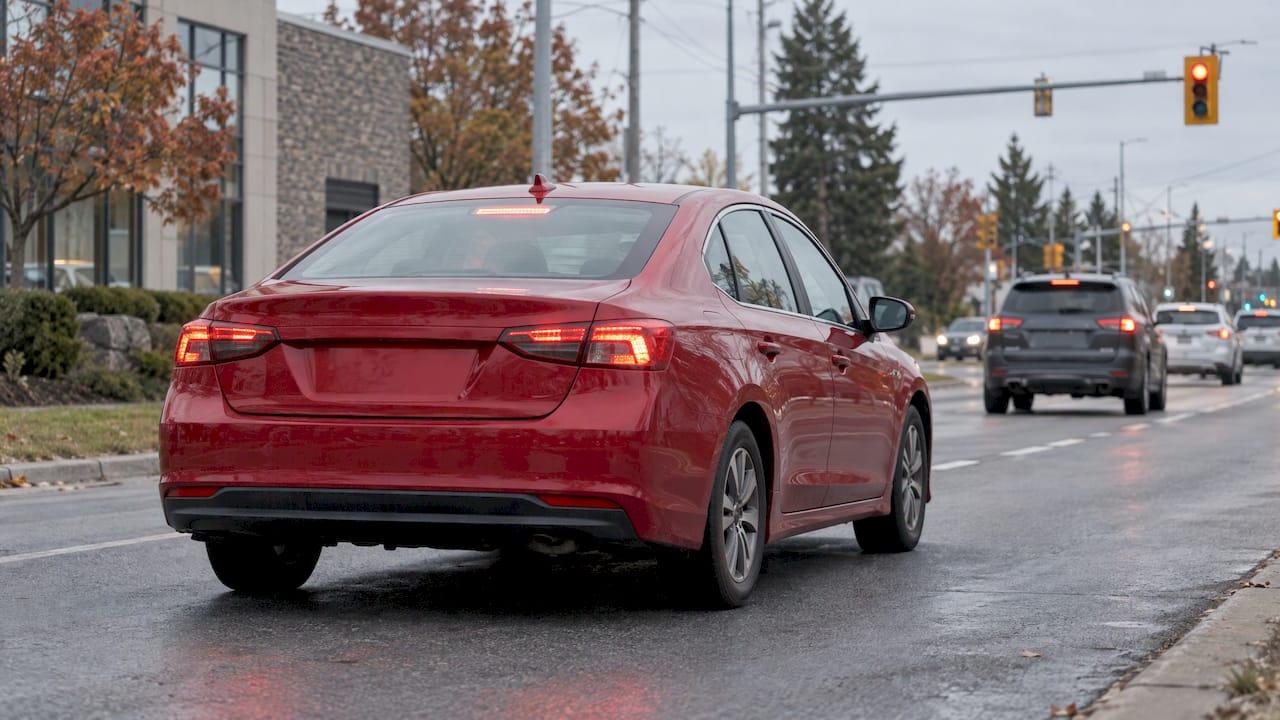
A steering wheel that shakes only when the brake pedal is pressed usually points to the front brakes. The most common cause is a rotor with uneven thickness or runout, often called a "warped rotor". Worn front suspension parts, a sticking caliper, rust on the hub face and uneven wheel torque can also cause it. The fix depends on the cause. For rotor-related shake, the lasting repair is a matched set of new rotors and pads, fitted to a clean hub and torqued evenly.
TL;DR
- Shake only while braking: the front brakes or front suspension are the first suspects. Shake at steady speed with no braking: tires and wheel balance are more likely.
- Uneven rotor thickness or runout is the most common cause. Worn control arm bushings, tie rods and ball joints can make a small rotor variation feel much worse.
- Shake that is sudden, severe or getting worse, or comes with pulling, grinding, a burning smell or a soft pedal, needs an inspection right away.
- Fitting new pads on a rotor that is still uneven can bring the shake back. Replace rotors and pads as a matched set and fix the cause.
- DBC Brakes makes cross-drilled rotor kits in Canada, with guaranteed fitment, inclusive pricing and free shipping on orders over $100.
Table of Contents
- Why the steering wheel shakes when braking
- Where you feel it tells you where to look
- Shaking when braking at high speed
- Other causes that mimic or add to rotor shake
- How to diagnose it step by step
- How urgent is it?
- Fixing it so it stays fixed
- Brake kits for Canadian vehicles
- Our view
- FAQ
- Sources
Why the steering wheel shakes when braking
Brake pads clamp a spinning rotor. If the rotor surface is not perfectly true, the clamping force rises and falls with every wheel rotation. That pulse travels up through the steering knuckle and the steering linkage. The driver feels it in the steering wheel and often in the pedal as well.
Michelin Canada says vibration felt only during braking usually indicates warped brake rotors rather than a tire problem. It also names overheated brakes as a cause, for example after long descents or with a stuck caliper. Abrupt cooling, such as driving through water with hot brakes, is another.
The rotor is not always physically bent. Two things are common:
- Thickness variation. Pad material can transfer unevenly onto the rotor face. Corrosion can also leave an uneven surface. The pads then grip harder in some spots than others.
- Runout. The rotor wobbles slightly as it spins, usually because of rust or debris between the rotor and hub, or uneven lug nut torque.
Both give the same pulse. For a deeper look at how technicians describe this, see the DBC guide on brake vibration causes, diagnosis and repair.
Where you feel it tells you where to look
Braking shifts weight to the front axle. That is why front-end problems show up under braking. The location and the conditions of the shake narrow the list quickly.
| What you feel | Most likely source |
|---|---|
| Steering wheel shakes only when braking | Front rotors, front pads, front calipers, front suspension |
| Pedal pulses under the foot | Rotor thickness variation or a caliper issue |
| Seat or whole body shakes when braking | Rear rotors or rear tires |
| Shake at steady highway speed, no braking | Wheel balance or tire condition |
| Car pulls to one side when braking | Sticking caliper or uneven pad wear on that side |
Michelin Canada notes that tire-related vibration is typically speed-dependent. It appears or worsens above a certain speed, often 80 to 100 km/h, and is felt through the steering wheel. Suspension vibration is more consistent across speeds, or appears during manoeuvres such as braking.
If the car pulls to one side only when braking, Michelin Canada says the cause is typically a sticking caliper or uneven pad wear, not an alignment issue.
Shaking when braking at high speed
The shake can be faint when stopping at a neighbourhood intersection and strong when slowing from highway speed. Higher speed means more energy turned into heat, and more load on a rotor surface that is already uneven. Slight variation that goes unnoticed in town becomes obvious at 100 km/h.
That pattern points to the rotors, but it can also be a tire or wheel balance problem that braking makes more noticeable. Two checks help separate them:
- Hold a steady highway speed and release the brakes. If the shake is still there, look at tires and wheel balance first.
- If the wheel is smooth at steady speed and shakes only when slowing, look at the brakes and front suspension.
Motor1 draws the same line: a shake tied to vehicle speed points to the wheel and tire assembly, while one tied to braking points to the brakes, such as uneven rotor surfaces or a sticking caliper.
Other causes that mimic or add to rotor shake
Rust or debris on the hub face
Corrosion between the rotor and the hub tilts the rotor slightly. It then runs out of true even if the rotor itself is flat. Cleaning the hub face during every rotor change prevents this.
Uneven lug nut torque
Lug nuts tightened by impact gun, without a torque wrench, can clamp the rotor unevenly. Tighten them in a star pattern to the vehicle's specification.
Sticking caliper or seized slide pins
A caliper that does not release fully keeps a pad dragging on the rotor. That causes overheating, uneven wear and often a pull to one side. Heat damage shows as blue or dark gold discolouration on the rotor. ALLDATA's Canadian brake guide says blue or dark gold rotor colour means the brakes overheated and need a complete inspection.

Worn front suspension and steering parts
Worn control arm bushings, tie rod ends and ball joints add play to the front wheels. A small amount of rotor variation then turns into a pronounced shake. This is why the same rotor condition can feel mild on a newer vehicle and rough on an older, higher-mileage one. Suspension repairs need a qualified technician with the vehicle on a hoist.
Tires and wheels
Out-of-balance tires, uneven wear, a damaged tire, a bent wheel or low tire pressure can all shake the steering wheel. Braking makes these more noticeable. Michelin Canada says a balance service is typically $20 to $50, and that left alone, persistent vibration speeds up wear on wheel bearings, shocks, struts and tie rods.
How to diagnose it step by step
A proper diagnosis covers both the brakes and the steering and suspension. A glance at pad thickness is not enough. Follow this order.
- Reproduce the shake on a road test. Note the speed, how hard the brakes are applied, and whether it is felt in the wheel, the pedal or the seat. Test at steady speed with no braking too.
- Rule out tires. Check tire pressure, look for uneven wear, bulges or flat spots, and confirm that wheel balance is current.
- Inspect the rotor surfaces. Look for deep grooves, blue or dark gold heat marks, and uneven bands. Cleaning the wheels first makes this easier. Here is a guide to removing brake dust safely. Never touch a hot rotor or caliper. ALLDATA warns against touching hot calipers or rotors when inspecting through the wheels. Let the brakes cool fully.
- Measure rotor thickness and runout. Every rotor has a minimum thickness stamped on it. Measure at several points with a micrometer and compare to that figure. The DBC guide on verifying minimum thickness with a four-point micrometer workflow shows the method. Runout is measured with a dial indicator on a clean hub.
- Check calipers and pads. Look for seized slide pins, a pad worn more on one side, and glazed or deposit-covered pad faces.
- Check the front suspension for play. Bushings, ball joints and tie rod ends are checked on a hoist.
If the result is a worn rotor, the next question is what to replace with it. The DBC article on replacing rotors without pads explains why thickness and runout are worth checking before any parts go on.
How urgent is it?
A very light vibration is not an emergency. It is still a reason to book an inspection. Treat these as signs to act promptly:
- The shake is severe, sudden or getting worse.
- The car pulls to one side under braking.
- There is grinding, squealing or a burning smell.
- The pedal feels soft or goes close to the floor.
- The brake warning light is on.
Ford of Canada recommends brake inspection every 16,000 km under the maintenance schedule. It lists a steering wheel vibration, with or without the brakes applied, among the signs for an earlier inspection. Its other early warnings include a brake system warning light, grinding, a burning odour, metal flakes on the brakes and deep gouges on rotors.
Kelley Blue Book also warns that delaying the repair is a safety risk and can damage other parts of the braking system.
If the steering wheel starts shaking suddenly, treat it differently. The AA advises to stop as soon as it is safe and call for assistance, because a wheel or steering component could be loose. Motor1 gives the same advice for tire damage, sharp pulling, clunking, loose steering or a rapidly worsening shake.
Do not wait because the car still stops. Braking should feel controlled and predictable, in rain, in traffic and in an emergency stop.
Fixing it so it stays fixed
The repair follows the diagnosis:
- Rotor thickness variation or runout: replace the rotors, with new pads, and clean the hub face.
- Worn pads or deposits: replace pads and check the rotor surface at the same time.
- Sticking caliper: service or replace the caliper and slide hardware.
- Tires or wheels: balance, correct pressure, or replace a damaged tire.
- Suspension play: replace the worn bushings, joints or tie rods.
New pads on rotors that are still uneven can bring the shake back, so the cause has to be fixed with the parts. Replace rotors in axle pairs. Match the pad compound to the rotor. The DBC guide on matching pads and rotors, with a 0.10 mm runout check covers this for DIY installs.
Heat is the main reason rotors go uneven again. Three habits help: avoid holding the brakes on after a hard stop, avoid sudden cooling with water, and use smooth, early braking on long descents. The DBC guide on three habits to prevent rotor warping goes through them. For the physics, see heat dissipation and rotor temperature.
Rotors do not need to be spin-balanced. The article on balanced brake rotors explains what to check instead.
Brake kits for Canadian vehicles
DBC Brakes makes brake kits with cross-drilled rotors, engineered to prevent warping and enhance durability. Kits are available for cars, trucks and performance vehicles. Fitment is guaranteed, and pricing is inclusive with no hidden fees. Orders over $100 ship free in Canada. Expedited shipping is $29.99 per order. International shipping is $129.99 per brake kit. Both are listed on the shipping information page.
To find parts for a vehicle, select the make on the make page. Browse by category: brake rotors, brake pads, brake kits and wheel bearings and hubs. Product lines include Performance XDB, Premium Black Kote and Performance SS on the DBC home page.
For a vehicle that needs both rotors and pads, a kit keeps the set matched. Browse DBC brake kits for the vehicle.
Our view
Most shake-when-braking cases we hear about come down to the same thing. The rotor surface is not true, and the parts around it are not helping.
We build our cross-drilled rotors to prevent warping and to last longer under repeated heavy braking. We make them in Canada. Fitment is guaranteed, so the rotor, pads and hardware go on as a matched set.
Our pricing is inclusive, with no hidden fees. Our support is from people who know brakes, not automated replies. If a shake needs a rotor and pad set, we can help find the right kit for the vehicle.
Sam
FAQ
Why does my steering wheel shake only when I brake?
Braking loads the front axle and presses the pads onto the rotors. If a front rotor has uneven thickness or runout, the pad force pulses and the wheel shakes. Worn front suspension parts can make the shake feel stronger.
Is it safe to drive with a shaking steering wheel when braking?
A light vibration is not an emergency, but it should be inspected soon. Stop and get help if the shake is sudden or severe, or comes with pulling, grinding, a burning smell or a soft pedal. Braking performance can be affected.
Can unbalanced tires cause shaking when braking?
Yes. Out-of-balance or damaged tires, a bent wheel and low pressure can all shake the steering wheel. Braking makes them more noticeable. A shake that is also present at steady speed points to the tires first.
Do new pads fix the shake?
Only if the pads were the cause. If the rotor surface is uneven, new pads can lead to the same shake again. Replace rotors and pads together when the rotor is the problem.
Sources
- Michelin Canada: Handling problems, symptom vibration
- Michelin Canada: Handling problems, symptom pulling to one side
- Ford of Canada: When should I have my brakes inspected?
- Kelley Blue Book: Why does my car shake when I brake?
- The AA: Why is my steering wheel shaking?
- Motor1: Why your steering wheel might shake at highway speeds
- ALLDATA DIY: Guide to brake inspection