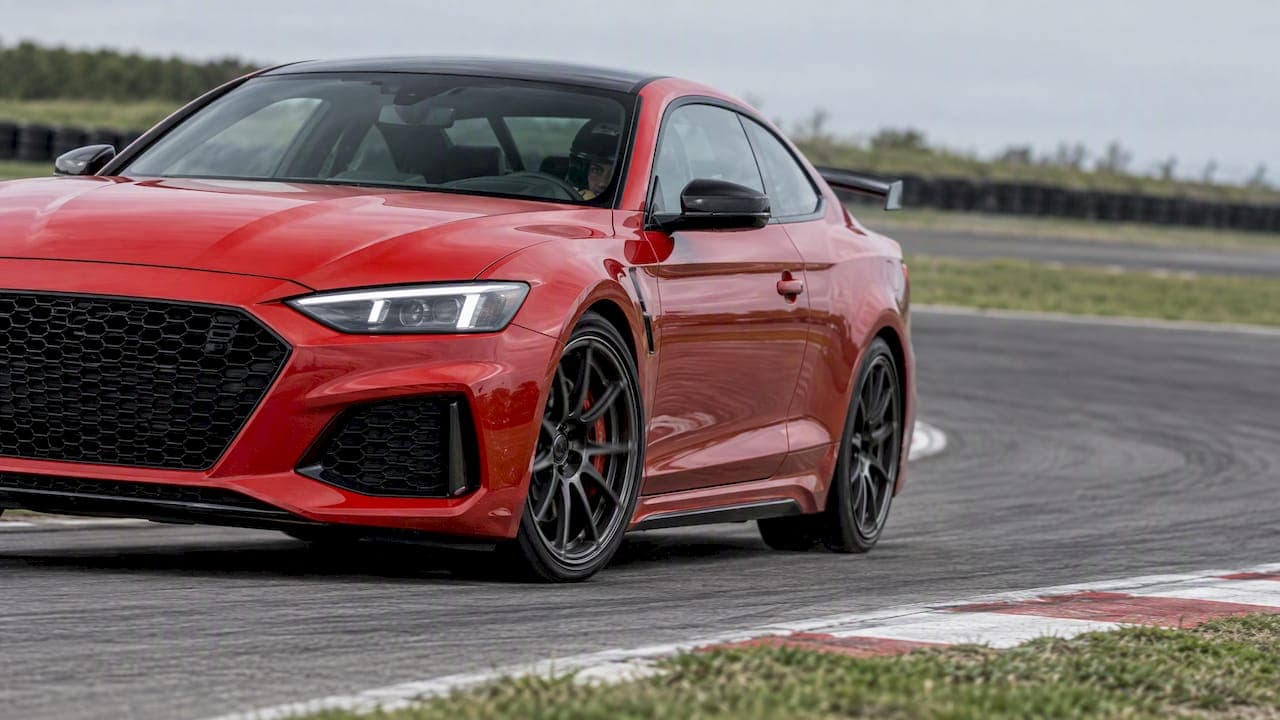
Brake knockback is when cornering forces push the rotor against the pads. The pads then push the caliper pistons back into their bores. The next brake application starts with a long pedal, because the first part of the stroke only moves the pistons back to the rotor. The usual causes are a loose or flexing wheel bearing, hub flex, or a rotor that runs out of true. It is fixed by finding the loose part, not by replacing the rotors.
This guide covers how knockback works, how to tell it from warped rotors and sticking calipers, how to test for it, and what each repair costs in Canada.
TL;DR
- Knockback is a pedal that is longer or lower than normal on the first stop after a hard corner. The second push feels normal.
- Lateral loads flex the hub and bearing, which pushes the pistons back and opens a gap between pad and rotor.
- Check the wheel bearing first. Knockback that follows left-hand or right-hand corners points to the loaded side.
- Knockback is often mistaken for warped rotors. Both can cause pedal pulsing, but they are different faults.
- Anti-knockback springs suit race cars only. Street cars need tight bearings, true rotors and sound calipers.
Table of Contents
- What brake knockback is
- Symptoms
- Knockback or warped rotors?
- Causes, from most to least common
- How to test for knockback
- Fixes
- What it costs in Canada
- Our view on knockback
- Brake parts for a rebuild
- When to see a technician
- FAQ
- Sources
What brake knockback is
With the brakes in good repair and the car travelling straight, the pads and rotor sit almost parallel with a very small gap. In a hard corner the wheel, hub and bearing flex under side load. The rotor tilts slightly and pushes the pads back. The pistons are pushed back into the caliper with them.
On the next stop, the first part of pedal travel re-seats the pistons against the rotor instead of building line pressure. The driver feels a low pedal and a short loss of stopping power. A second press brings the pedal back to normal, because the pistons are now in position. Pumping the pedal before a braking zone is the familiar workaround.

The fault is also called pad knock-back or pad slap. A forum thread on a Subaru STi describes it as the pads being pushed away from the rotor by flex in the bearing, the rotor or other hub parts. Motor Sport Magazine's history of disc brakes notes that pad knockback from wheel bearing flexibility was a problem in the 1950s as well. It is not new.
Symptoms
- Long pedal on the first stop after a corner. The pedal goes lower than usual, then firms up on the next press.
- Pattern tied to turn direction. If it happens after one direction of turn, the cause is likely on the loaded side. Trackpedia says a consistent left or right pattern strongly suggests a worn or loose wheel bearing on that side.
- Normal pedal on straight roads. Knockback needs side load. A car that has a long pedal in a straight line has a different fault, such as air in the lines or a fluid leak.
- More noticeable on track or spirited driving. Daily driving rarely loads the hub enough to show it, so many street drivers never notice it.
A worn pad, a leaking caliper seal or low fluid can also give a low pedal. Rule these out before blaming knockback.
Knockback or warped rotors?
Both faults can show up as a pulsing or uneven pedal, and drivers often blame the rotors. True rotor warping is rare. What drivers feel is usually uneven pad material transfer or excess lateral runout at the hub or rotor mounting surface. A dial indicator is the objective tool that separates these causes.
| Sign | Knockback | Pad deposits or runout |
|---|---|---|
| Pedal feel | Long, low pedal after a corner | Pulsing through the pedal or steering wheel |
| Trigger | Side load in a turn | Braking from speed, often after heat |
| Second press | Pedal firms up | Pulse returns on every stop |
| First check | Bearing play, hub flex | Rotor runout, pad transfer layer |
Two guides on our blog cover the other half of this table: the 10-minute check for pad deposits versus warped rotors and three habits that prevent rotor warping. Track-day forum discussions make the same point: what is called warping is mostly pad material buildup, and bedding the pads in properly matters more than machining rotors.
Causes, from most to least common
Wheel bearing play
This is the first thing to check. A loose bearing lets the hub tilt under side load. The rotor follows and shoves the pads back. Race teams address persistent knockback by blueprinting and shimming wheel bearings to cut clearance and lateral runout.
Hub and knuckle flex
Some hubs, knuckles and rotor hats flex more than others. A stiff bearing in a flexible hub still allows movement. Hub spacers, wheels with a large offset and sticky tires raise the side load and make this worse.
Rotor runout
A rotor that wobbles as it turns pushes the pads back with each revolution. This can come from rust or debris between the hub and rotor, a bent hat or an uneven hub face. The 0.10 mm runout figure in our pad and rotor matching guide is a useful check point for DIY work, but follow the manufacturer's specification for your vehicle.
Caliper design and slide hardware
Floating calipers slide on pins. Fixed calipers bolt rigidly to the knuckle. Worn, dry or corroded slide hardware changes how the pads sit and how far the pistons retract. Excessive caliper movement in the anchor bracket can cause noise, uneven wear and, in severe cases, dangerous failure, under the 2025 Vehicle Inspection Manual standards used in professional inspections.
Piston seals and caliper upgrades
Pistons retract further when the seals have more rollback. Some owners report knockback appearing after a caliper change. If it does, check bearing play and rotor runout first, since a bigger brake sends more load through the same hub.
How to test for knockback
Use a safe, level spot and take the wheel and brake parts seriously. If anything feels loose, the vehicle should go to a licensed technician before it is driven hard.
- Log the pattern. Note which turn direction triggers the long pedal and whether it happens on both axles.
- Check for bearing play. Raise the corner on stands and grip the wheel at 12 and 6 o'clock. Rock it, then repeat at 3 and 9 o'clock. Any clunk or movement means the bearing, hub or suspension needs a closer look.
- Clean and inspect the brakes. Brake dust hides scoring, uneven pad wear and rust on the hub face. A guide on removing brake dust safely from wheels explains the dwell time for wheel cleaners, so the parts can be seen clearly before inspection.
- Measure pad thickness. In the 2025 Vehicle Inspection Manual, a bonded pad is deficient at 1.6 mm (1/16 in.) or less at the thinnest point, and riveted linings at 3.2 mm (1/8 in.).
- Measure rotor runout. Mount a dial indicator on the knuckle and rotate the rotor. Compare the reading to the vehicle specification.
- Test the slide pins. Pins should move freely and be properly lubricated. Seized pins can imitate or add to the problem.
- Road test. Repeat the corner-then-brake pattern with the same direction of turn and compare to the log.
Track drivers can use sessions the same way. Monitoring which turns trigger the long pedal can point to the wheel assembly that needs service before a complete failure.
Fixes
Street cars
- Replace or adjust worn wheel bearings. This is the most common repair. Bearings and hubs for several applications are listed in the DBC wheel bearing range. Match the part number to the vehicle.
- Clean the hub face and mount rotors flat. Remove rust and debris before fitting new rotors.
- Service the slide hardware. Clean and lubricate the pins and replace worn clips and boots.
- Match pads and rotors. Mixed friction materials can leave uneven deposits that add to pulsing. Bed the pads in as the manufacturer directs.
- Fresh fluid and a bled system. Air or old fluid makes any long pedal feel worse.
Track and race cars
- Blueprint and shim the wheel bearings.
- Fit stiffer hubs and uprights where available.
- Consider anti-knockback springs behind the piston. They keep the pads in constant contact with the rotor, but increase drag, so they are unsuitable for street-driven vehicles.
Some manufacturers handle this at the system level. An SAE technical paper describes using the stability control hydraulic pump to re-seat the pads when sensor data suggests knockback.
What it costs in Canada
The fix depends on the cause. The bearing is the usual culprit, but a shop will confirm with an inspection first. Based on figures from one Ontario service centre, as of 2026:
| Service | Typical cost |
|---|---|
| Full diagnostic inspection | $49 to $130 |
| Slide-pin service, per caliper | $39 to $69 |
| Caliper replacement, per corner (excluding pads and rotors) | $250 to $500 |
| Pad and rotor replacement, one axle | $350 to $700 |
Prices vary by vehicle. Electronic parking brakes, trucks, SUVs and premium European models sit toward the higher end. Bearing replacement is not in this table, so get a quote for your vehicle. Our guide to the average price of brake replacement in Canada covers the wider range, and the brake kit cost guide explains how to avoid hidden fees when buying parts.
Our view on knockback
We make and sell cross-drilled rotors, pads and brake kits for Canadian drivers. Knockback is a good example of a problem that rotors alone do not cause and do not solve.
A rotor cannot stop a loose bearing from letting the hub tilt. We would not tell a customer that a new set of rotors will fix a long pedal after corners. The first check is always bearing play and runout. If those are within specification, then new rotors and matched pads are a sensible next step for stopping power and durability.

We also see a lot of rotors replaced because of pulsing that was really uneven pad transfer. Proper bedding and matched pads and rotors prevent most of it. Our rotors are engineered to resist warping, and we recommend that every set is fitted to a clean, flat hub and bedded in as directed.
If you are unsure which part number fits your vehicle, ask us. Our support is by people, not automated replies, and fitment is guaranteed.
— Sam
Brake parts for a rebuild
If the diagnosis points to worn parts, DBC sells rotors, pads, brake kits and wheel bearings and hubs. Pricing is inclusive with no hidden fees. Shipping is free in Canada on orders over $100. Expedited shipping is $29.99 per order, and international shipping is $129.99 per brake kit, as listed on the shipping information page.
Select your vehicle in the brake kit collection, or browse brake rotors and brake pads individually.
When to see a technician
- The pedal goes to the floor or stays low on every stop, not only after corners.
- The vehicle pulls to one side under braking, or one wheel is hot or smells burnt. This can mean a sticking caliper.
- You feel play at the wheel, or hear a growl that changes with speed or turns.
- Pads are at or below the 1.6 mm bonded-pad limit.
Brakes are a safety system. A licensed technician should confirm any play in a bearing, hub or caliper before the vehicle is driven hard.
FAQ
How bad is a pad slap?
On the street it is usually a nuisance, but it is a warning. It shows that the hub or bearing flexes more than it should. On track, a long pedal at the end of a straight can cost braking distance, so it should be fixed before the next session.
What causes brakes to knock?
The most common cause is a worn or loose wheel bearing. Hub flex, rotor runout and worn caliper slide hardware also contribute. Side load in a corner pushes the rotor against the pads and the pistons retract.
Will new rotors fix knockback?
Only if rotor runout is the cause. If the bearing has play, new rotors will show the same long pedal. Measure runout and check the bearing before buying parts.
Does knockback mean my rotors are warped?
No. They are separate faults, though both can affect pedal feel. Pulsing is usually pad deposits or runout. A dial indicator separates the two.
How much does it cost to fix a brake caliper?
In Canada, caliper replacement is typically $250 to $500 per corner, excluding pads and rotors. A slide-pin service is $39 to $69 per caliper. Costs depend on the vehicle.
Sources
- scR motorsports: Brake Pad Knockback
- Trackpedia: Brakes
- Vehicle Inspection Manual 2025, Section 3H Hydraulic Brakes
- Tire Choice Auto Centre: Car Caliper Service
- SAE technical paper 2006-01-3197
- Motor Sport Magazine: Disc brakes
- Track Mustangs: Brake pedal pulsing
- IW STi Forum: Brake Knockback
- Cars With Fares: Sticking brake caliper