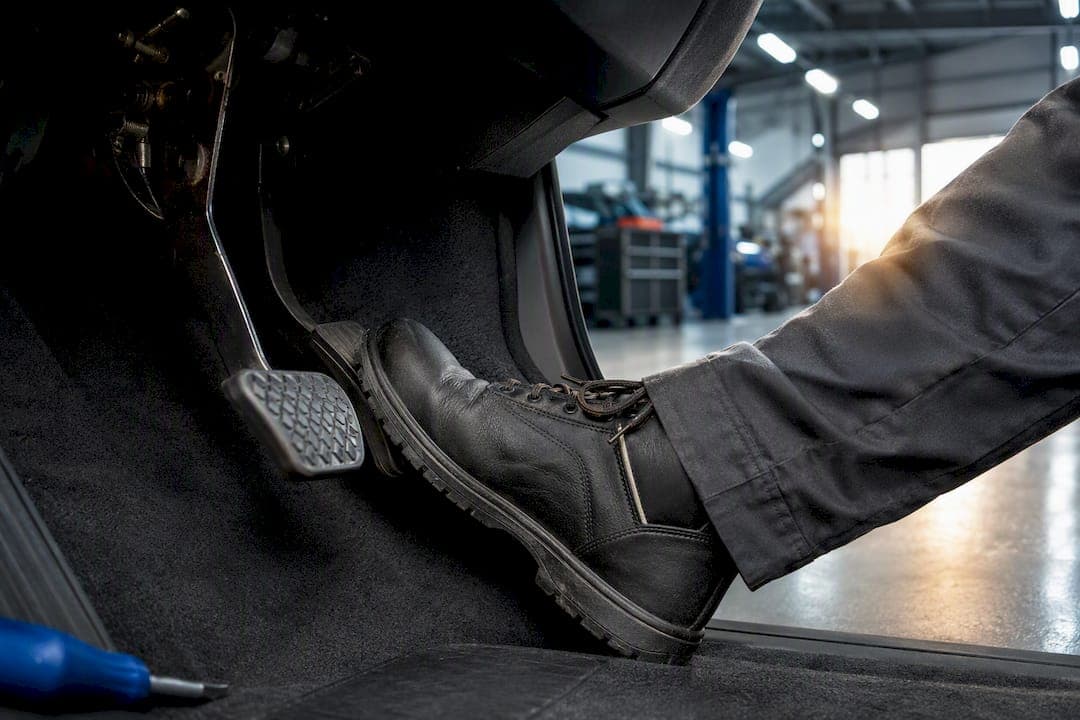
A soft or spongy brake pedal almost always signals a hydraulic problem: air in the lines, a leak, or a failing master cylinder that is quietly stealing your stopping power. If the pedal sinks toward the floor or braking feels unreliable, stop driving. Do a quick pump test and check your brake fluid reservoir before deciding whether this is a DIY fix or a tow-truck call.
TL;DR:
- Bleeding the brake system and replacing old fluid typically resolve air-related soft pedals, but active leaks must be fixed before bleeding.
- Visual inspection for leaks, dark or low fluid, and pedal behavior helps identify whether to repair at home or seek professional help.
- A pedal that sinks immediately under steady pressure indicates a major leak, internal master cylinder failure, or ABS modulator fault requiring expert diagnosis.
- DOT 5 brake fluid must not be mixed with glycol-based DOT fluids, as incompatible fluids can cause seal swelling and system gelling.
- Most repeated spongy pedal complaints stem from incomplete bleeding and incorrect fluid specifications, emphasizing correct diagnosis before upgrades or replacements.
Table of Contents
- Why is my brake pedal soft? Reading the symptoms
- Common causes of a soft or spongy brake pedal
- How to check a soft brake pedal at home
- Fixing a soft brake pedal: bleeding, parts, and when to call a pro
- When to call a mechanic and what to tell them
- What technicians actually see behind spongy pedals
- A technician's honest take on soft pedals
- Replacing worn brakes after diagnosis
- Sources
Why is my brake pedal soft? Reading the symptoms
A pedal that needs extra travel before it bites, or one you have to pump before it firms up, is telling you something specific about where the fault lives. Extra pedal travel with a firm stop at the end usually points to trapped air or low fluid. A pedal that sinks slowly to the floor under steady pressure, even after pumping, points to a bigger problem: a major leak or a master cylinder that can no longer hold pressure.
A soft pedal can also be a genuinely dangerous failure. If the pedal sinks to the floor or your stops feel unpredictable, safety authorities recommend you stop driving and get the vehicle inspected before another trip.
Watch for these accompanying clues:
- Brake or ABS warning light on the dash
- Pedal that sinks slowly even with steady foot pressure
- A burning or chemical smell after hard braking
- Uneven or delayed stopping compared to normal
Pro Tip: If the pedal pumps up and holds, you likely have time to diagnose calmly. If it sinks no matter how hard you press, treat it as an emergency and call for help instead of driving to a shop.
Common causes of a soft or spongy brake pedal
Brake fluid does not compress. Air does. That single fact explains most of what follows.
- Air in the brake lines. This is the most common cause of a spongy pedal because trapped air compresses under pedal force while fluid stays solid, giving you a mushy, low pedal instead of a firm one.
- External fluid leaks. Brake lines, calipers, and wheel cylinders can all weep or fail outright. Any drop in fluid volume means less pressure reaches the wheels.
- Contaminated or boiled fluid. Brake fluid absorbs moisture over time, lowering its boiling point. Heavy braking on a grade or in traffic can boil that moisture into vapour, which behaves exactly like trapped air.
- Master cylinder internal failure. Worn seals inside the master cylinder let fluid bypass internally, so pedal effort never fully converts to hydraulic pressure.
- Deteriorated brake hoses. Aging rubber hoses can let air seep in and out without ever showing a visible leak, which is why some cars need a spongy pedal fixed twice before someone thinks to replace the hoses themselves.
- Seized calipers, misadjusted drum shoes, or ABS modulator faults. A caliper that will not release fluid correctly, or an ABS modulator valve that sticks, can produce the same soft, uneven pedal feel without any fluid loss at all.
How to check a soft brake pedal at home
You can narrow the cause with a few minutes of careful checking, without touching a wrench — for handy tips, see our guide to DIY jobs to get your classic ready for spring.
- Run the pump test. With the engine off, pump the brake pedal several times, then hold steady pressure. A pedal that firms up temporarily then sinks usually means air or a slow leak. A pedal that sinks immediately, even after pumping, points to a major leak or internal master-cylinder bypass.
- Check the reservoir. Open the hood and look at the brake fluid reservoir. Fluid should sit between the min and max marks and look clear to light amber. Dark, cloudy, or noticeably low fluid suggests either contamination or an active leak somewhere in the system.
- Inspect each wheel visually. Look behind each wheel for wet, dark grime around the caliper or wheel cylinder. Uneven brake dust from one wheel compared to the others can also hint at a dragging or seized caliper.
- Know when to stop. A visible leak, a pedal that goes to the floor, or fluid that is clearly gone from the reservoir means the DIY checks end here. Call a mechanic or arrange a tow rather than risk driving on brakes you cannot trust.
Pro Tip: Write down exactly how the pedal behaved during the pump test. That detail alone often tells a technician whether they are chasing air, a leak, or a master cylinder before they even lift the hood.
Fixing a soft brake pedal: bleeding, parts, and when to call a pro
Bleeding the system and replacing old fluid solves the majority of air-related soft pedals, and a thorough four-wheel bleed typically takes a technician 30 to 45 minutes. That said, bleeding only works if there is no active leak. Fix the leak first, then bleed the system, or you will just pull more air right back in.
Match the fix to the fault:
- Air only, no leak: bleed the system and replace old fluid with the correct DOT-rated brake fluid for your vehicle.
- Leaking hose, line, caliper, or wheel cylinder: replace the failed component, then bleed the whole system.
- Sinking pedal with no visible leak: suspect internal master-cylinder failure, which almost always needs professional replacement.
- Soft pedal plus ABS light: the ABS modulator may need scan-tool diagnosis, not a manual bleed.
One detail trips up a lot of well-meaning DIYers: DOT 5 brake fluid is silicone-based and will not mix with DOT 3, DOT 4, or DOT 5.1, all of which are glycol-based. Mixing them can swell seals and gel the whole system. Check your owner's manual before topping up, not after.
When to call a mechanic and what to tell them
A clear, specific description saves time and often money once you're on the phone with a shop.
- Describe the pedal behaviour exactly: did it firm up and sink, or sink right away?
- Report the reservoir: was the fluid low, discoloured, or normal?
- Mention any visible leak location and recent brake work, including fluid top ups.
If the pedal firms with pumping, a scheduled appointment is usually fine. If it sinks to the floor or you see fluid pooling, arrange a tow. Once at the shop, expect the technician to run pressure and isolation checks, inspect calipers and hoses, and pull an ABS scan if the warning light is on. A straightforward bleed job runs under an hour; a master cylinder or hose replacement takes longer once parts and testing are factored in.
What technicians actually see behind spongy pedals
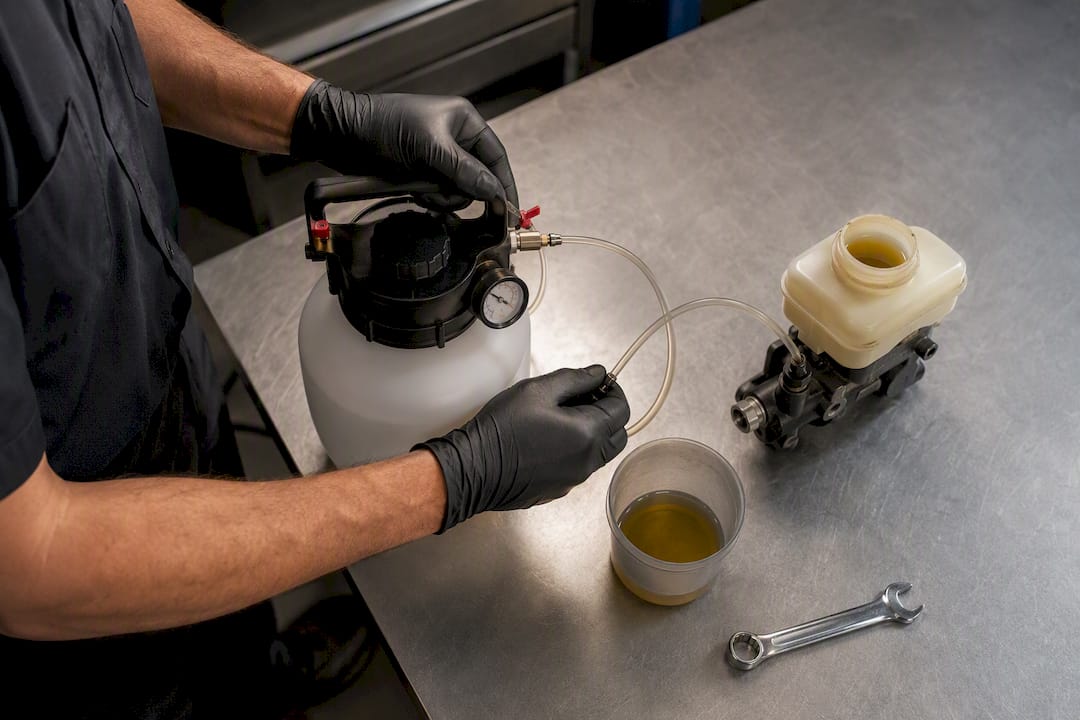
Most repeat spongy-pedal complaints trace back to two things: incomplete bleeding and the wrong fluid spec going into the system. Vacuum or pressure bleeding tends to clear stubborn air pockets that a simple bench bleed misses, particularly high points inside a caliper. Once the hydraulics are sound, that's the right moment to consider upgraded rotors or a full brake kit, not before.
A technician's honest take on soft pedals
Drivers want a quick fix for a soft pedal, but the real skill is patience: fixing the leak before bleeding, matching the fluid spec exactly, and never assuming a firm pedal after one pump means the job is done. Most repeat complaints I'd expect a shop to see come from skipping that order. If your pedal sinks to the floor, don't experiment. Stop driving. If it just feels mushy and you're not sure why, work through the checks above, and reach out to a shop if anything stays unclear.
— Sam
Replacing worn brakes after diagnosis
Once the hydraulics check out and a mechanic has ruled out leaks, air, and master-cylinder faults, a soft pedal sometimes comes down to worn rotors or pads that need replacing, or drivers who want better stopping performance going forward. That's where DBC Brakes fits, not before diagnosis, but after. DBC Brakes builds cross-drilled rotors engineered to resist warping and hold up under repeated hard stops, with inclusive pricing that skips hidden fees and free shipping on orders over $100.
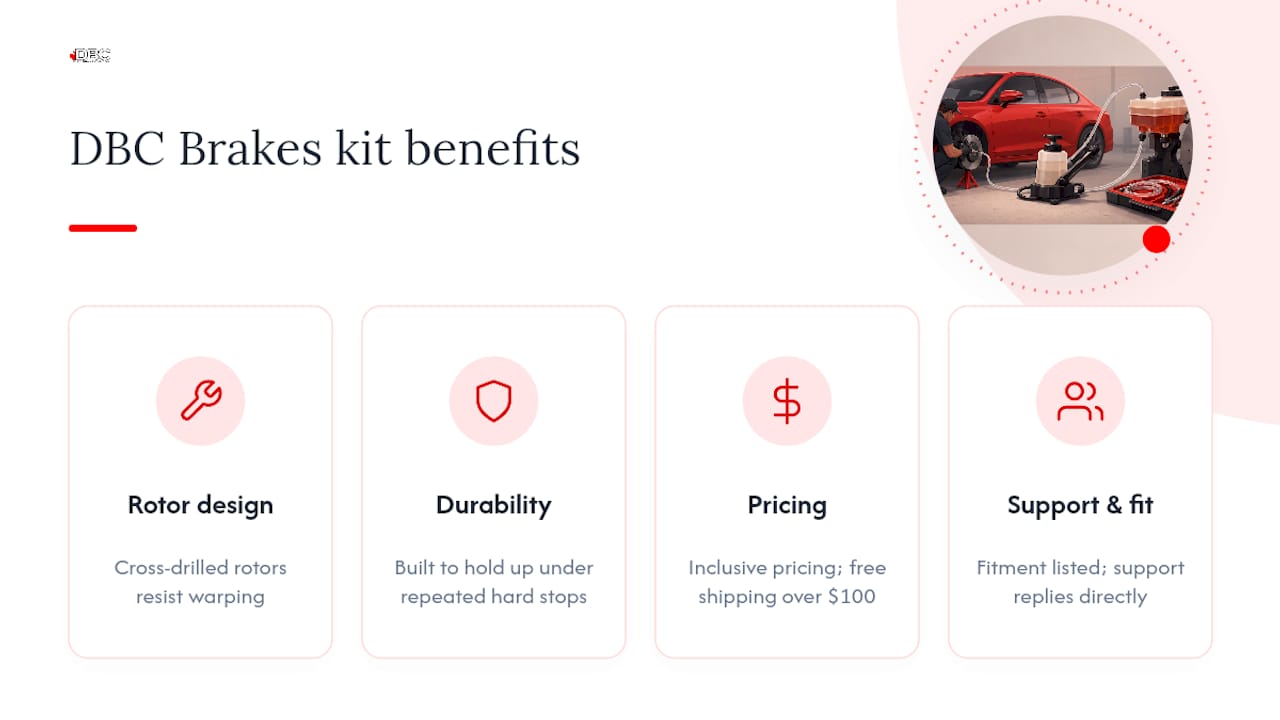
Every kit ships with the fitment details clearly listed, and the support team answers questions directly instead of routing you through automated replies. If your mechanic has confirmed the hydraulic system is sound and it's time to replace or upgrade the rotors and pads, check the performance brake kit fitment page for your vehicle or contact support before you order.
Sources
- Why Do My Brakes Feel Spongy? - Kelley Blue Book
- Soft or Spongy Brake Pedal: 7 Causes and What to Do - Direct Brakes
- Why is my Brake Pedal Soft? How to Diagnose and Fix | Master Power Brakes