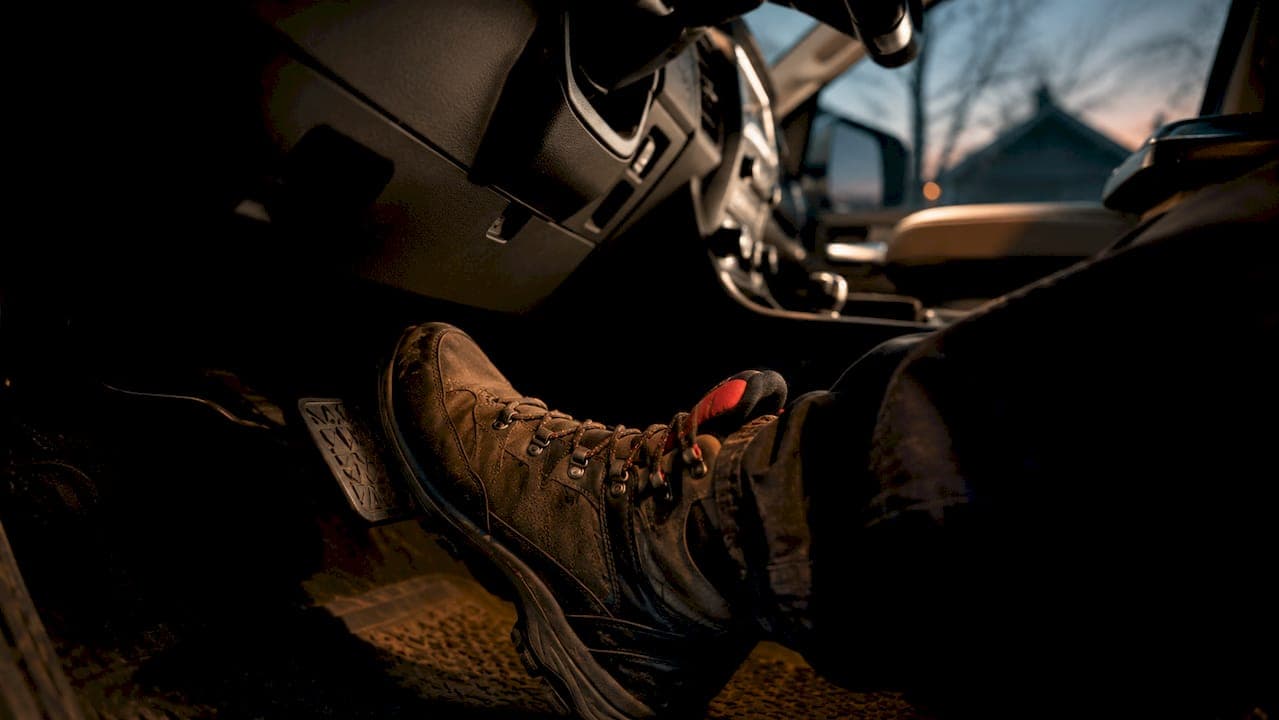
Brake pedal feel is defined as the tactile feedback a driver receives through the pedal when applying braking force, reflecting the health and responsiveness of the entire brake system. A healthy system produces nonlinear pedal feedback, where drivers typically apply between 20 and 120 lbs of force, peaking around 70 lbs during normal stops. That range is not arbitrary. It reflects the combined output of hydraulic pressure, mechanical leverage, and friction at the rotor surface. Understanding what is brake pedal feel gives you a direct window into your vehicle's braking performance, and it is the first step toward diagnosing problems before they become safety issues. DBC Brakes builds its brake kits around this principle: every component should contribute to a pedal that feels predictable, firm, and responsive.
What is brake pedal feel and what creates it?
Brake pedal feel is the product of several mechanical and hydraulic systems working together. The pedal itself acts as a mechanical lever, multiplying your foot's force before it reaches the master cylinder. The master cylinder converts that mechanical force into hydraulic pressure, which travels through brake lines to the callipers at each wheel.
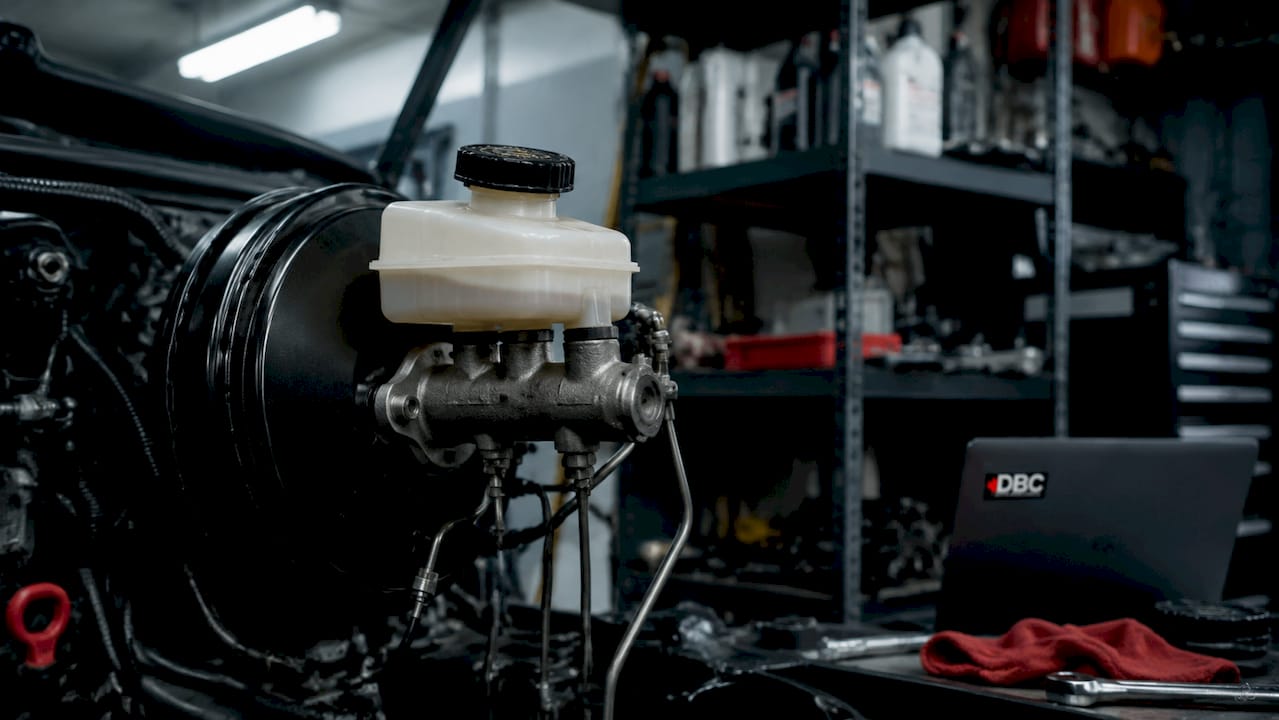
The brake booster sits between the pedal and the master cylinder. It uses engine vacuum to amplify your foot's input, reducing the effort needed to generate strong braking force. Without a functioning booster, the pedal feels noticeably harder and requires significantly more leg pressure to stop the vehicle.
Brake fluid condition directly affects pedal responsiveness. Fresh fluid transmits hydraulic pressure efficiently. Degraded or moisture-contaminated fluid compresses under heat, which softens the pedal and reduces braking precision. The material of your brake lines also matters. Rubber lines expand slightly under pressure, absorbing energy that should reach the callipers. Stainless-steel braided lines resist expansion, keeping hydraulic pressure consistent and pedal travel shorter.
Key components that shape brake pedal characteristics:
- Master cylinder: Converts pedal force to hydraulic pressure; wear or push rod play causes excessive pedal travel
- Brake booster: Amplifies foot input using vacuum; failure produces a hard, unresponsive pedal
- Brake fluid: Transmits pressure through the system; moisture contamination softens pedal feel
- Brake lines: Rubber lines expand under pressure; braided stainless-steel lines maintain firmness
- Callipers and pistons: Piston travel and friction coefficient determine how quickly the brakes bite
Pro Tip: Check your brake fluid colour every six months. Clear or light yellow fluid is healthy. Dark brown fluid has absorbed moisture and needs replacing before it softens your pedal under heat.
Engineering brake pedal feel requires balancing friction coefficients with piston and master cylinder sizes. A mismatch between these components produces unpredictable pedal behaviour, even when all parts are technically functional.
How does brake pedal responsiveness affect safety?
Brake pedal responsiveness is defined as the system's ability to react immediately and proportionally to driver input. A responsive pedal translates foot pressure into braking force without delay, lag, or inconsistency. That directness is what gives drivers confidence when stopping in an emergency.
A firm, linear pedal feel enables precise force modulation. When the pedal responds predictably, you can apply exactly the right amount of braking pressure for the situation, whether that is a gentle slow-down in traffic or a hard stop to avoid a collision. Firm, responsive pedals reduce driver hesitation and improve reaction time. That is not a minor comfort issue. It is a measurable safety factor.
Pedal ergonomics also play a role. The shape, size, and angle of the pedal affect how naturally your foot applies force. A poorly positioned pedal forces awkward ankle angles, which reduces the force you can apply and makes modulation less accurate. Most factory pedal positions are engineered for average foot geometry, but drivers with larger or smaller feet may find aftermarket pedal covers improve their control.
Four signs your pedal responsiveness needs attention:
- Spongy or soft feel: The pedal compresses easily without firm resistance, suggesting air in the hydraulic lines or fluid contamination
- Excessive travel: The pedal sinks further than normal before braking engages, pointing to master cylinder wear or low fluid
- Delayed bite: Braking force arrives late after pedal application, indicating calliper or line issues
- Inconsistent feel: The pedal behaves differently between stops, which signals fluid degradation or a partially failing component
Pro Tip: Test pedal firmness with the engine off, then again with the engine running. A firm pedal with the engine off that softens when running points to a booster problem, not a hydraulic one.
Drivers use natural foot pressure sensing to gauge pedal force. When hardware issues disrupt that feedback, force modulation becomes unsafe and unpredictable. That is why consistent pedal feel is not just a comfort preference. It is a functional safety requirement.
Common issues affecting brake pedal feel and how to diagnose them
Most abnormal pedal sensations trace back to a small set of root causes. Identifying the symptom accurately points you toward the right fix.
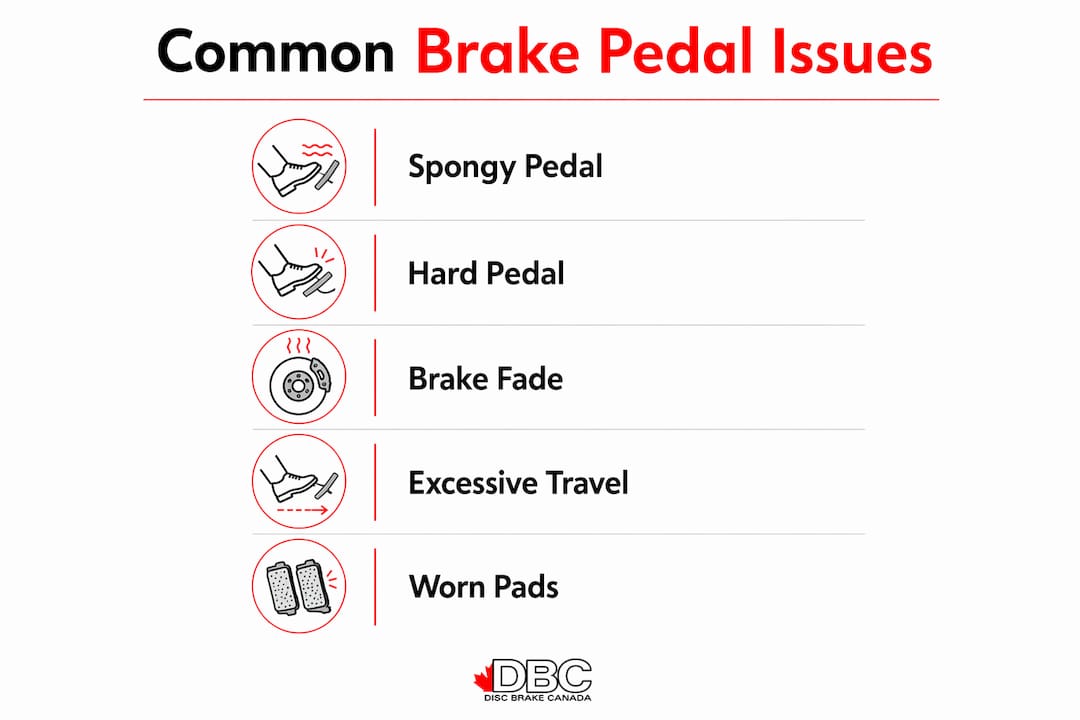
Spongy or soft pedal is the most common complaint. A soft pedal that sinks easily usually indicates air in the brake lines, moisture-contaminated fluid, or worn hydraulic seals. Air is compressible, so it absorbs pedal force instead of transmitting it. Bleeding the brakes removes trapped air and restores firmness.
Hard pedal is the opposite problem. A pedal that requires excessive force to engage typically signals brake booster failure. Mechanics diagnose this by comparing pedal hardness with the engine off versus on. A hard pedal with the engine running and a softer pedal with the engine off confirms booster failure, since the booster relies on engine vacuum to function.
Brake fade produces a sinking pedal during prolonged or aggressive braking. Heat reduces brake fluid effectiveness, causing the pedal to feel progressively softer the longer you brake. This is common on long downhill grades or during track use. Upgrading to high-temperature brake fluid and cross-drilled rotors reduces fade significantly.
Excessive pedal travel often comes from a worn master cylinder push rod. Less than .025 inches of excess rod play can add 0.5 inches of extra pedal travel. That is a large change from a tiny mechanical variation, which is why push rod adjustment is part of any thorough brake inspection.
| Symptom | Likely cause | Diagnostic step |
|---|---|---|
| Spongy pedal | Air in lines or contaminated fluid | Bleed brakes, inspect fluid colour |
| Hard pedal | Brake booster failure | Compare feel engine on vs. engine off |
| Sinking pedal under load | Brake fade or fluid boiling | Check fluid spec, inspect rotors |
| Excessive travel | Master cylinder wear or push rod play | Inspect push rod clearance, check cylinder |
| Pulsating pedal | Warped rotors | Measure rotor runout, replace if needed |
Worn brake pads also affect pedal feel indirectly. As pads wear thin, calliper pistons extend further to maintain contact with the rotor. That increased piston travel adds to pedal travel and can make the pedal feel lower and less firm than normal.
How can drivers improve brake pedal feel?
The most direct improvement comes from brake fluid maintenance. Fluid absorbs moisture over time, which lowers its boiling point and softens pedal feel under heat. Replacing brake fluid every two years, or more frequently for performance driving, keeps the hydraulic system operating at full pressure. Bleeding the system after replacement removes any trapped air. The role of brake fluid in maintaining consistent pedal feedback is often underestimated by drivers who focus only on pads and rotors.
Upgrading to stainless-steel braided brake lines is one of the most cost-effective pedal feel improvements available. Braided lines reduce pedal travel by resisting the expansion that rubber lines experience under pressure. The result is a firmer, more direct pedal with less wasted travel. Drivers who have made this upgrade consistently report a noticeably more confident pedal. For a full breakdown of which brake parts are worth upgrading, braided lines rank near the top for daily drivers.
Master cylinder and booster condition both need periodic inspection. A worn master cylinder allows internal fluid bypass, which causes the pedal to sink slowly under steady pressure. A failing booster increases pedal effort without warning. Both components are straightforward to inspect during a routine service.
Modern brake-by-wire systems use active pedal simulators that adjust pedal feel based on driving conditions. These systems deliver a softer feel at low speed and a firmer response during emergency stops. While this technology is currently found in electric and hybrid vehicles, it reflects where pedal engineering is heading. Understanding the principles behind it helps drivers appreciate why pedal feedback is an engineered output, not just a mechanical side effect.
Pro Tip: After any brake work, pump the pedal several times before driving to seat the callipers and confirm firm pedal feel. A pedal that firms up after pumping suggests air is still present in the system.
Key takeaways
Brake pedal feel is the clearest indicator of brake system health, and maintaining firm, consistent pedal feedback requires attention to fluid condition, line integrity, and mechanical wear across the entire hydraulic system.
| Point | Details |
|---|---|
| Pedal feel reflects system health | A firm, consistent pedal indicates proper hydraulic pressure and mechanical function throughout the brake system. |
| Fluid condition is critical | Moisture-contaminated brake fluid softens pedal feel and must be replaced every two years to maintain performance. |
| Braided lines improve firmness | Stainless-steel braided brake lines resist pressure expansion, reducing pedal travel and improving responsiveness. |
| Booster failure changes pedal hardness | A hard pedal with the engine running and a softer pedal with it off confirms brake booster failure. |
| Small mechanical wear has large effects | Less than .025 inches of push rod play can add 0.5 inches of pedal travel, significantly changing pedal feel. |
What most drivers miss about pedal feedback
Your foot is the most sensitive sensor in your braking system. That sounds obvious, but most drivers treat pedal feel as a background sensation rather than diagnostic data. I have spoken with drivers who lived with a gradually softening pedal for months, assuming it was normal wear. By the time they had it inspected, the master cylinder had been bypassing fluid internally for long enough to cause uneven pad wear across all four corners.
The part that surprises most people is how small the mechanical tolerances are. A push rod with less than a millimetre of excess play adds half an inch of pedal travel. That is the difference between a pedal that feels tight and one that feels vague. Drivers rarely notice the change day to day because it happens gradually. The fix, once diagnosed, takes minutes.
Brake fade is another area where drivers misread the feedback. A pedal that sinks during a long downhill run is not a sign of weak brakes. It is a sign that the fluid is boiling. The brakes themselves may be fine. Switching to a higher-spec fluid and fitting cross-drilled rotors that dissipate heat faster solves the problem without replacing the entire system.
The emerging technology worth watching is adaptive pedal simulation in brake-by-wire systems. These systems prove that pedal feel is an engineered output, not a fixed mechanical result. That means it can be tuned, improved, and maintained. Treating your pedal feedback as information, rather than just sensation, is the shift that separates drivers who catch brake problems early from those who do not.
— Sam
Brake components from DBC Brakes for better pedal feel
Pedal feel starts with the quality of the components in your brake system. DBC Brakes supplies premium brake kits for a wide range of Canadian vehicles, with cross-drilled rotors engineered to reduce heat buildup and maintain consistent braking performance. Better heat management means less brake fade and a firmer pedal under demanding conditions.
DBC Brakes offers transparent pricing with no hidden fees and free shipping on orders over $100. Every order comes with knowledgeable support from real people, not automated responses. Whether you drive a daily commuter or a performance vehicle, DBC Brakes brake kits are built to improve stopping power and restore confident pedal feedback. Browse the full catalogue at CrossDrilledRotors.ca to find the right fit for your vehicle.
FAQ
What does brake pedal feel mean?
Brake pedal feel is the physical feedback a driver senses through the pedal when applying braking force. It reflects the hydraulic pressure, mechanical leverage, and friction output of the entire brake system.
Why does my brake pedal feel spongy?
A spongy pedal typically indicates air in the brake lines, moisture-contaminated fluid, or worn hydraulic seals. Bleeding the brakes and replacing degraded fluid usually restores firm pedal feel.
What causes a hard brake pedal?
A hard pedal with the engine running most often signals brake booster failure. The booster uses engine vacuum to amplify pedal force, and when it fails, significantly more leg pressure is needed to stop the vehicle.
How does brake fluid affect pedal feel?
Brake fluid transmits hydraulic pressure through the system. Fluid that has absorbed moisture compresses under heat, which softens the pedal and reduces braking precision. Replacing fluid every two years maintains consistent pedal feedback.
Can upgrading brake lines improve pedal feel?
Stainless-steel braided brake lines resist pressure expansion better than rubber lines, which reduces pedal travel and delivers a firmer, more direct pedal response.