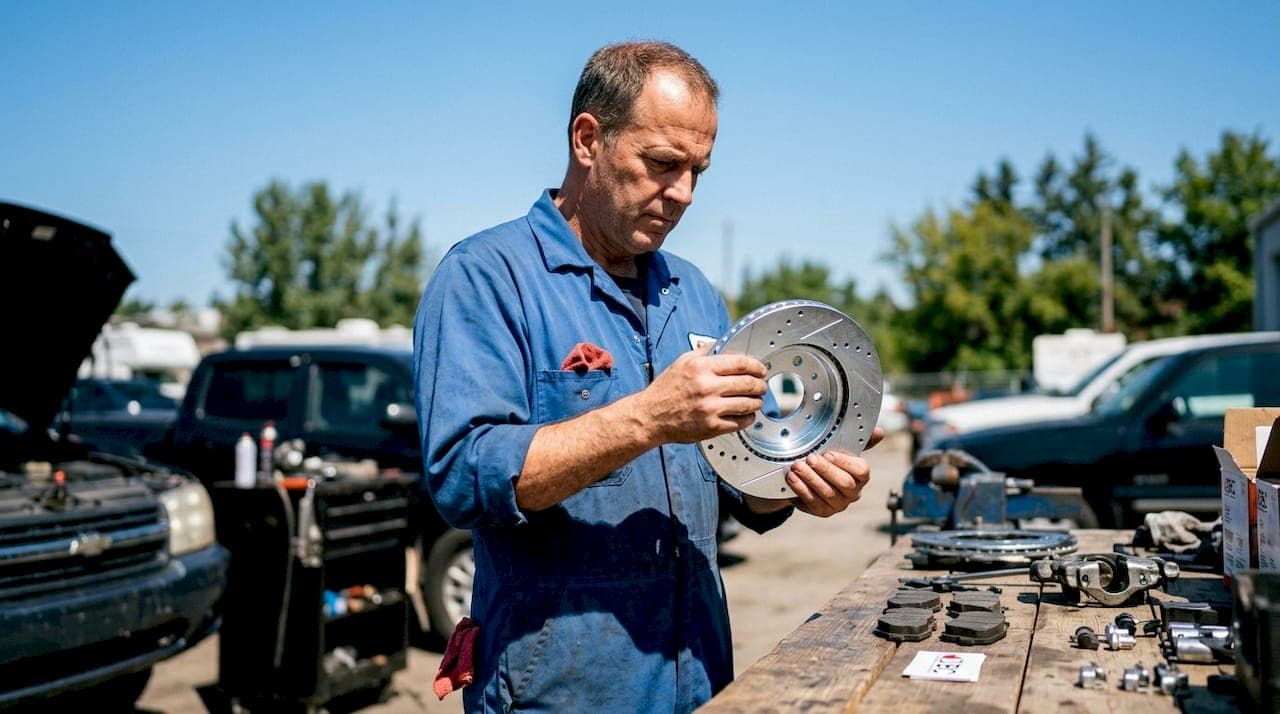
Premium brake components are the one vehicle upgrade where spending more directly reduces your stopping distance and your risk. The brake parts worth splurging on are rotors, pads, calipers, and hardware that outperform budget alternatives in heat resistance, longevity, and consistent feel. Professionally installed high-quality aftermarket brake kits start at $1,800 and climb past $9,000 for carbon ceramic systems. That range reflects a real performance gap, not just marketing. DBC Brakes, a Canadian manufacturer of cross-drilled rotor kits, builds products that sit in the performance-grade tier without the carbon ceramic price tag. Knowing which parts justify the premium, and which do not, saves money and keeps you safe.
1. Which brake parts are worth splurging on?
Rotors, brake pads, and hardware are the three categories where premium spending pays off most clearly. Calipers matter too, but they are the last item most drivers need to upgrade.
Rotors
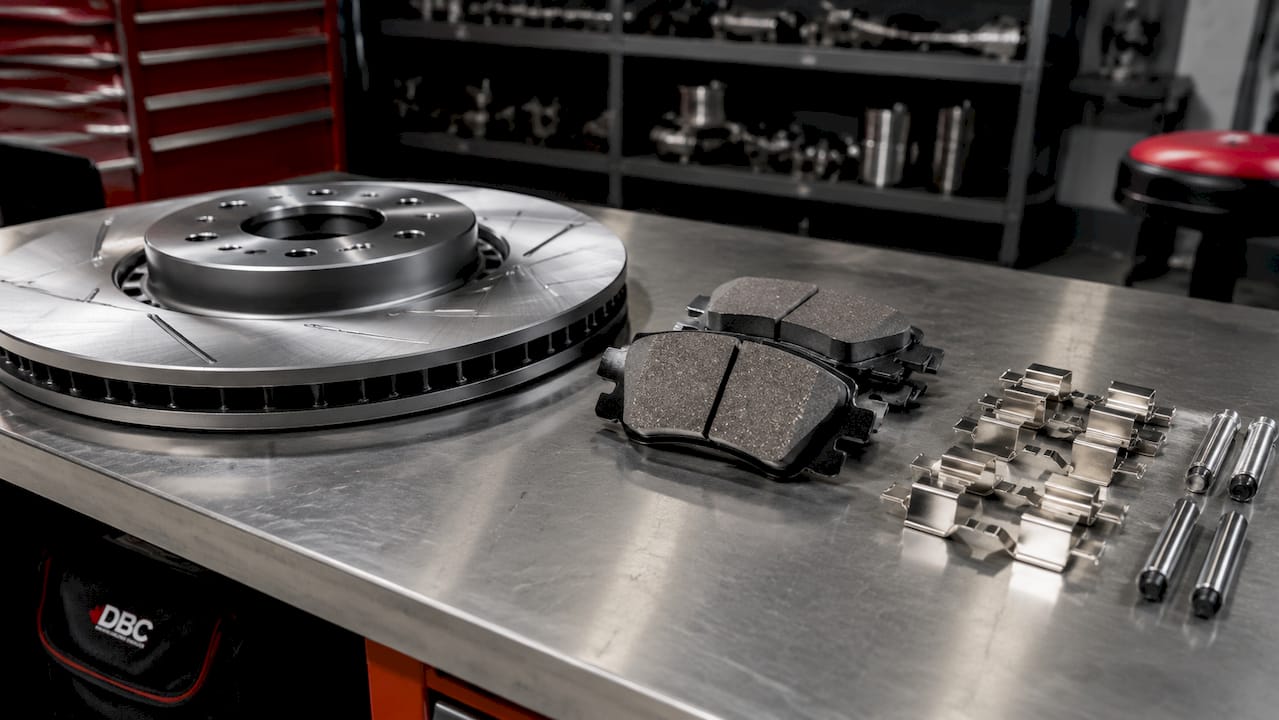
Cross-drilled and slotted rotors manage heat better than plain cast-iron rotors. The drilling and slotting channels away gas and debris during hard braking, which keeps the rotor surface in firm contact with the pad. DBC Brakes engineers their cross-drilled rotors specifically to resist warping under repeated heat cycles, which is the most common failure mode for budget rotors.
Carbon ceramic rotors represent the top of the market, with a service life up to 500,000 km and wear as low as 0.125 mm per 100,000 km. That longevity makes them rational for high-mileage drivers in corrosive climates, where standard iron rotors rust and require frequent replacement. For most Canadian drivers, a quality coated or cross-drilled iron rotor delivers the best balance of cost and durability.
Brake pads
Premium ceramic pads outperform semi-metallic pads in three measurable ways: less dust, less noise, and longer pad life. Premium ceramic pads produce lower dust levels and enhanced wear resistance compared to semi-metallic or metallic alternatives. That matters for drivers who care about keeping their wheels clean and their cabin quiet.
Copper-free ceramic compounds also reduce rotor wear, which protects your rotor investment. A quality ceramic set typically costs $45–$65 and can last up to twice as long as a standard pad. That lifespan advantage alone often justifies the price difference.
Pro Tip: Always replace pads and rotors as an axle set. Mixing a new pad with a worn rotor creates uneven contact and reduces the performance of both parts.
Hardware
Brake hardware is the most overlooked category when investing in brake upgrades. Anti-rattle clips, slide pins, and caliper brackets control how the pad sits and moves against the rotor. Worn hardware causes the pad to drag, wear unevenly, and make noise that drivers often blame on the pad itself.
2. How driving conditions change which upgrades are worth it
The right premium brake component depends entirely on how and where you drive. A track-day pad is a poor choice for a daily commuter, and a standard OEM pad is a liability for a driver who tows.
- Corrosive or winter climates: Carbon ceramic rotors are effectively immune to rust. For Canadian drivers who park outside through a salt-heavy winter, the rust resistance alone extends rotor life significantly.
- Towing and mountainous terrain: Slotted or drilled rotors paired with thermal-stable ceramic pads manage the sustained heat load from long descents and heavy trailer weight. Standard pads fade under this kind of load.
- Daily drivers: OEM-spec or luxury-grade ceramic pads deliver the best result for stop-and-go city driving. They run quietly, produce minimal dust, and last a long time without the cold-start bite issues of track-focused compounds.
- Performance and track use: Carbon ceramic systems reduce unsprung weight and resist fade at high temperatures. They are the rational choice for track enthusiasts but may feel less responsive during cold morning starts on public roads.
Experts agree that splurging delivers the most value for performance vehicles, heavy EVs, and towing applications where heat and fade resistance are safety-critical. Daily drivers often get better results from reliable OEM-spec parts than from track-focused hardware that was never designed for their conditions.
Pro Tip: If you tow regularly or drive mountain passes, check the operating temperature range printed on your pad packaging. A pad rated for street use typically operates between 0°C and 400°C. Towing demands a pad rated higher.
3. Common mistakes when splurging on premium brake upgrades
Spending more on brake parts does not automatically produce better results. The most common mistakes come from incomplete upgrades and skipped procedures.
-
Skipping hardware replacement. Old or fatigued hardware causes failures that drivers misattribute to poor-quality pads. Anti-rattle clips and slide pins must be replaced and lubricated with high-temperature grease every time you install new pads.
-
Skipping the break-in procedure. Carbon ceramic and premium ceramic pads require a correct break-in procedure to build an even friction transfer layer on the rotor. Skipping this step causes uneven pad deposits, vibration, and premature wear.
-
Mismatching pad and rotor temperature profiles. Track-focused pads paired with street rotors produce cold-start noise, excessive dust, and poor daily drivability. The pad and rotor must share compatible friction and temperature profiles.
-
Upgrading pads without upgrading rotors. A premium pad on a worn or warped rotor cannot perform correctly. The contact surface must be flat and within manufacturer thickness specifications.
-
Ignoring caliper condition. A sticking caliper piston causes uneven pad wear and heat buildup regardless of pad or rotor quality. Inspect caliper function before installing any premium components.
Pro Tip: The bedding procedure for most premium ceramic pads involves 8–10 moderate stops from 60 km/h, allowing the rotor to cool between each stop. Follow the pad manufacturer's specific instructions, as the sequence varies by compound.
4. Comparing entry-level, mid-range, and premium brake components
The table below shows how the three grades differ across the features that matter most for safety and performance.
| Feature | Entry-level | Mid-range | Premium |
|---|---|---|---|
| Rotor material | Plain cast iron | Coated or slotted iron | Cross-drilled coated or carbon ceramic |
| Pad compound | Semi-metallic | Ceramic blend | Copper-free ceramic or carbon ceramic |
| Hardware included | Basic clips | Anti-rattle clips | Full hardware kit with high-temp grease |
| Typical rotor lifespan | 60,000–80,000 km | 80,000–120,000 km | 120,000 km to 500,000 km (carbon ceramic) |
| Typical pad lifespan | Standard | Up to 1.5x standard | Up to 2x standard |
| Approximate kit cost | $1,800–$2,500 | $2,500–$4,000 | $4,000–$9,000+ |
| Best for | Budget daily driving | Most drivers and light towing | Performance, towing, high mileage |
The mid-range tier delivers the best value for most Canadian drivers. It covers the majority of driving conditions, includes better hardware, and costs significantly less than a full carbon ceramic system.
When does the premium tier justify the cost? Three situations stand out clearly.
- You drive a performance vehicle or track your car regularly.
- You tow heavy loads or drive mountain routes where sustained braking is common.
- You live in a high-corrosion environment and want to avoid rust-related rotor replacement every two to three years.
For performance brake value in everyday driving, a quality cross-drilled rotor kit paired with copper-free ceramic pads and fresh hardware is the most cost-effective upgrade available. DBC Brakes builds kits in this category, with transparent pricing and no hidden fees.
Key takeaways
The brake parts most worth splurging on are cross-drilled or coated rotors, copper-free ceramic pads, and complete hardware kits, matched to your specific driving conditions and vehicle type.
| Point | Details |
|---|---|
| Rotors and pads first | Upgrade rotors and pads together for the greatest safety and performance gain. |
| Match parts to driving conditions | Towing and mountain driving need thermal-stable pads; daily drivers benefit most from ceramic compounds. |
| Hardware is not optional | Replace clips, pins, and grease with every pad change to protect your premium investment. |
| Break-in procedures matter | Skipping the bedding process causes uneven wear and negates the value of premium pads. |
| Mid-range delivers best value | Most drivers get the best cost-to-performance result from coated or cross-drilled iron rotor kits with ceramic pads. |
My take on spending more on brakes
Why I think most brake advice gets the splurge question wrong
Most articles tell you to buy the most expensive parts you can afford. That is the wrong frame. The right question is: what does your driving actually demand?
I have seen drivers spend over $4,000 on carbon ceramic systems for vehicles that never exceed 120 km/h on public roads. The parts performed well, but a $600 cross-drilled rotor and ceramic pad kit would have produced identical results for that driver's conditions. The carbon ceramic advantage only shows up under sustained high heat, which a daily commuter rarely generates.
The splurge that consistently pays off is fresh hardware. Drivers skip it because it costs almost nothing and looks unimportant. But fatigued clips and dry slide pins are the most common cause of brake noise and uneven wear complaints I have seen, even on expensive pad and rotor combinations.
My practical advice: spend mid-range on rotors and pads, spend generously on hardware, and follow the break-in procedure exactly. That combination outperforms a track-grade setup with neglected hardware every time. If you tow or drive aggressively, move up to thermal-stable pads and slotted rotors. Reserve carbon ceramic for the situations where the weight savings and heat endurance are genuinely needed.
— Sam
DBC Brakes: premium brake kits for Canadian drivers
Canadian drivers need brake components built for cold starts, road salt, and variable terrain. DBC Brakes supplies premium brake kits engineered with cross-drilled rotors that resist warping and handle heat cycles reliably across all seasons.
DBC Brakes offers transparent, all-inclusive pricing with free shipping on orders over $100. Every order comes with access to knowledgeable support, not automated responses. Whether you drive a daily commuter, a performance vehicle, or a truck that tows regularly, DBC Brakes carries kits matched to your specific make and model. Vehicle-specific fitment is available directly on the site, making it straightforward to find the right components without guesswork on compatibility.
FAQ
What are the most important brake parts to upgrade first?
Rotors and pads deliver the greatest safety improvement and should be upgraded together as an axle set. Hardware replacement should accompany every pad change.
Are carbon ceramic brakes worth it for daily driving?
Carbon ceramic brakes are most cost-effective for track use, heavy EVs, and high-mileage drivers in corrosive climates. For standard daily driving, a quality coated or cross-drilled iron rotor with ceramic pads provides comparable performance at a fraction of the cost.
How much do premium brake upgrades cost in 2026?
Entry-level aftermarket kits start at $1,800–$2,500, mid-range kits run $2,500–$4,000, and premium carbon ceramic systems range from $4,000 to over $9,000.
Why do premium ceramic pads last longer than standard pads?
Copper-free ceramic compounds wear more slowly and generate less heat transfer to the rotor, which extends both pad and rotor life. Premium ceramic pads can last up to twice as long as standard semi-metallic pads.
What happens if you skip the break-in procedure on new brake pads?
Skipping the break-in process causes uneven friction material transfer onto the rotor surface, which leads to vibration, noise, and premature wear. Follow the pad manufacturer's specific bedding sequence after every pad installation.