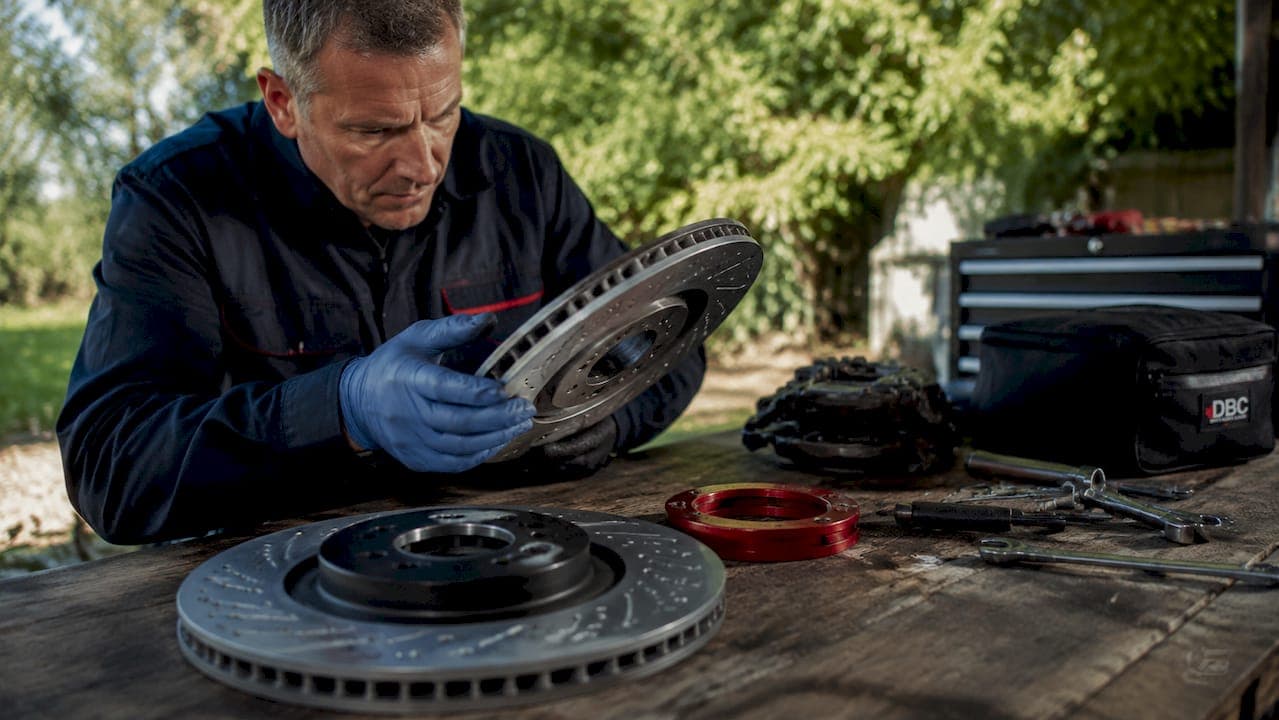
Performance brake value is defined as the measurable effectiveness and reliability of a brake system under real driving conditions, assessed against original equipment manufacturer (OEM) standards. The term is not a single number. It covers friction coefficient (μ), thermal stability, fade resistance, modulation, wear rate, and consistency across repeated stops. Car owners and enthusiasts who understand what performance brake value means can make better decisions when selecting brake pads, rotors, or full brake kits. Materials like ceramic, semi-metallic, and sintered compounds each produce a different performance profile, and regulatory frameworks like UNECE Regulation 90 (R90) set the baseline for what replacement parts must achieve.
What does performance brake value mean in measurable terms?
Performance brake value is built from several measurable attributes, not a single rating. Hagerty identifies thermal stability, friction stability, modulation, wear rate, stiffness, consistency, and intuitiveness as the core traits used to evaluate brake pad performance. Each trait contributes to how a brake system behaves across different temperatures, speeds, and driving conditions.
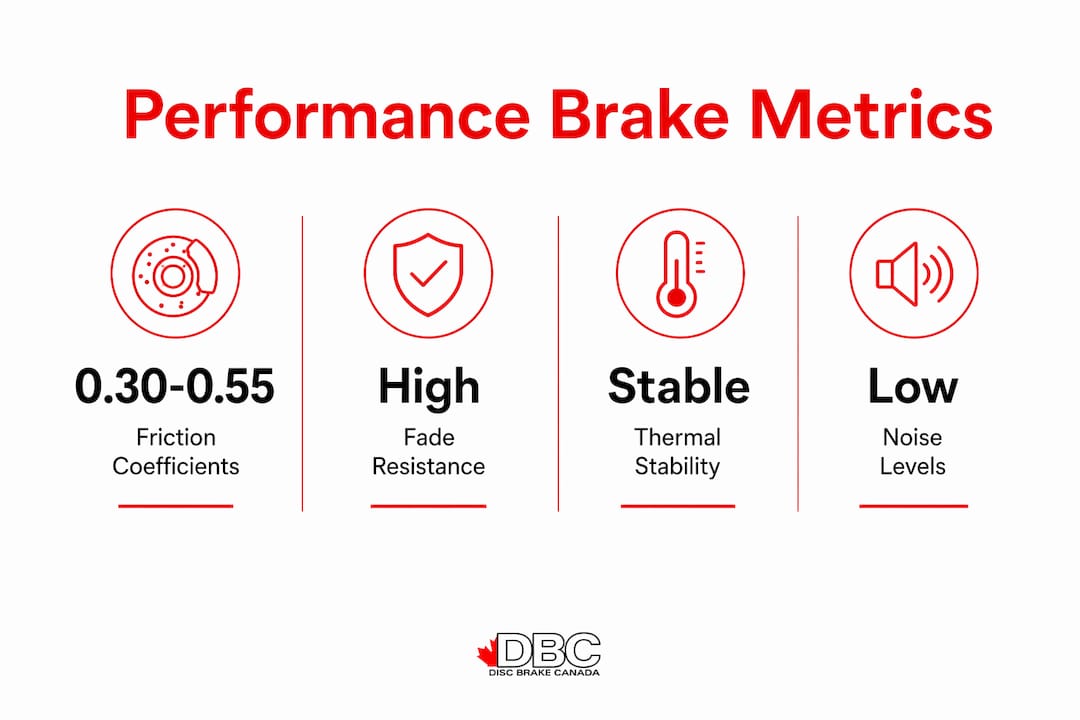
Friction coefficient (μ) is the most cited number in brake performance discussions. It measures the grip between the pad and rotor surface. Friction coefficient ranges typically fall between 0.30 and 0.55 depending on pad material, with ceramic pads sitting around 0.35–0.45, semi-metallic pads reaching 0.35–0.55, and sintered compounds often exceeding 0.5. A higher μ does not automatically mean better braking. Friction variability across heat cycles, known as delta μ, determines how predictable the brakes feel from one stop to the next.
Key performance attributes to understand:
- Friction coefficient (μ): The grip level between pad and rotor, measured across cold and hot conditions.
- Thermal stability: How well a pad maintains its friction rating as temperatures rise through repeated braking.
- Fade resistance: The ability to resist a drop in braking force after sustained hard stops.
- Modulation: How progressively and controllably the braking force builds under pedal pressure.
- Wear rate: How quickly the pad material depletes, which affects long-term cost and maintenance intervals.
- Consistency: Whether friction performance stays stable across many braking cycles, not just the first few.
Brake dynamometer tests simulate repeated braking events to produce friction versus temperature curves, fade resistance data, and wear rates. This test data gives a far more complete picture of brake performance value than a single friction number printed on a box.
Pro Tip: When reading brake pad specifications, look for friction data across a temperature range, not just a peak μ figure. A pad that shows 0.45 μ cold but drops to 0.30 μ after heat soak is not delivering consistent performance value.
How do UNECE R90 standards relate to brake performance rating?
UNECE Regulation 90, commonly called R90, is the European standard that governs replacement brake pads and linings. R90 requires replacement pads to demonstrate friction and behaviour within strict tolerances compared to the OEM reference part. Both dynamometer and vehicle-level tests are used to verify compliance. An R90 marking on a brake pad confirms it has passed these tests.
R90 compliance matters because it sets a performance floor. A pad carrying the R90 mark will not perform dramatically worse than the original part it replaces. That is a meaningful safety assurance for daily drivers who are not running track-specific compounds.
The compliance process involves:
- Dynamometer testing: The replacement pad is tested against the OEM reference across defined temperature and deceleration cycles.
- Vehicle testing: On-road or test-track stops verify real-world friction behaviour matches dynamometer results.
- Friction tolerance check: Results must stay within the OEM friction band. Pads that fall outside this band fail certification.
- Marking and traceability: Certified pads carry an E-mark or R90 identifier, linking the product to its test record.
R90 certification has limits, though. R90 markings indicate compliance but buyers should seek underlying test data to verify safety claims beyond the label. A pad can pass R90 and still sit at the low end of the acceptable friction range. Drivers planning spirited street use or track days need to look beyond the certification and examine actual friction consistency data.
Pro Tip: Ask suppliers for the full test data sheet, not just the R90 certificate. The certificate confirms the pad passed. The data sheet shows where in the acceptable range it actually sits.
Brake pad materials compared: ceramic, semi-metallic, and sintered
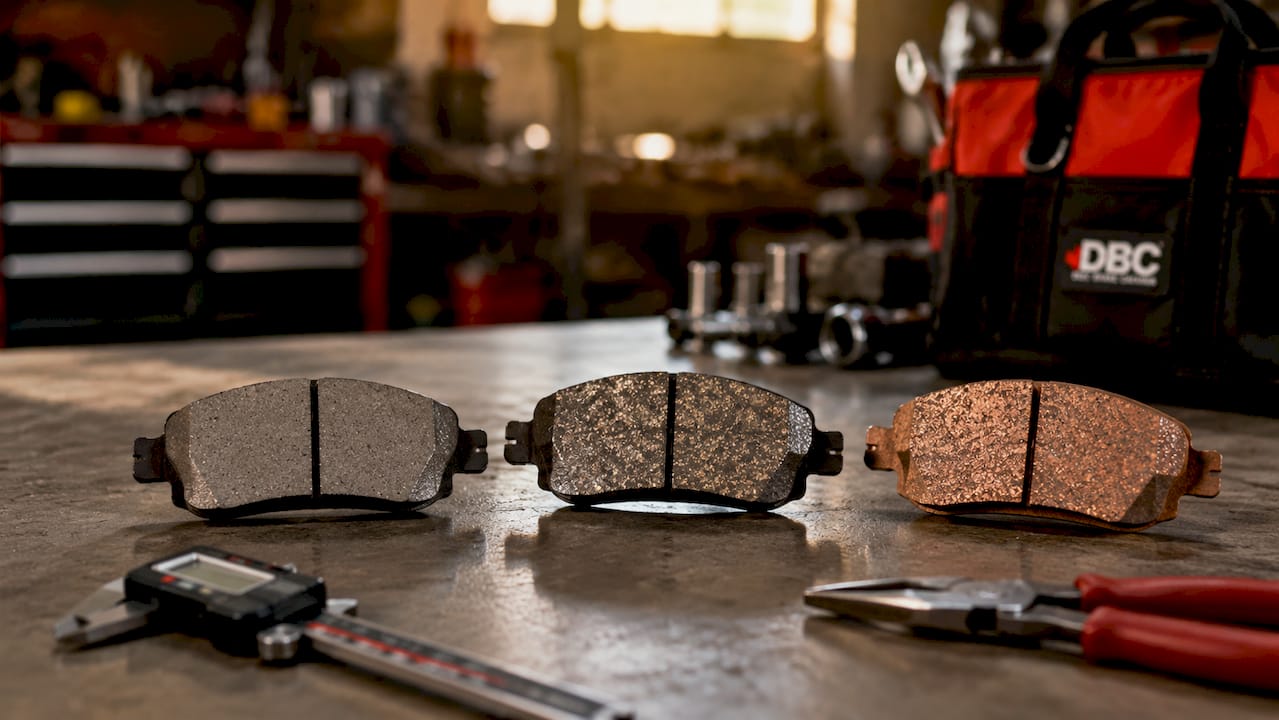
Brake pad material is the single biggest factor in determining a pad's performance value profile. Each material type produces a distinct combination of friction, heat resistance, wear, and noise characteristics.
| Material | Friction coefficient (μ) | Fade resistance | Noise level | Typical use case |
|---|---|---|---|---|
| Ceramic | 0.35–0.45 | Moderate | Low | Daily driving, light spirited use |
| Semi-metallic | 0.35–0.55 | Good | Moderate to high | Street performance, towing |
| Sintered | Above 0.5 | Excellent | High | Track days, aggressive driving |
Ceramic pads produce moderate friction with low dust and minimal noise. They are well suited to daily driving because they are gentle on rotors and consistent in normal temperature ranges. Their thermal ceiling is lower than metallic compounds, so they are not the right choice for repeated hard stops at high speeds.
Semi-metallic pads use metal fibres bonded in a resin matrix. They generate higher friction and handle heat better than ceramics, but they produce more noise and can wear rotors faster. For drivers who tow, drive in hilly terrain, or want more stopping confidence on spirited road routes, semi-metallic compounds offer a meaningful step up in brake performance value.
Sintered pads are compressed metal compounds, common in motorsport and motorcycle applications. They deliver the highest friction and the best fade resistance, but they require heat to reach peak performance. Cold sintered pads can feel wooden and unresponsive. They also accelerate rotor wear. For a track performance build, sintered pads are often the correct choice. For a daily driver, they are rarely worth the trade-offs.
How to interpret brake value for your vehicle and driving style
Applying brake performance knowledge to a real purchase decision requires matching the pad's performance profile to your actual driving conditions. Hagerty and ICOOH both advise selecting pads based on wear rate, fade resistance, and friction stability across the temperature ranges relevant to your driving routine. A pad optimised for track temperatures will underperform on a cold commute.
Friction codes, sometimes called SAE-style friction grades, appear on many brake pad catalogues. SAE friction codes convey design friction behaviour across cold and hot test ranges rather than exact μ values. The letter codes indicate friction bands, not precise numbers. Use them as a starting filter, then look for full temperature curve data before committing to a pad.
Matching your pad to your use case:
- Daily driving: Prioritise low noise, low dust, and consistent cold friction. Ceramic compounds are the standard choice.
- Spirited street use: Look for higher hot friction ratings and better fade resistance. Semi-metallic compounds work well here.
- Towing or mountain driving: Thermal capacity is the priority. A pad with strong fade resistance across sustained moderate temperatures outperforms a high-peak pad that fades after three hard stops.
- Track days: Sintered or high-performance semi-metallic compounds with documented hot friction data are the baseline requirement.
Heat management is the most common limiting factor in brake upgrade effectiveness. Most brake problems under hard use stem from heat management failures, not insufficient caliper size. Brake fluid, rotor venting, and pad thermal capacity all contribute to sustained braking performance. Upgrading pads without addressing fluid and rotor condition often produces disappointing results.
Pro Tip: Change your brake fluid when upgrading pads. A high-performance pad generates more heat, and old fluid with absorbed moisture will boil at lower temperatures, causing a spongy pedal exactly when you need firm braking.
Key takeaways
Performance brake value is a multi-dimensional assessment covering friction coefficient, thermal stability, fade resistance, modulation, and wear rate, not a single number or marketing claim.
| Point | Details |
|---|---|
| Friction coefficient (μ) | Ranges from 0.30 to 0.55 depending on material; higher is not always better without consistency data. |
| Fade resistance matters most | Heat management limits brake performance more than caliper size in most real-world scenarios. |
| R90 sets the floor | UNECE R90 certification confirms OEM-comparable performance but does not guarantee top-end friction consistency. |
| Match material to use case | Ceramic suits daily driving; semi-metallic fits street performance; sintered is for track and aggressive use. |
| Read friction codes carefully | SAE friction codes show bands, not exact values. Always seek full temperature curve data before buying. |
Why peak friction numbers can mislead you
I have looked at a lot of brake pad specifications over the years, and the single most common mistake I see is drivers fixating on peak friction numbers. A pad rated at 0.50 μ sounds impressive. What that number does not tell you is whether that friction holds after the fourth or fifth hard stop in a row.
Friction can appear strong in cold conditions but deteriorate markedly after heat soak. The pads that actually deliver high brake performance value are the ones that show stable friction across a realistic temperature window, not just at the start of a test. I have seen drivers install expensive pads and report that their brakes felt worse under hard use. In most of those cases, the pad had a high cold friction number but poor fade resistance.
Modulation and release characteristics influence safety as much as peak μ values. A pad that bites hard with no progressive feel makes threshold braking difficult. You end up either locking the wheels or not braking hard enough. Consistent, controllable braking is what actually keeps you safe and in control.
My recommendation is straightforward. Ignore the marketing friction numbers. Ask for dynamometer data showing friction across a temperature range. Check fade resistance after multiple cycles. And do not overlook brake fluid and rotor condition when planning an upgrade. The system matters more than any single component.
— Sam
Performance brake upgrades from DBC Brakes
Car owners looking to act on this knowledge can find matched brake kits at CrossDrilledRotors.ca, the Canadian specialist behind DBC Brakes. DBC Brakes carries brake pads, cross-drilled rotors, and complete kits selected for a wide range of vehicles, from daily drivers to performance builds.
DBC Brakes matches products to specific vehicle makes and models, so you are not guessing at compatibility. Orders over $100 ship free, pricing is transparent with no hidden fees, and support comes from knowledgeable staff rather than automated responses. Whether you drive a classic Triumph, a Dodge Dart, or a modern daily, DBC Brakes carries components that fit and perform.
FAQ
What does performance brake value mean?
Performance brake value is the overall effectiveness of a brake system measured across friction coefficient, fade resistance, modulation, wear rate, and consistency. It is a multi-attribute assessment, not a single number.
What is a good friction coefficient for brake pads?
A friction coefficient between 0.35 and 0.45 suits most street applications. Semi-metallic pads reach 0.35–0.55, and sintered compounds exceed 0.5, but consistency across heat cycles matters as much as the peak figure.
Does R90 certification guarantee high brake performance?
R90 certification confirms a replacement pad performs within OEM tolerances on dynamometer and vehicle tests. It sets a safety floor but does not guarantee top-end friction consistency. Drivers should request full test data for performance applications.
How does heat affect brake performance value?
Heat is the primary limiting factor in sustained brake performance. Repeated hard stops cause brake fade when pads or fluid exceed their thermal limits. Selecting pads with documented fade resistance and pairing them with fresh brake fluid maintains consistent stopping power.
Are ceramic or semi-metallic pads better for performance driving?
Semi-metallic pads deliver higher friction and better fade resistance than ceramic compounds, making them the better choice for spirited street use, towing, and hilly driving. Ceramic pads are quieter and gentler on rotors, which makes them the practical choice for daily commuting.