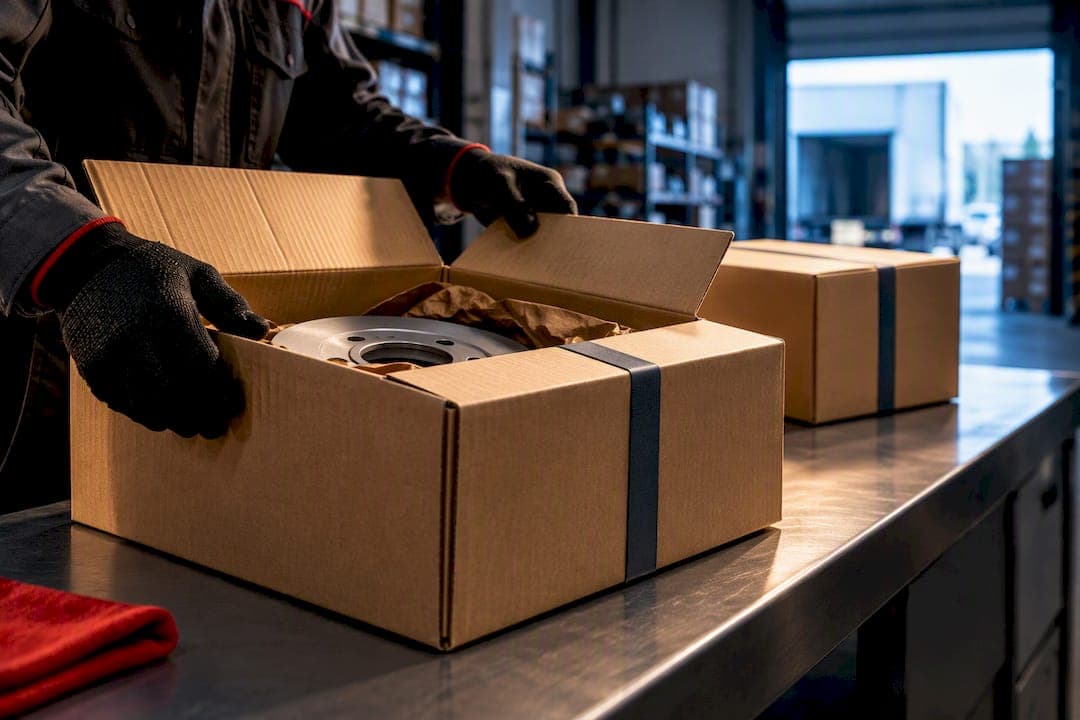
A full pad-and-rotor brake kit in Canada typically runs $150 to $600 per axle for parts, with premium performance kits reaching $1,500 or more. Professional installation adds another $150 to $500 per axle in labour and shop fees.
TL;DR:
- Canadian-made brake kits generally cost between $135 and $1,500 CAD for parts, with higher-tier kits offering better rust resistance, heat management, and weight reduction.
- Installation costs vary from $150 to $500 per axle for standard jobs, rising to $500 to $1,000 for performance kits at specialty shops, with professional bleeding and testing included.
- US-shipped brake kits often incur additional costs for duty, GST, and brokerage fees, which can add up to 25% or more of the sticker price, making domestically sourced parts more economical.
- Pads-only replacements are the cheapest option, costing as little as $30 to $90 CAD per axle, but replacing both pads and rotors usually offers better long-term reliability.
- Buyers should prioritize exact fitment, coated rotors for winter durability, and keep all installation invoices for warranty and safety inspection purposes.
Table of Contents
- How much do brake kits cost in Canada?
- What does a brake kit include?
- How much does brake installation cost in Canada?
- Domestic stock vs US-shipped kits: the landed-cost trap
- Pads-only, full kit, or upgrade: a quick decision framework
- What Canadian drivers should actually prioritise when buying brakes
- Where to buy DBC brake kits in Canada
- Sources
- FAQ
How much do brake kits cost in Canada?
Pads-only replacement is the cheapest option. Entry-level semi-metallic pads for a small car or sedan start around $30 to $90 CAD per axle at Canadian-stocked retailers, with ceramic compounds pushing toward the top of that band.
A full pad-and-rotor job costs more but resets wear on both components at once. Vendors selling into Canada list complete kits from roughly $135 up to $1,500 or more, depending on the vehicle and kit tier. A compact car sits at the low end. A mid-size sedan or crossover lands in the middle. A light truck or SUV, with bigger rotors and higher pad volume, sits toward the top.
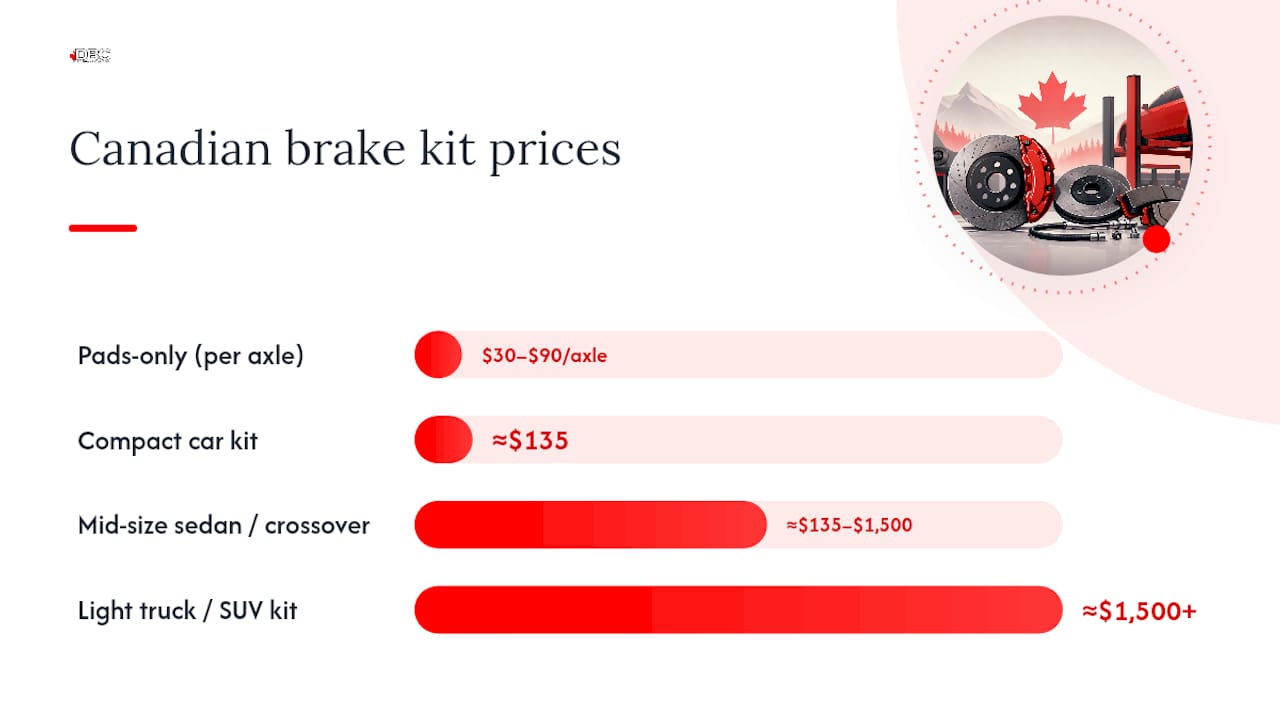
Statistic Callout: Complete kits sold to Canadian buyers span from about $135 to over $1,500 CAD, a spread that reflects rotor design and pad chemistry as much as vehicle size.
What moves the price inside that range:
- Coated rotors resist rust longer than bare cast iron, which matters through a Canadian winter.
- Slotted or cross-drilled rotors improve heat dissipation and pad bite, common on performance kits.
- Two-piece rotors (aluminum hat, iron ring) cost more but shed weight and reduce warping.
- Ceramic pads cost more than semi-metallic but produce less dust and run quieter.
What does a brake kit include?
A basic kit covers the rotors, pads, and the small hardware that keeps them working: pad wear sensors, anti-rattle clips, and shims. That's the entry-level tier, built to match factory specs.
OEM-style kits go a step further, matching the vehicle's original rotor design and pad friction rating almost exactly. Performance kits add engineered rotors, sometimes upgraded calipers, and pad compounds built for higher heat.
- Rotors (front, rear, or both axles)
- Pads matched to the rotor's friction profile
- Mounting hardware and wear sensors where applicable
- Optional calipers on performance-tier kits
The part that matters most on paper is the one buyers skip reading: fitment guarantee and warranty terms. A kit that fits your specific trim and model year without modification saves a return shipment and a second labour bill. Check what a brake kit includes before comparing prices side by side, because a $200 kit missing hardware isn't actually cheaper than a $250 kit that has everything.
How much does brake installation cost in Canada?
Labour is where quotes diverge the most. A straightforward pad swap at an independent shop runs on the lower end. A full pad-and-rotor axle job, done properly, typically costs $150 to $500 in labour per axle at most Canadian shops. Performance-oriented kits installed at a specialty shop can run $500 to $1,000 CAD once alignment checks and break-in procedures are included.
A qualified shop does more than swap parts:
- Bleeds the brake lines to remove air and restore pedal feel.
- Torques caliper bolts and wheel lugs to spec.
- Road-tests the vehicle to confirm pedal response and check for noise.
- Issues a paid invoice, which most provincial inspection stations and some warranty programs will ask to see.
DIY pad-and-rotor swaps take an experienced home mechanic roughly two to four hours per axle. Brake work directly affects stopping ability, so a mistake here isn't like a loose trim panel. If you're not confident bleeding lines or torquing to spec, pay for the install.
Pro Tip: Keep the shop invoice even if you never plan to sell the vehicle. Some brake warranties and most provincial safety inspections want proof of professional installation, not just a receipt for parts.
Domestic stock vs US-shipped kits: the landed-cost trap
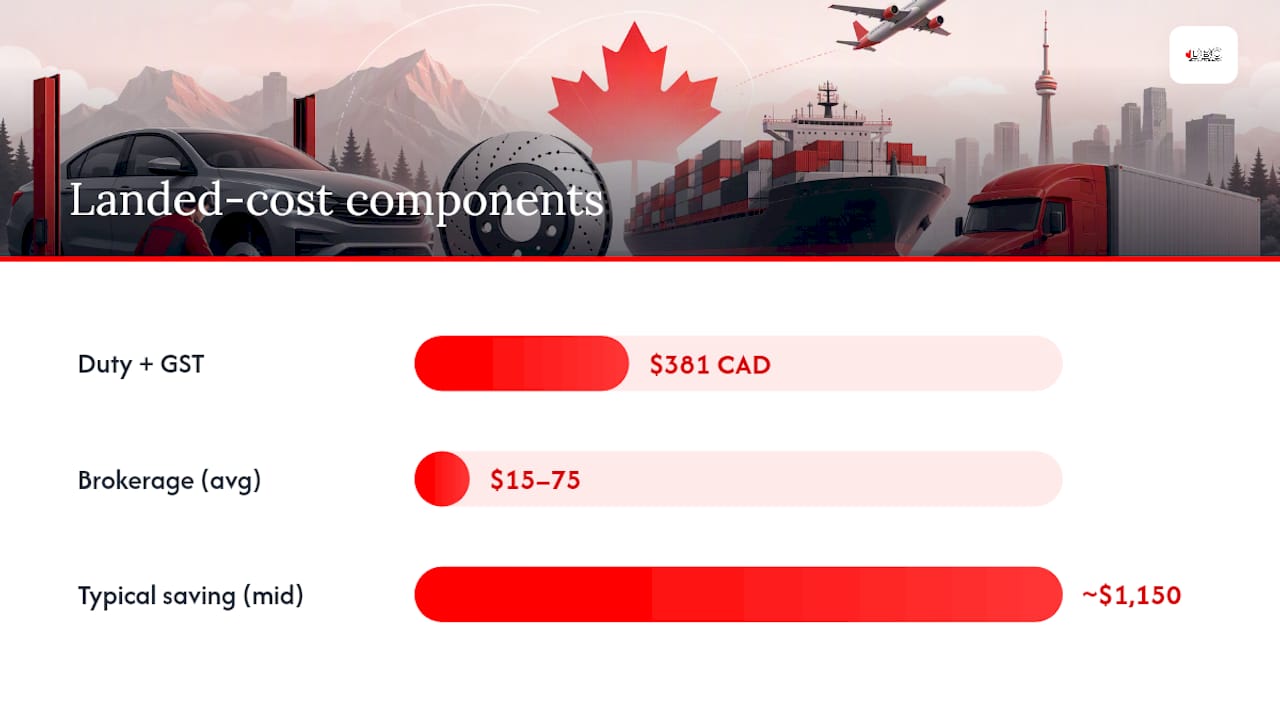
The sticker price on a US website is rarely the price you pay at your door. Add a carrier brokerage fee, and the gap widens fast.
A worked example makes it concrete. RIDEZ calculated that a $2,500 USD kit picks up roughly $381 CAD in duty and GST, before any brokerage charge lands on top. Carrier brokerage fees on cross-border parcels typically run $15 to $75 per shipment, and cross-border guides put the combined uplift at 15% to 25% of the advertised price once everything is tallied.
| Cost component | US-shipped kit | Canadian-stocked kit |
|---|---|---|
| Sticker price | Advertised US price | Advertised CAD price |
| Duty | Duty added on import | Not applicable |
| GST | GST added on import | GST on sale price |
| Brokerage fee | $15 to $75 | Not applicable |
Statistic Callout: Canadian-distributed kits can save $800 to $1,500 CAD versus a US-sourced kit once duty, GST, brokerage, and installed cost are all counted.
Before you check out on any site:
- Confirm the seller's warehouse is in Canada, not just its billing address.
- Ask directly whether brokerage is included or billed separately on delivery.
- Prefer domestic stock whenever the price difference is close, since the hidden fees rarely show up until the parcel arrives.
Pads-only, full kit, or upgrade: a quick decision framework
Start by inspecting the rotors, not just the pads. If rotor thickness is still comfortably above the minimum stamped on the rotor edge and there's no visible scoring, lip, or heat discolouration, pads-only replacement is a legitimate and cheaper choice. If the rotors are thin, warped, or already resurfaced once, replacing both pays off in stopping consistency and avoids a second labour bill soon after.
When a quote lands in your inbox, read it in four parts:
- Parts cost, broken out by rotor and pad line item, not bundled into one number.
- Labour, quoted as a flat rate or an hourly estimate with an hour count.
- Taxes, GST or HST depending on your province, applied to the full invoice.
- Unknown fees, like shop supplies or environmental charges some shops add at the bottom.
That contingency isn't padding your quote generously, it's covering the brokerage fee or shop supply charge that rarely appears until the final invoice.
Pro Tip: Get two quotes: one for pads-only, one for pads-and-rotors. The price gap is often smaller than expected once labour is added, since the mechanic is already under the car.
What Canadian drivers should actually prioritise when buying brakes
Fitment matters more than price on the spec sheet. A kit that's a near match but not exact can mean shims that don't sit right or a rotor hub that binds slightly, problems you won't notice until the pads wear unevenly. Winter durability matters just as much here as anywhere in the country; coated rotors resist the corrosion that road salt causes on exposed cast iron sitting in a driveway overnight.
Some suppliers build their pitch around engineered cross-drilled rotors meant to resist warping, plus pricing that states the final number up front rather than adding fees at checkout. Whichever supplier you choose, keep every installation invoice. Warranty claims and provincial inspections both tend to ask for it, and a missing receipt is a bad reason to lose a valid claim.
— Sam
Where to buy DBC brake kits in Canada
DBC Brakes ships from Canadian stock, which means the price you see at checkout is closer to what you'll actually pay, without a customs bill arriving weeks later. That's the practical edge over ordering a US-listed kit: no duty calculation, no brokerage surprise, and support from people who know the parts rather than a call centre reading a script.
The lineup covers three tiers built for different needs: Performance XDB for daily drivers who want better heat management, Premium Black Kote for rust resistance through Canadian winters, and Performance SS for drivers pushing harder braking demands. Every kit ships with inclusive pricing, meaning the number on the product page is the number you pay, and orders over $100 qualify for free shipping within Canada. Full shipping details, including expedited options, are posted before you commit to checkout.
Browse the brake kit collection by vehicle, or check rotors and pads separately if you're only replacing one component. If you're not sure which kit fits your make and model, contact DBC's support team before ordering. A five-minute fitment check now saves a return shipment later.
Sources
Cost figures and landed-cost math throughout this article draw from RIDEZ's analysis of aftermarket brake kit costs in Canada, AMZPrep's breakdown of cross-border customs charges, and retail pricing published by Standard Auto Part Canada. Each addresses a different piece: distribution economics, duty and brokerage mechanics, and real-world shelf pricing.
- OEM Big Brake Kit vs Aftermarket: 5 Hidden Cost Traps in Canada — RIDEZ
- Cross-border hidden customs charges — AMZPrep
- Brake Kits - Brake Discs, Pads & Calipers - Vinnistore
FAQ
How much should a brake kit cost in Canada?
A complete pad-and-rotor kit typically costs $135 to $1,500 or more CAD for parts alone, depending on vehicle size and kit tier. Add labour, taxes, and any import fees for US-shipped kits, and the true cost runs higher than the sticker price.
How much does it cost to replace brakes in Canada?
Pads-only replacement starts around $30 to $90 CAD per axle for parts, while a full pad-and-rotor job runs $150 to $600 or more per axle in parts. Professional installation typically adds $150 to $500 per axle, with performance kits at specialty shops reaching $500 to $1,000 CAD.
What does a normal brake job cost?
A standard pad-and-rotor job at an independent Canadian shop usually lands between $300 and $900 total per axle once parts, labour, and taxes are combined. The final number depends heavily on whether the shop sources a domestic kit or imports one, since US-sourced parts can add 11% to 25% in duty, GST, and brokerage.
What does a brake kit include?
A standard kit includes rotors, matched pads, and the mounting hardware and wear sensors needed for installation. Performance-tier kits like those from DBC Brakes add engineered rotor coatings and upgraded pad compounds built for higher heat tolerance and winter durability.