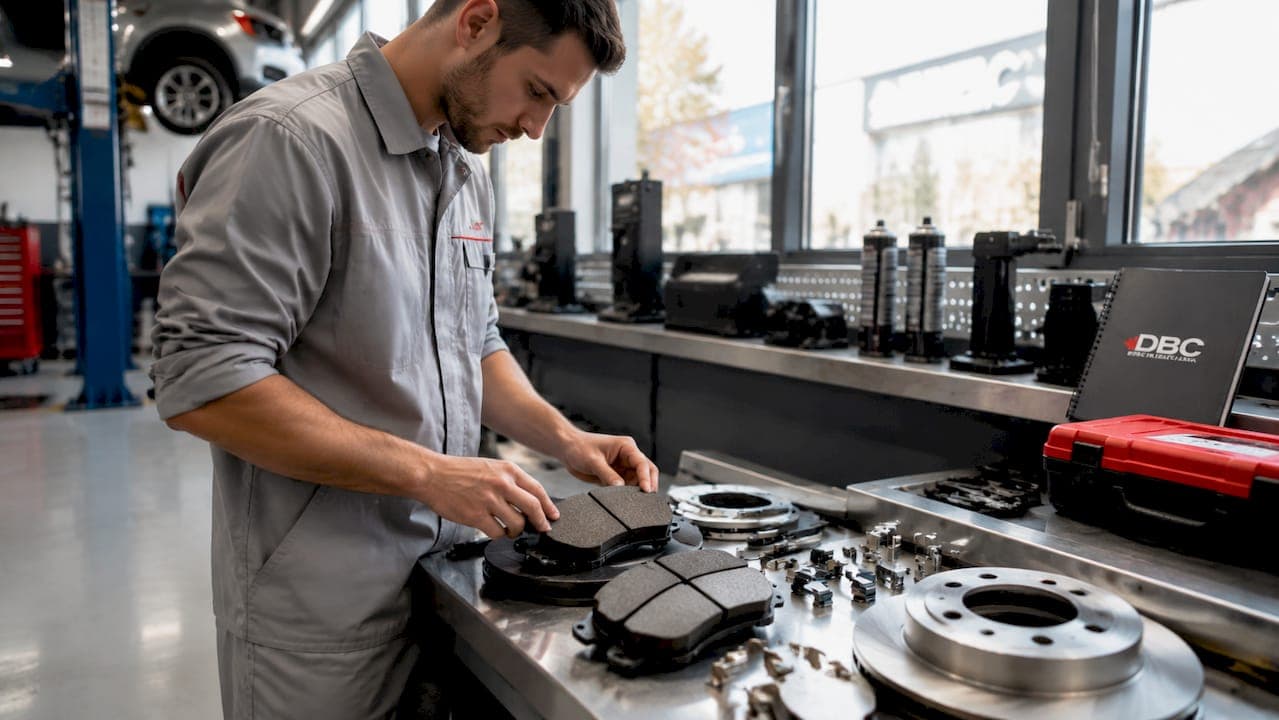
A brake kit is a pre-assembled package containing the matched components needed to replace or restore a vehicle's braking system. Standard brake kits typically include brake rotors, brake pads, and essential hardware such as clips, shims, and anti-rattle springs. Understanding what does a brake kit include helps vehicle owners and DIY mechanics order the right parts, avoid compatibility problems, and get the job done correctly the first time.
What does a brake kit include as standard components?
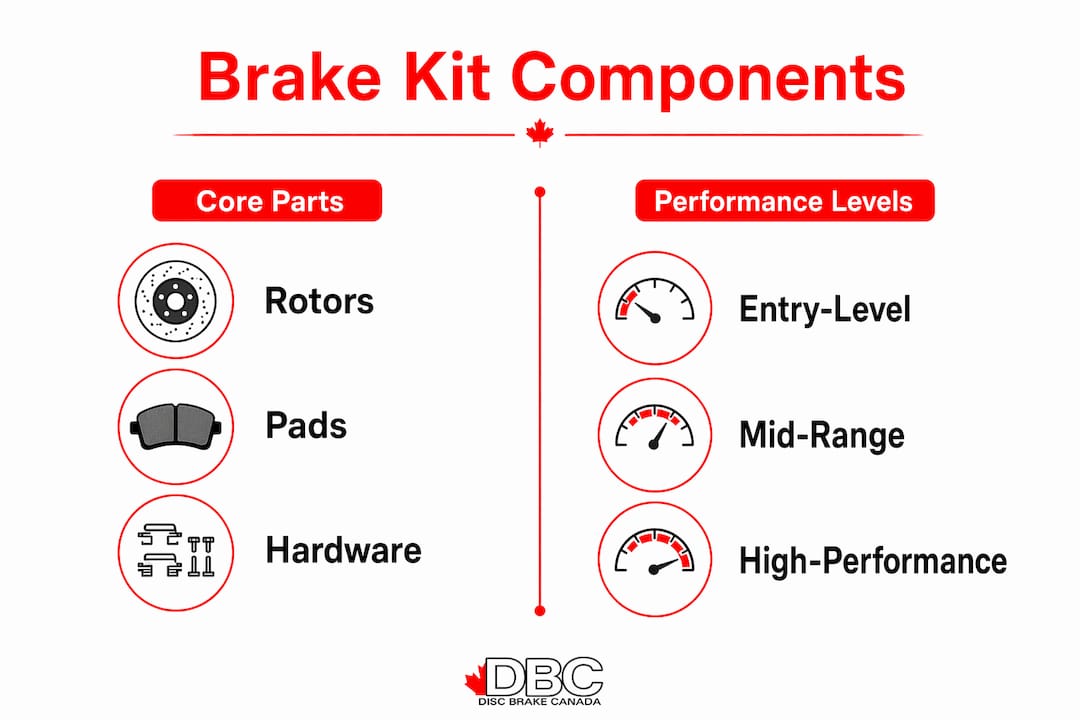
A standard brake kit covers the three core elements of a disc brake system: rotors, pads, and hardware. Each element plays a distinct role, and the quality of the match between them determines how well the system performs over time.
Brake rotors
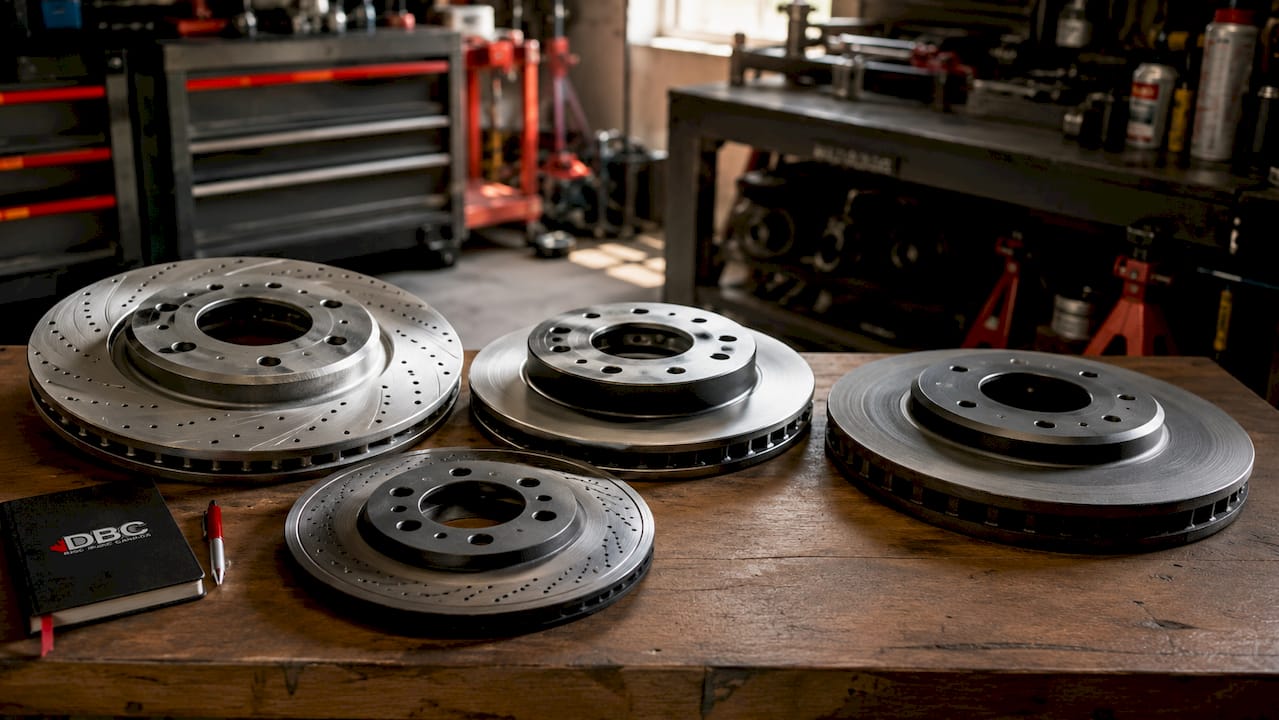
Brake rotors are the metal discs that the brake pads clamp against to slow the vehicle. They come in four main configurations:
- Solid rotors: Found on lighter vehicles and rear axles. Simple and cost-effective for everyday driving.
- Vented rotors: Feature internal air channels to dissipate heat. Standard on front axles of most passenger vehicles.
- Cross-drilled rotors: Holes drilled through the rotor face allow gas and heat to escape quickly. DBC Brakes engineers their kits around cross-drilled rotors specifically to prevent warping and extend rotor life.
- Slotted rotors: Channels cut across the face sweep debris and gases away from the pad surface, maintaining consistent contact.
Rotor diameter and thickness are vehicle-specific. Ordering the wrong size is one of the most common and avoidable mistakes.
Brake pads
Brake pads are the friction material that contacts the rotor. Three main pad types appear in kits:
- Organic pads: Made from fibres and resins. Quiet and gentle on rotors, but wear faster under heavy use.
- Semi-metallic pads: Contain metal fibres for better heat transfer and durability. A solid choice for most Canadian drivers.
- Ceramic pads: Produce less dust and noise than semi-metallic pads. Carbon fibre ceramic pads appear in advanced performance kits for drivers who want cleaner wheels and consistent bite.
Pad material affects rotor wear, stopping distance, and noise level. Matching the pad to the rotor material and the vehicle's typical load is not optional.
Hardware: the component most buyers overlook
Hardware such as clips, shims, anti-rattle springs, and wear sensors often dictates installation success more than the rotors or pads themselves. That finding matters because many mechanics reuse old hardware to save time, which causes brake noise, uneven pad wear, and vibration even when premium parts are installed. A quality kit includes fresh hardware for every position.
| Rotor type | Best application | Pad material match |
|---|---|---|
| Solid | Light vehicles, rear axles | Organic or semi-metallic |
| Vented | Front axles, daily driving | Semi-metallic or ceramic |
| Cross-drilled | Performance, Canadian winters | Ceramic or semi-metallic |
| Slotted | Towing, track days | Semi-metallic |
Pro Tip: Always replace hardware when you replace rotors and pads. Reusing worn clips and shims is the leading cause of brake squeal after a fresh installation.
How do brake kit contents vary by performance level?
Most brake kits include pads and rotors, but the contents expand significantly as performance requirements increase. Knowing which level fits your vehicle and driving style prevents overspending or under-specifying.
Entry-level replacement kits cover a single axle with vented or solid rotors and organic or semi-metallic pads. They suit daily commuters with no towing or track use.
Mid-range performance kits add coated rotors, ceramic pads, and a full hardware set. DBC Brakes positions most of its catalogue here, targeting daily drivers and enthusiasts who want better stopping power without a full system overhaul.
Big brake kits represent a different category entirely. They include:
- Multi-piston calipers for greater clamping force
- Larger rotor diameters requiring new mounting brackets
- Stainless steel brake lines to reduce flex under pressure
- High-temperature hardware and caliper brackets
Performance kits with multi-piston calipers and drilled or slotted rotors offer superior heat dissipation and modulation, but they may be unnecessary for daily commuters. Matching the kit's performance level to actual driving conditions avoids unnecessary expense. A truck used for weekend towing needs a different kit than the same truck used only for city driving. Guides on brake components for towing break down those differences in detail.
Why do matched brake kit components matter for safety?
System-engineered kits optimise friction levels and heat management better than mismatched parts from different brands. That is the core argument for buying a kit rather than sourcing rotors and pads separately. When a manufacturer designs a rotor and pad together, they calibrate the friction coefficient, bedding-in process, and thermal range as a unit.
Mixing brands breaks that calibration. A ceramic pad designed for one rotor metallurgy may glaze a rotor from a different manufacturer within a few thousand kilometres. The result is longer stopping distances and uneven wear, both of which are safety issues.
Common installation pitfalls that kits help prevent:
- Reusing worn hardware that causes vibration and noise
- Installing pads not rated for the rotor's heat range
- Using the wrong caliper bracket for the rotor diameter
- Skipping the bedding-in process specified for the pad compound
Verifying vehicle-specific trim, rotor diameter, bolt pattern, and caliper mounting points is critical before ordering. Manufacturers often change specs within the same model year, so confirming by year, make, model, and trim is the only reliable method.
Pro Tip: Pull up your vehicle's build sheet or check the door jamb sticker before ordering. Trim level and brake package can change rotor diameter by 15–30 mm on the same model year.
How does brake kit bundling save money and time?
Purchasing brake parts as a kit avoids mismatched components, provides cost savings, and lowers the risk of installation errors. Bundled pricing is consistently lower than buying rotors, pads, and hardware separately from different suppliers. That saving compounds when you factor in the time spent sourcing compatible parts individually.
Standard brake kit replacement costs range from $300 to $600. DIY installation may save $150 to $300 in labour per axle compared to professional service. That figure represents real money, and a well-specified kit makes DIY installation achievable for most mechanically inclined vehicle owners.
The bundling advantage goes beyond price:
- Compatibility is guaranteed. Every part in the kit is designed to work together.
- Hardware is included. No separate trip to the parts store for clips and shims.
- Installation is faster. One box, one vehicle, one job.
- Returns are simpler. If a part is wrong, the whole kit goes back rather than tracking down individual suppliers.
Brake system safety and longevity benefit most from system-engineered kits rather than mixing aftermarket parts from different brands. That principle holds whether you are doing the work yourself or paying a shop.
What to look for when selecting a brake kit
Choosing the right kit requires confirming several details before adding anything to a cart. Follow this sequence:
- Confirm vehicle fitment. Enter year, make, model, trim level, and brake package. Do not skip trim level. A base model and a sport trim on the same vehicle often use different rotor diameters.
- Choose rotor style for your use case. Cross-drilled rotors suit performance driving and wet Canadian conditions. Vented solid rotors are sufficient for light daily use.
- Select pad material for your load. Ceramic pads suit daily drivers who want clean wheels and quiet operation. Semi-metallic pads handle higher heat for towing or spirited driving.
- Check hardware inclusion. Confirm the kit includes clips, shims, and anti-rattle springs. If wear sensors are required for your vehicle, verify they are in the box.
- Plan for installation consumables. Proper installation requires high-temperature brake lubricant on contact points and a clean hub surface. Most kits do not include lubricant, so add it to the order separately.
- Review the return and warranty policy. A Canadian supplier with clear warranty terms protects you if a part is defective or the fitment is incorrect.
Guides on brake kit features for reliability cover the technical details of system compatibility in more depth for those who want to go further.
Key takeaways
A complete brake kit includes matched rotors, pads, and hardware engineered to work together, and buying them as a bundle reduces cost, eliminates compatibility risk, and simplifies installation.
| Point | Details |
|---|---|
| Core kit contents | Every standard kit includes rotors, brake pads, clips, shims, and anti-rattle springs. |
| Hardware matters | Reusing old clips and shims causes noise and uneven wear even with new premium parts. |
| Kit level matching | Choose entry-level, mid-range, or big brake kits based on actual driving demands, not assumptions. |
| Bundling saves money | Kits cost less than sourcing parts separately and eliminate compatibility guesswork. |
| Fitment verification | Always confirm year, make, model, trim, and brake package before ordering to avoid returns. |
My honest take on brake kit buying mistakes
Most brake kit buying mistakes come down to one thing: underestimating the hardware. Vehicle owners spend time comparing rotor styles and pad compounds, then reuse the original clips because they look fine. They do not look fine. Brake hardware fatigues with heat cycling, and worn clips are the number one cause of brake noise after a fresh installation. I have seen this pattern repeat itself enough times that I now consider hardware the first thing to check on any kit spec sheet, not the last.
The second mistake is buying a kit that is over-specified for the vehicle's actual use. Brake kits are essential maintenance components for all vehicle types, not only for performance upgrades. A daily driver does not need multi-piston calipers and stainless steel lines. A well-matched mid-range kit with cross-drilled rotors and ceramic pads delivers better real-world results for most Canadian drivers than an over-engineered big brake setup that never reaches its operating temperature in city traffic.
The third mistake is skipping the bedding-in process. New pads and rotors need a series of controlled stops to transfer an even layer of friction material onto the rotor face. Skipping this step causes uneven deposits, vibration, and premature wear. It takes ten minutes and costs nothing.
— Sam
DBC Brakes brake kits for Canadian vehicles
DBC Brakes offers a full range of brake kits matched to Canadian vehicle types and driving conditions, from daily commuters to trucks used for heavy towing.
Every DBC Brakes kit is built around engineered cross-drilled rotors designed to resist warping and handle the thermal demands of Canadian winters. Pricing is transparent with no hidden fees, and orders over $100 ship free. If you need help confirming fitment or choosing between rotor styles, real support is available without automated responses. Browse the full selection at CrossDrilledRotors.ca to find the right kit for your vehicle's year, make, model, and trim. For Dodge and Pontiac owners, dedicated vehicle pages make fitment confirmation straightforward.
FAQ
What parts are in a standard brake kit?
A standard brake kit includes brake rotors, brake pads, and hardware such as clips, shims, and anti-rattle springs. Some kits also include wear sensors depending on the vehicle.
Do brake kits include calipers?
Most standard and mid-range kits do not include calipers. Big brake kits and complete system kits include multi-piston calipers, mounting brackets, and stainless steel brake lines.
Is it cheaper to buy a brake kit or individual parts?
Buying a brake kit is consistently less expensive than sourcing rotors, pads, and hardware separately. Bundled pricing and guaranteed compatibility also reduce the risk of returns and installation errors.
How do I know which brake kit fits my vehicle?
Confirm fitment by entering your vehicle's year, make, model, trim level, and brake package. Manufacturers often change rotor diameter and caliper specs within the same model year, so trim level is a required field.
Does a brake kit include everything needed for installation?
A brake kit includes the main components, but installation also requires high-temperature brake lubricant and hub surface cleaning. These consumables are rarely included in the kit and should be ordered separately.