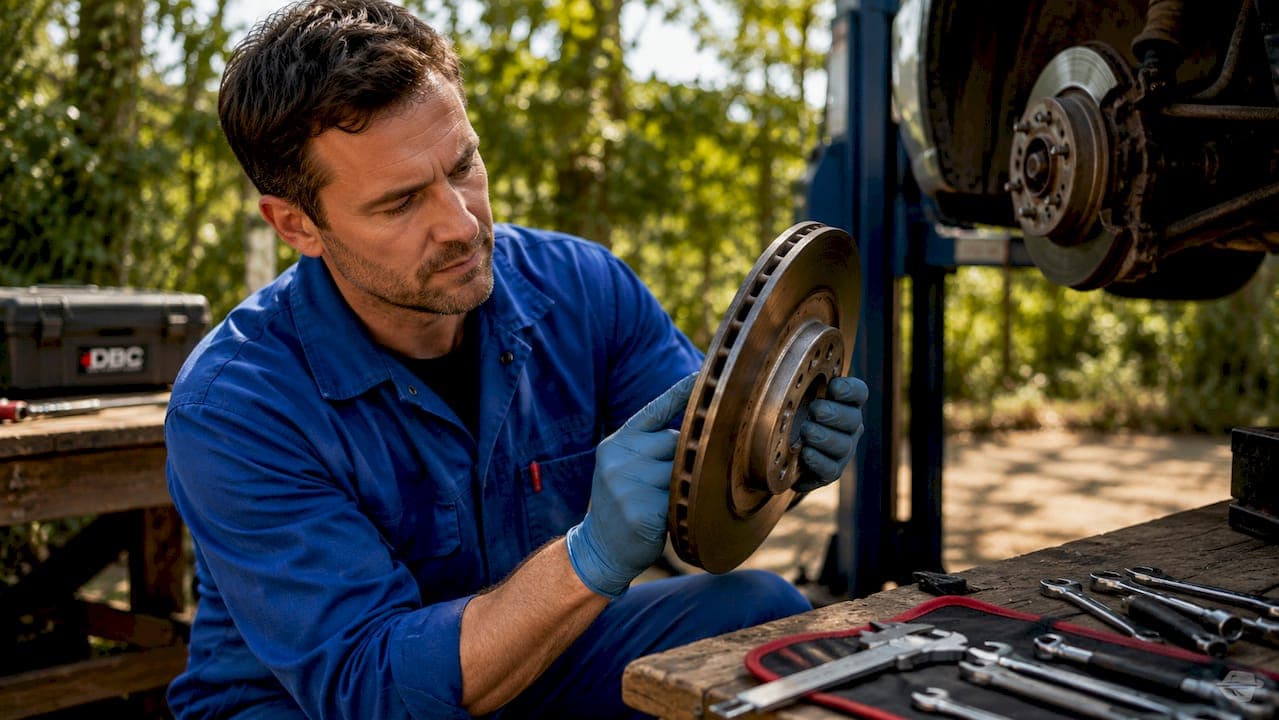
Reliable brake kits are defined by features including OEM-level engineering, rotor thermal durability, friction material quality, integrated caliper-pad-rotor design, and hydraulic system integrity. These are the brake kit features for reliability that separate a kit that performs consistently over years from one that fades, warps, or fails under stress. Whether you drive a daily commuter, a tow vehicle, or a modified truck, the same core principles apply. Getting these features right means fewer repairs, safer stops, and a system that holds up when it matters most.
1. What rotor features ensure reliable braking under heat stress?
Rotor design is the foundation of thermal reliability. A rotor that cannot shed heat fast enough will warp, crack, or fade, and no pad compound can compensate for that failure.
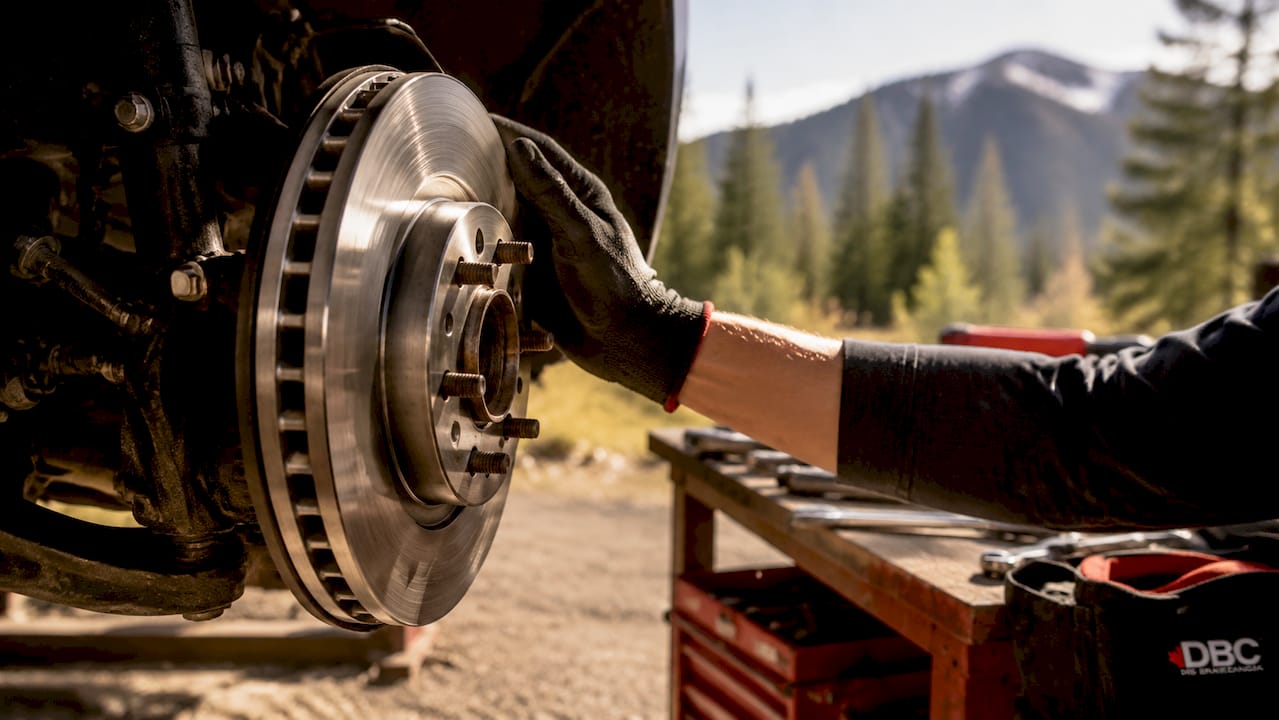
Ventilation geometry matters most. Cross-drilled and vented rotors use uniform hole patterns to channel heat away from the friction surface. Uniform hole and slot geometry in drilled and vented rotors ensures consistent cooling, preventing localized heat buildup that causes fade or thermal cracking. Uneven cooling is not just a performance issue. It creates stress fractures that shorten rotor life significantly.
Coatings extend service life. UV and corrosion-resistant coatings protect the rotor surface between braking events. This matters most in Canadian winters, where road salt accelerates surface rust. A coated rotor maintains a cleaner friction surface, which supports consistent pad contact and more predictable stopping distances.
- Cross-drilled holes improve gas and heat evacuation under repeated braking
- Vented internal fins increase surface area for passive cooling between stops
- Corrosion-resistant coatings reduce surface rust that degrades pad contact
- Carbon iron alloy construction resists thermal cracking better than standard grey iron
Pro Tip: Match rotor ventilation design to your driving conditions. City driving with frequent light stops benefits from standard vented rotors. Highway driving, towing, or track use demands cross-drilled designs with higher thermal capacity.
OEM upgrades improve pad friction and rotor venting modestly without changing driving characteristics. That consistency is exactly what makes OEM-standard rotor engineering a reliable baseline for most drivers.
2. Which brake pad materials provide the best balance of durability and performance?
Pad compound is the single most debated brake kit feature, and for good reason. The wrong compound for your duty cycle causes premature rotor wear, excessive dust, or brake fade under load.
Organic pads suit light daily driving. They are quiet and gentle on rotors but wear faster under heat. Ceramic pads produce minimal dust and handle moderate heat well, making them a strong choice for daily drivers who want low maintenance. Aramid and steel-fibre reinforced compounds are built for heavier demands. Pads using aramid and steel fibres deliver strong braking for heavy loads while being kinder to rotors and producing minimal dust. That combination of durability and rotor friendliness directly reduces long-term maintenance costs.
Brake upgrades should focus as much on friction materials and noise management as on raw stopping power. Long-term reliability depends on a compound that manages heat without transferring it aggressively to the rotor.
| Compound Type | Best Use | Rotor Impact | Dust Level |
|---|---|---|---|
| Organic | Light daily driving | Low wear | Moderate |
| Ceramic | Daily and moderate performance | Very low wear | Minimal |
| Aramid reinforced | Towing and heavy loads | Low wear | Minimal |
| Steel-fibre reinforced | Heavy-duty and lifted trucks | Moderate wear | Low |
- Ceramic pads suit drivers who prioritise clean wheels and quiet operation
- Aramid compounds handle sustained heat from towing without glazing
- Steel-fibre pads provide bite for heavier vehicles needing extra clamping force
Pro Tip: Choose your pad compound based on your vehicle's duty cycle, not its power output. A daily driver that tows a trailer on weekends needs an aramid or steel-fibre compound, not a standard ceramic pad.
3. How does integrated brake system design enhance reliability?
A brake kit is not a collection of individual parts. It is a system, and reliability depends on how well those parts work together.
Thermal capacity and rejection must match vehicle duty cycle. Components chosen without system-level balance risk premature failure or fade. This is why complete kit upgrades outperform mixing individual parts from different sources.
Matching rotor size, caliper type, and pad compound is the core principle. A larger rotor increases thermal mass, which absorbs more heat before temperatures reach dangerous levels. A matched caliper applies even clamping force across the full pad surface. When one component is mismatched, the others compensate unevenly, which accelerates wear and reduces consistency.
Multi-piston calipers improve clamping force and pad contact for consistency on heavy or performance vehicles. A single-piston sliding caliper applies force from one side, which can cause uneven pad wear over time. A multi-piston fixed caliper applies force from both sides simultaneously, keeping contact even across the full pad face.
Integrated brake kits designed as matched systems with multi-piston calipers and larger rotors create more even pressure and improved heat dissipation for reliable stopping under load.
The role of brake caliper design in braking consistency is often underestimated. Caliper rigidity, piston count, and mounting geometry all affect how reliably a kit performs across repeated stops.
4. What role does brake fluid and hydraulic system integrity play?
Brake fluid is the part of the system most drivers ignore until something goes wrong. Degraded fluid is one of the most common causes of reduced braking reliability.
Brake fluid contamination and hydraulic system air leaks degrade braking reliability by reducing boiling point and pressure, increasing stopping distances, and causing spongy pedal feel. Moisture enters brake fluid over time through the hydraulic system. As water content rises, the fluid's boiling point drops. Under hard braking, the fluid can vapourise, creating air pockets that compress instead of transmitting force.
Regular fluid replacement and leak checks sustain reliability and braking consistency. Most manufacturers recommend a fluid flush every two years, regardless of mileage.
- Check fluid colour regularly. Fresh DOT 3 or DOT 4 fluid is clear to light yellow. Dark brown fluid indicates contamination.
- Inspect brake lines and caliper seals for seeping fluid, which introduces air into the system
- Bleed the system after any component replacement to remove trapped air
- Use the correct fluid specification for your vehicle. Mixing DOT grades can lower the boiling point
Pro Tip: A spongy brake pedal that firms up after pumping is almost always an air contamination issue. Bleed the system before replacing any hardware. This single step resolves the majority of soft-pedal complaints.
Clamping force and heat management under repeated braking both depend on clean, properly pressurised hydraulic fluid. No rotor or pad upgrade compensates for a compromised hydraulic system.
5. Which features matter most for heavy vehicles and modified suspensions?
Heavy vehicles and modified suspensions place demands on brake kits that standard OEM components are not designed to handle. Choosing the right brake kit features for these applications requires understanding where the extra stress comes from.
Increased vehicle weight raises the kinetic energy a brake system must absorb on every stop. A stock brake kit sized for a 2,000 kg vehicle will overheat and fade on a 3,500 kg tow rig. Larger rotors with greater thermal mass are the first requirement. Matched pad compounds rated for sustained heat come second.
Lifted or modified suspensions change brake geometry. A suspension lift alters the angle of the brake caliper relative to the rotor, which can affect pad contact uniformity. Brake kit options for modified suspension vehicles must account for this geometry change. Kits with adjustable or direct-mount caliper brackets maintain correct alignment after a lift.
For drivers who need brake components for towing performance, the priority is thermal capacity and pad compound. Towing generates sustained heat loads rather than the short, sharp heat spikes of performance driving. Aramid and steel-fibre compounds handle sustained heat better than ceramic pads in these conditions.
- Upsize rotors by at least one size class when adding significant payload or towing capacity
- Confirm caliper bracket compatibility before purchasing a kit for a lifted vehicle
- High-traction tyres increase braking grip, which transfers more force to the caliper and rotor
- Avoid mixing heavy-duty pads with standard rotors. The increased friction can crack an undersized rotor
Pro Tip: If your vehicle has been lifted more than 50 mm, verify that the brake kit supplier lists your specific lift height as a compatible application. Generic fitment guides do not always account for geometry changes at larger lift increments.
Reliability differences between OEM and aftermarket kits hinge on fitment and compatibility with suspension and electronics. Careful selection avoids trade-offs that compromise safety.
6. Why quality brakes save on repairs over time
The benefits of quality brake kits extend well beyond stopping distance. The financial case for investing in durable components is straightforward.
Low-quality rotors warp under repeated heat cycles. Each warped rotor requires replacement, along with the labour to remove and reinstall the caliper and pad. A quality rotor with proper ventilation and corrosion-resistant coating lasts significantly longer. The same logic applies to pads. A compound that is gentle on rotors reduces rotor wear, which means both components last longer before replacement is needed.
Compounds that reduce rotor wear and dust support reliability by extending overall system life and reducing maintenance. That is the clearest expression of why quality brakes save on repairs. You pay more once and replace less often.
Proper brake kit installation also affects long-term costs. A correctly installed kit beds in properly, which seats the pad compound evenly across the rotor surface. Improper bedding causes uneven deposits that create vibration, noise, and accelerated wear.
Key takeaways
Reliable brake kits require matched rotor design, pad compound, caliper type, and hydraulic system integrity to deliver consistent stopping power across all driving conditions.
| Point | Details |
|---|---|
| Rotor ventilation is foundational | Cross-drilled and vented rotors prevent heat buildup that causes fade and cracking. |
| Pad compound must match duty cycle | Aramid and steel-fibre pads suit towing and heavy loads; ceramic suits daily driving. |
| System integration prevents failure | Mismatched components cause uneven wear and reduce thermal capacity across the kit. |
| Hydraulic integrity is non-negotiable | Contaminated fluid or air in the system raises stopping distances regardless of hardware quality. |
| Quality components reduce repair costs | Durable rotors and rotor-friendly pads extend system life and lower long-term maintenance spend. |
Sam's take on what actually matters in a brake kit
Most brake kit buying guides focus on stopping distance numbers and peak friction coefficients. Those metrics matter, but they miss the point for the majority of drivers.
What I have found, after looking at how brake systems actually fail in real-world use, is that thermal mismatch is the leading cause of premature failure. A driver upgrades to a high-friction pad compound without upsizing the rotor. The pad generates more heat than the rotor can shed. Within a season, the rotor is warped and the pad is glazed. The driver blames the brand. The real problem was the mismatch.
The second thing most guides underemphasise is hydraulic maintenance. You can spend a significant amount on a premium rotor and pad kit, then run it with two-year-old fluid that has absorbed enough moisture to boil under hard braking. The hardware performs perfectly. The system fails anyway.
My practical advice is this: buy a matched kit from a supplier who specifies the rotor, pad, and caliper as a system. Then maintain the hydraulic side on schedule. That combination delivers more consistent reliability than any single component upgrade. The performance brake value is not in the peak numbers. It is in the consistency over thousands of kilometres.
— Sam
DBC Brakes: reliable brake kits for Canadian drivers
DBC Brakes supplies quality brake kits designed for a range of vehicles, from daily drivers to tow rigs and modified trucks. Each kit is built around engineered cross-drilled rotors that resist warping and handle heat efficiently.
DBC Brakes offers transparent pricing with no hidden fees and free shipping on orders over $100. Knowledgeable support is available without automated responses, so you get direct answers about fitment and compatibility. Whether you drive a Chevrolet or a Ford Custom, DBC Brakes carries kits matched to your specific vehicle. Browse the full catalogue at CrossDrilledRotors.ca to find the right kit for your application.
FAQ
What are the most important brake kit features for reliability?
The most important features are rotor thermal ventilation, matched pad compound, integrated caliper design, and clean hydraulic fluid. These four elements work together to maintain consistent stopping power over time.
How do I know if my brake fluid needs replacing?
Dark brown or cloudy fluid indicates moisture contamination and reduced boiling point. Most manufacturers recommend a full fluid flush every two years to maintain hydraulic system reliability.
Are cross-drilled rotors better for daily driving?
Cross-drilled rotors improve heat and gas evacuation under repeated braking, making them well suited to daily driving, towing, and performance use. Uniform hole geometry is critical. Poorly drilled rotors can crack under thermal stress.
What brake pads work best for towing and heavy loads?
Aramid and steel-fibre reinforced pad compounds handle sustained heat from towing better than standard ceramic pads. They also produce minimal dust and are gentler on rotors, which reduces overall maintenance costs.
Do I need a full brake kit or just new pads and rotors?
A matched kit that specifies rotors, pads, and calipers as a system delivers more reliable results than mixing individual components. Mismatched thermal capacities between parts are a leading cause of premature brake failure.