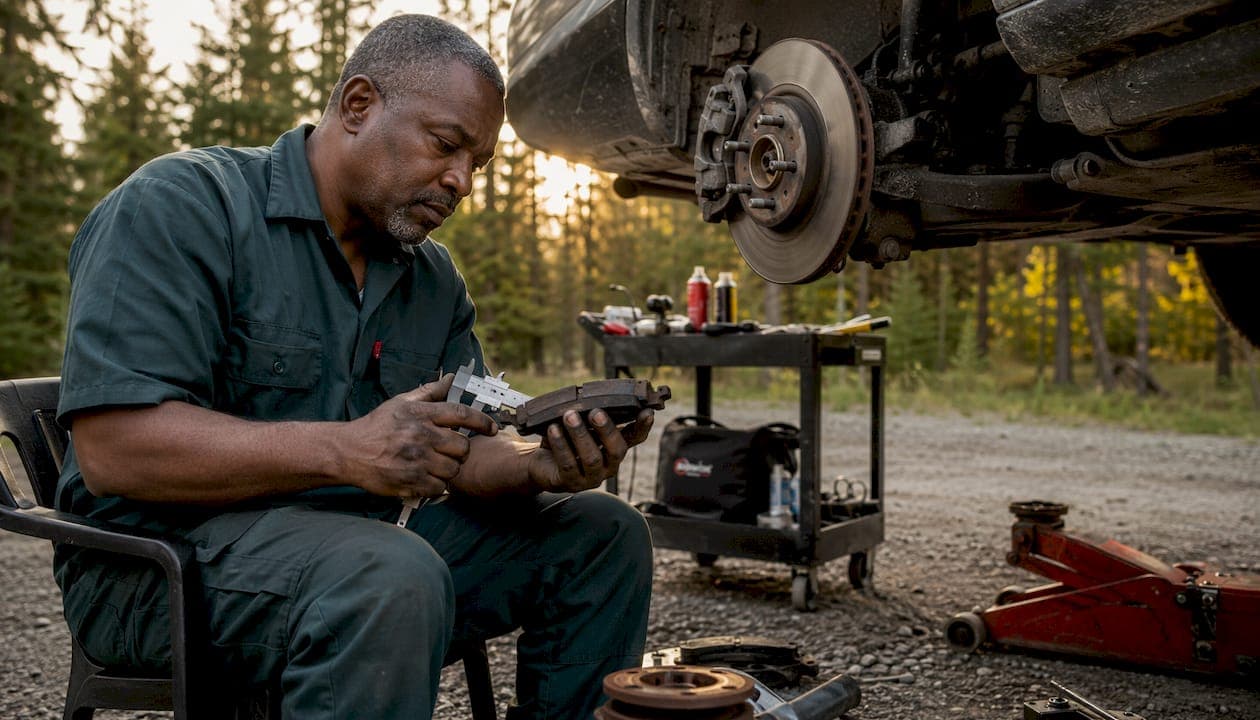
Car brake parts are the components responsible for stopping your vehicle safely. Every time the brake pedal is pressed, a chain of hydraulic force, friction, and heat management brings the vehicle to a controlled stop. In Canada, road salt, ice, and freeze-thaw cycles accelerate wear on these parts faster than in most other climates. Choosing the right components for your vehicle and region is a safety baseline, not an upgrade.
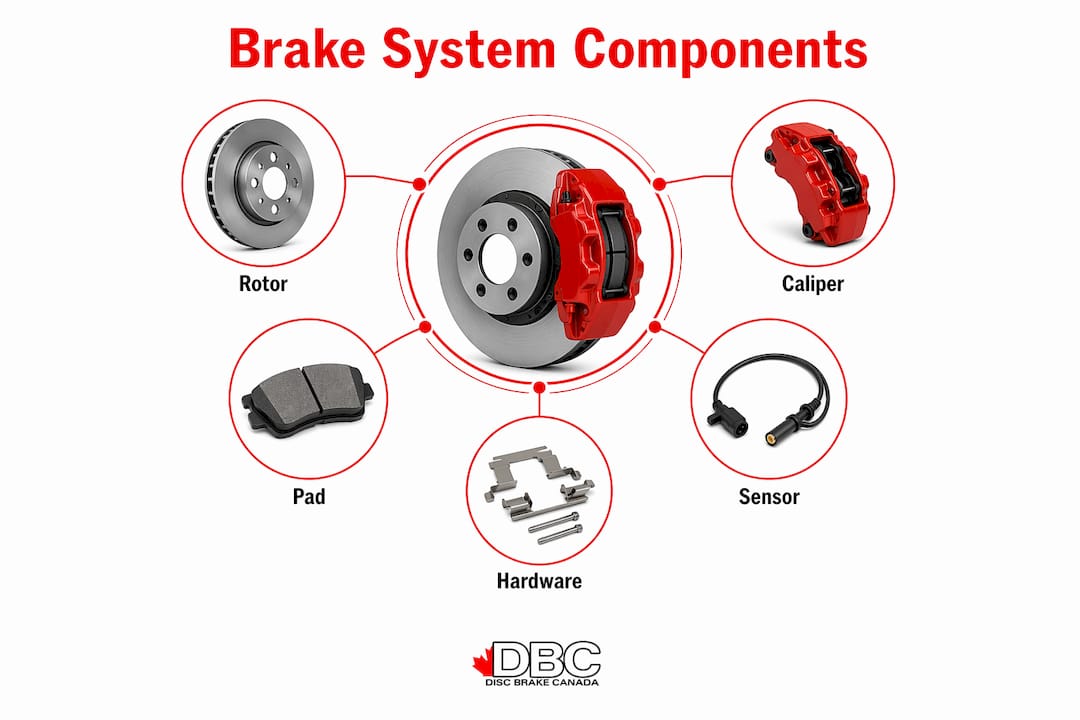
Major brake system components and their roles:
- Brake pads — friction material that clamps against the rotor to slow the wheel
- Rotors (discs) — spinning steel discs that pads grip to generate stopping force
- Calipers — hydraulic clamps that press pads against the rotor
- Master cylinder — converts pedal pressure into hydraulic force through the brake lines
- Brake booster — amplifies pedal force before it reaches the master cylinder
- Wheel speed sensors — feed data to the ABS module to prevent wheel lock-up
- ABS module — electronic control unit that modulates brake pressure during hard stops
- Hardware kits — clips, pins, and shims that keep pads and calipers aligned and quiet
Worn or mismatched parts in any of these positions reduce stopping power and increase risk. Brake failure does not announce itself with much warning.
What are the key components of a car brake system?
Disc brakes are standard on most modern Canadian vehicles. The four core parts of a disc brake assembly are the rotor, caliper, brake pads, and the caliper bracket with hardware. The rotor must match OEM diameter and minimum thickness specifications stamped on its face. Rotors worn below that threshold must be replaced, not resurfaced.
Drum brakes appear on the rear axles of older vehicles and some current economy models. They use brake shoes, a wheel cylinder, and a drum instead of a rotor and caliper. The shoes press outward against the inside of the drum when hydraulic pressure is applied.
Hydraulic and electronic components:
- Brake lines and hoses — carry fluid from the master cylinder to each caliper or wheel cylinder
- Brake fluid — transfers force through the hydraulic system; absorbs moisture over time and must be flushed periodically
- Brake booster — typically vacuum-assisted on gas vehicles, electrically assisted on hybrids and EVs
- ABS module — controls individual wheel brake pressure to maintain steering during hard stops
- Wheel speed sensors — one per wheel; a faulty sensor triggers the ABS warning light and disables the system
Front brakes handle 60–75% of braking force on most vehicles, so front pads wear faster. Many post-2015 crossovers from Honda, Subaru, and Toyota use electronic parking brake systems that shift more load to the rear, causing rear pads to wear out relatively faster. Checking both axles at every inspection prevents surprises.
Common replacement brake parts available in Canada
Brake pad replacements are the most frequent maintenance item. Pads are rated by friction code: FF and GG ratings suit everyday Canadian driving, while HH ratings are reserved for performance or heavy-duty use. Material choice matters as much as friction rating, particularly in Canadian winters.
Pad material comparison for Canadian conditions:
- Ceramic — low dust, quiet operation, effective above approximately -10°C; preferred for urban driving in milder Canadian regions
- Semi-metallic — better cold-weather bite below -20°C, making them the standard choice for Prairie and Quebec winters
- Organic (non-asbestos) — softest and quietest, but wear faster and perform poorly in wet or cold conditions
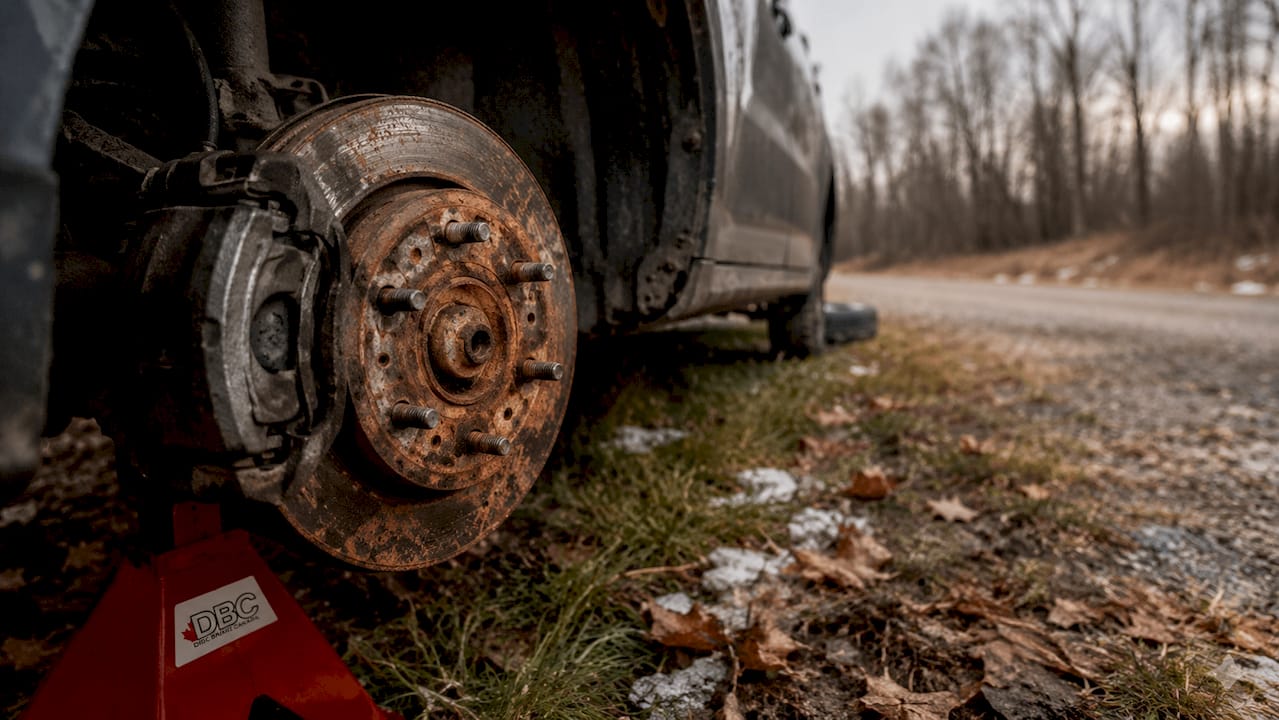
Rotors corrode quickly in Canada's salt belt. Plain iron rotors rust fast in Ontario, Quebec, and the Maritime provinces. Geomet-coated, zinc-plated, or e-coated rotors resist corrosion on non-friction surfaces and last considerably longer in those regions. Zimmermann produces zinc-coated rotors widely used across European and Canadian markets for exactly this reason.
For sensors, Omnex supplies wheel speed sensors compatible with a broad range of Canadian vehicle makes. TRW produces brake pads meeting OEM specifications for European and North American platforms sold in Canada. NAPA carries its own Silent Guard brake pads using proprietary shim technology to reduce noise, alongside full rotor and caliper lines covering most vehicles sold in Canada.
Canadian online suppliers PartsBlue and GeoBrakes stock OEM and aftermarket parts for most makes and models, with orders typically shipping within 1–2 days from Canadian warehouses. Caliper repairs carry a higher cost: installed prices run $250–$600+ CAD per corner, with master cylinders at $400–$1,000+ and ABS modules at $800–$2,000+ including programming. Keeping slide pins lubricated is a low-cost habit that prevents premature caliper failure.
Pro Tip: Always replace the full hardware kit alongside new pads. Worn clips and shims are a leading cause of brake noise and uneven pad wear after a DIY job. See the brake hardware kit guide for a full breakdown.
How to get the right fit and best value when buying brake parts in Canada
Fitment accuracy is non-negotiable for brake parts. A caliper or rotor that is even slightly off-spec for a vehicle's year, make, and model can cause uneven wear, noise, or brake pull. GeoBrakes offers a 100% fitment guarantee and recommends using a vehicle-specific lookup tool before purchasing. PartsBlue operates the same way, matching every part to the vehicle selector and accepting straightforward returns when a mismatch occurs.

Ordering from a Canadian warehouse avoids brokerage fees and delays common with U.S.-based sellers. Cross-border shipments can add duties and add days to delivery, which matters when a vehicle is off the road. Both PartsBlue and GeoBrakes ship from within Canada with no duty or brokerage on orders.
Checklist for buying brake parts online in Canada:
- Use a vehicle year, make, and model lookup tool before adding to cart
- Confirm the supplier ships from a Canadian warehouse
- Choose corrosion-resistant rotors (Geomet, zinc-plated, or e-coated) for Ontario, Quebec, or Maritime driving
- Select pad material based on your region's winter temperatures
- Order a full hardware kit with every pad replacement
- Verify the return policy covers fitment mismatches
DIY installation reduces total brake job costs by 30–60% by eliminating labour charges; for those considering extra work, bijverdienen als automechanieker of elektricien is a relevant side income option. A full brake job with rotors at a shop runs $600–$1,200 CAD for both axles. Buying parts through a Canadian supplier and installing them yourself brings parts-only costs to $200–$500 per axle. For drivers comfortable with basic tools, the savings are real. The brake system cost breakdown covers what to expect across different vehicle types.
For cold-weather performance specifics, the 2026 Canadian cold-weather brake guide covers pad and rotor selection by province and season.
DBC Brakes: Canadian-made brake kits built for Canadian roads
DBC Brakes manufactures cross-drilled brake kits designed for Canadian vehicles and driving conditions. Cross-drilled rotors resist warping under repeated hard stops and shed heat faster than plain rotors. DBC Brakes offers transparent, all-inclusive pricing with no hidden fees and free shipping on orders over $100.
Browse the full catalogue at CrossDrilledRotors.ca, or shop by make: Ford, Chevrolet, and Pontiac fitments are available with Canadian-specific compatibility. Support comes from knowledgeable staff, not automated systems.
Key takeaways
Ceramic pads suit mild Canadian winters above -10°C, while semi-metallic pads deliver better cold-weather stopping power below -20°C, making material selection a region-specific decision.
| Point | Details |
|---|---|
| Pad material by climate | Ceramic pads work above -10°C; semi-metallic pads perform better below -20°C for Prairie and Quebec winters. |
| Corrosion-resistant rotors | Geomet-coated, zinc-plated, or e-coated rotors are strongly recommended for Ontario, Quebec, and Maritime drivers. |
| Replace hardware kits | Always replace clips, pins, and shims with new pads to prevent noise and uneven wear. |
| DIY saves 30–60% | Buying parts from a Canadian supplier and self-installing reduces total brake job cost by 30–60%. |
| Fitment guarantee matters | Use a vehicle-specific lookup tool and confirm a fitment guarantee before purchasing any brake component. |