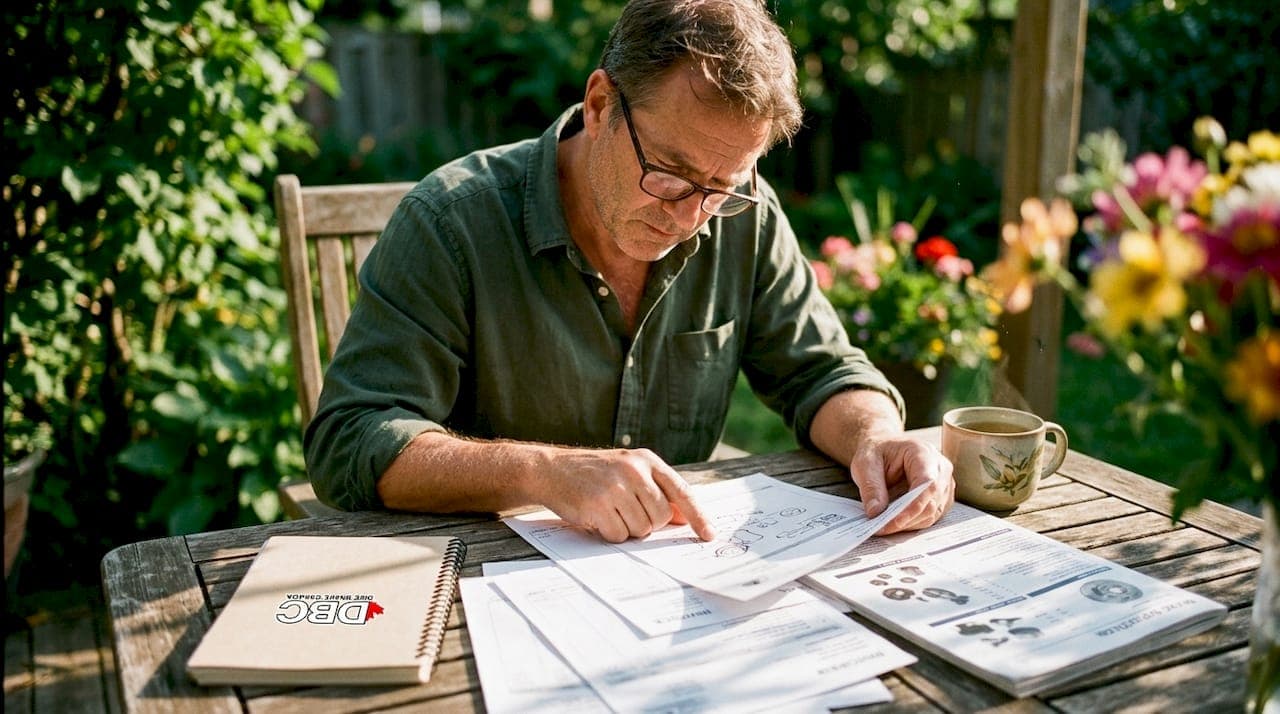
Brake system total cost is the combined expense of all parts and labour required to maintain, repair, or upgrade a vehicle's braking components. For most Canadian car owners, that figure ranges from roughly $150 for a basic pad swap on one axle to well over $3,500 for a comprehensive system overhaul on a luxury or performance vehicle. Understanding what is brake system total cost means looking beyond the sticker price on a box of pads. Vehicle type, service provider, and the scope of work all shift the final number significantly.
What are the main components included in brake system costs?
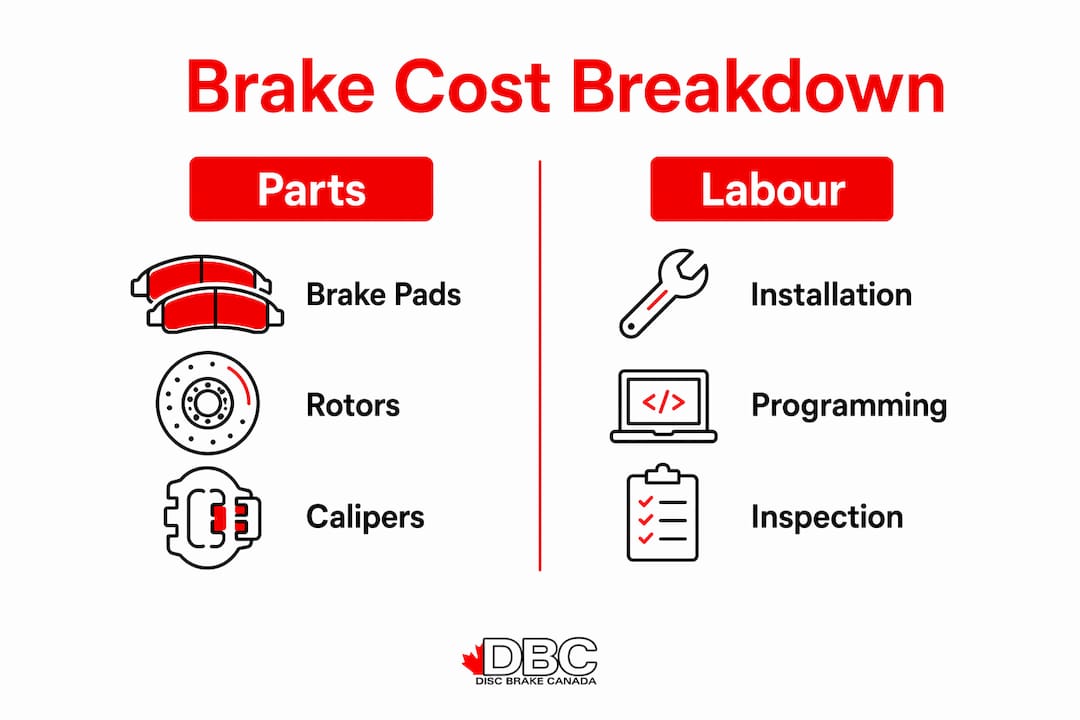
A complete brake system cost breakdown covers five core component categories. Each carries its own parts and labour expense, and skipping any one of them can create safety risks or drive up costs later.
- Brake pads: The most frequent replacement item. Parts cost $30–$150 per axle for standard compounds; performance ceramic or carbon-metallic pads run higher. Labour to swap pads alone adds $80–$150 per axle at an independent shop.
- Rotors: Typically replaced alongside pads for best results. New rotors cost $40–$200 each depending on vehicle and rotor type. Cross-drilled rotors, like those offered by DBC Brakes, resist warping and improve heat dissipation compared to plain-face alternatives.
- Calipers: Less frequent but expensive when needed. A single caliper can cost $75–$250 in parts, plus one to two hours of labour.
- Brake fluid: A brake fluid flush is recommended every 2–3 years and costs $80–$150. Delaying this service causes moisture buildup that corrodes hydraulic components.
- Hardware and hoses: Brake hardware kits, slides, and rubber hoses add $20–$80 per axle and are often overlooked in budget estimates.
A standard brake job covering pads and rotors on one axle costs $300–$600 at an independent shop. Full four-wheel service runs $600–$1,200. Labour accounts for 40–60% of the total bill, which means the shop you choose matters as much as the parts you select.
| Component | Typical parts cost | Typical labour cost |
|---|---|---|
| Brake pads (per axle) | $30–$150 | $80–$150 |
| Rotors (per axle, pair) | $80–$400 | Included with pads |
| Calipers (each) | $75–$250 | $75–$150 |
| Brake fluid flush | $20–$50 (fluid) | $60–$100 |
| Hardware kit (per axle) | $20–$80 | Included with pads |
Electronic Parking Brake (EPB) systems add another layer of cost. EPB service requires specialized programming tools and adds $200–$400 to a rear brake job on vehicles equipped with this feature. Many car owners are caught off guard by this charge because it does not appear in basic parts quotes.
How do vehicle type and service provider affect total brake system costs?
Vehicle class is the single biggest driver of brake system repair expenses. Economy and compact cars use smaller, simpler brake components that cost less to source and less time to service. Luxury and performance vehicles use larger, more complex systems with proprietary parts that carry a significant price premium.
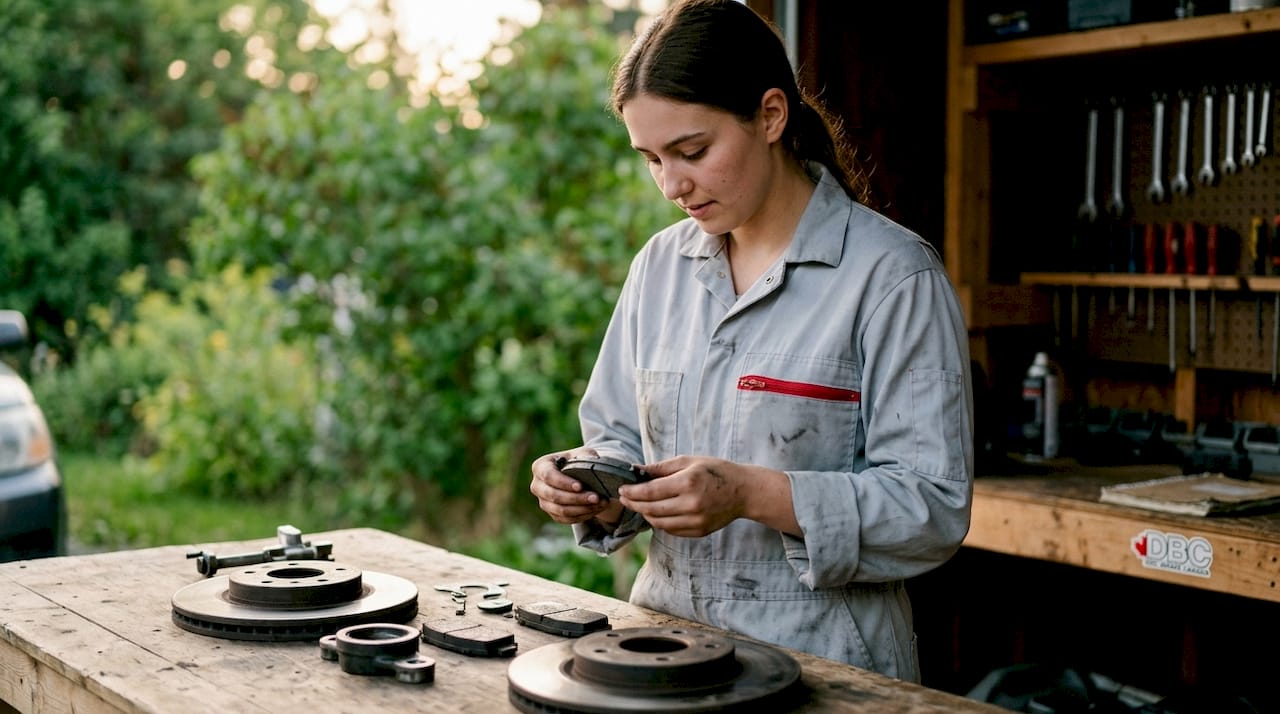
European luxury and performance vehicle brakes often cost 2–3 times more than equivalent service on a standard sedan. A full brake service on a mid-size domestic sedan might total $700. The same scope of work on a European performance SUV can easily reach $1,800 or more.
Service provider choice creates equally large cost differences. Independent shops charge $75–$130 per hour in labour. Dealerships charge $100–$200 per hour, and dealers also tend to specify OEM parts at higher prices. That gap adds up fast on a multi-axle job. Mobile brake services eliminate facility overhead entirely and offer 20–30% savings compared to traditional shops while delivering comparable labour quality.
| Vehicle class | Typical full brake service cost |
|---|---|
| Economy/compact | $400–$700 |
| Mid-size sedan | $600–$1,000 |
| SUV/truck | $700–$1,200 |
| Luxury vehicle | $1,200–$2,500 |
| Performance/European | $1,500–$3,500+ |
Pro Tip: Servicing all four wheels at the same appointment saves 5–10% compared to doing each axle separately. Labour time for setup, bleeding, and test drives is shared across the full job, and parts shipping is consolidated into one order.
The quality of parts you authorise also shifts the total. Budget-grade pads and rotors cost less upfront but wear faster, meaning more frequent service intervals. Mid-grade or performance-grade components from a supplier like DBC Brakes cost more initially but extend service life and reduce the number of times you pay for labour.
What are the cost differences between basic maintenance and performance brake upgrades?
Standard brake maintenance and a performance brake upgrade are fundamentally different purchases. Maintenance restores your factory braking system to its original specification. A performance upgrade replaces that system with components engineered for higher heat tolerance, shorter stopping distances, or greater fade resistance under track or towing conditions.
Performance "Big Brake Kits" represent the upper end of brake system installation cost. Entry-level kits for street use start at roughly $700 per axle. Professional-grade kits for track or racing applications exceed $10,000. The kit price alone does not tell the full story.
Hidden costs in a performance brake upgrade include:
- Wheel clearance: Larger brake calipers and rotors often require larger wheels. Buyers who do not already run 18-inch or larger wheels may need to budget for new rims.
- Machining: Custom hat or rotor machining to fit a specific vehicle adds $100–$300 per corner in some applications.
- ABS and ECU recalibration: Some vehicles require dealer-level programming after brake component changes to avoid ABS faults or warning lights. This adds $75–$180 or more per service visit.
- Brake lines: Braided stainless lines are often recommended with performance kits to handle higher hydraulic pressures. Budget $100–$300 for a full set.
A realistic brake kit total cost breakdown for a street-performance upgrade on a mid-size vehicle looks like this:
- Performance brake kit (pads, rotors, hardware): $700–$2,500
- Installation labour (2–4 hours per axle): $300–$600
- Braided brake lines: $100–$300
- Wheel upgrade if required: $800–$2,000
- ABS/EPB recalibration if required: $75–$180
Total project cost for a street-performance upgrade commonly lands between $1,500 and $5,000 when all peripheral expenses are included. Buyers who budget only for the kit price regularly underestimate the final bill by 30–50%. Understanding the full upgrade cost before committing prevents mid-project budget surprises.
What practical strategies can car owners use to manage brake system repair expenses?
Managing brake system maintenance cost starts with timing and scope decisions. Several approaches consistently reduce total spending without cutting corners on safety.
Pro Tip: Get a written quote that itemises parts and labour separately. This lets you compare part prices independently and spot shops that inflate parts margins to offset lower labour rates.
Rotor resurfacing is the most overlooked cost-saving option. Resurfacing costs $25–$50 per rotor and saves $100–$300 per axle compared to full replacement. The catch is that resurfacing is only safe when rotors still meet the manufacturer's minimum thickness specification. A technician must measure each rotor before recommending this route. Rotors that are at or below minimum thickness must be replaced regardless of surface condition.
Practical cost-management strategies for car owners:
- Bundle axle service: Full four-wheel brake service saves 5–10% versus separate axle appointments. Schedule both axles together whenever possible.
- Choose mid-grade parts: Budget parts wear faster. Premium parts cost more upfront. Mid-grade parts from a reputable supplier typically offer the best cost-per-kilometre value for daily drivers.
- Flush brake fluid on schedule: A $80–$150 flush every 2–3 years prevents hydraulic failures that cost $500–$1,500 to repair. This is one of the highest-return maintenance items on any vehicle.
- Do not skip EPB programming: On vehicles with electronic parking brakes, skipping the required EPB programming after a rear brake job can disable the parking brake or trigger persistent warning lights. The $75–$180 programming fee is not optional on these vehicles.
- Consider mobile brake services: Mobile technicians save 20–30% on total brake repair cost by operating without shop overhead. Verify that the technician carries proper insurance and uses calibrated tools.
Car owners who treat brake maintenance as a scheduled expense rather than an emergency repair consistently spend less over the life of a vehicle. Catching worn pads before they score rotors eliminates the rotor replacement cost entirely.
Key takeaways
Brake system total cost is determined by parts, labour, vehicle class, and service scope. Knowing each variable before you book a service appointment prevents budget surprises and helps you make decisions that hold up over time.
| Point | Details |
|---|---|
| Labour is 40–60% of the bill | Choosing an independent shop over a dealership can save hundreds on the same job. |
| Vehicle class drives parts cost | European luxury and performance brakes cost 2–3 times more than standard sedan service. |
| Performance upgrades carry hidden costs | Wheels, machining, and ABS recalibration can add $1,000+ beyond the kit price. |
| Rotor resurfacing saves money | At $25–$50 per rotor, resurfacing is viable when rotors meet minimum thickness specs. |
| Fluid flushes prevent costly failures | A $80–$150 flush every 2–3 years protects hydraulic components worth far more to repair. |
Sam's take on brake costs: what the quotes don't tell you
The number on a brake quote is rarely the number you pay. After years of watching car owners get caught off guard by brake bills, the pattern is consistent. The quote covers parts and basic labour. The invoice adds EPB programming, a hardware kit, a fluid flush, and sometimes a rotor that "didn't look right once we got in there." None of those additions are dishonest. They are just not visible at the quoting stage.
The most useful thing a car owner can do is ask for a full written scope before work begins. Ask specifically whether the quote includes hardware, fluid, and any electronic calibration your vehicle requires. That one question changes the conversation from a surprise invoice to a confirmed budget.
Performance upgrades are worth the investment in specific situations. If you tow regularly, drive in mountainous terrain, or track your car even occasionally, upgraded rotors and pads pay for themselves in fade resistance and reduced wear. DBC Brakes' cross-drilled rotors are a good example of a component that costs more than a budget replacement but delivers measurably better heat management and longevity. For a daily driver on flat urban roads, the standard replacement is the right call.
The advice I give consistently: budget for the full project, not just the parts. Add 20% to any upgrade estimate to cover the peripheral costs that almost always appear. And schedule brake fluid flushes on the calendar rather than waiting for a warning light. The car owners who spend the least on brakes over a decade are the ones who treat maintenance as routine rather than reactive.
— Sam
DBC Brakes: quality brake kits for Canadian drivers
Canadian car owners looking for transparent pricing and quality parts have a direct option in DBC Brakes, available through CrossDrilledRotors.ca.
DBC Brakes supplies premium brake kits engineered for a wide range of vehicles, from daily drivers to performance builds. Their cross-drilled rotors are designed to resist warping and manage heat more effectively than standard replacements. Pricing is all-inclusive with no hidden fees, and orders over $100 ship free across Canada. Every order comes with access to knowledgeable support from real people, not automated responses. Whether you are replacing worn pads and rotors or planning a full brake system overhaul, DBC Brakes offers the parts and guidance to get the job done right.
FAQ
What is the average brake system cost in Canada?
A standard brake job covering pads and rotors on one axle costs $300–$600 at an independent shop. Full four-wheel service typically runs $600–$1,200 depending on vehicle type and parts quality.
How much does a full brake system overhaul cost?
Comprehensive overhauls covering calipers, hydraulic lines, and master cylinders cost $1,200–$3,500 or more. Luxury and performance vehicles sit at the higher end of that range.
Does vehicle type change brake system repair expenses?
European luxury and performance vehicle brakes cost 2–3 times more to service than standard sedans. Parts complexity and higher labour time at dealerships drive that difference.
Is rotor resurfacing a reliable way to reduce brake costs?
Rotor resurfacing at $25–$50 per rotor saves $100–$300 per axle when rotors still meet manufacturer minimum thickness specifications. Rotors below that threshold must be replaced for safety.
Do performance brake kits cost more than standard replacements?
Entry-level performance kits start at roughly $700 per axle. When installation labour, braided lines, and potential wheel upgrades are included, total project costs commonly reach $1,500–$5,000 or more.