
For most Canadian drivers, the right upgrade is a DBC Brakes premium cross-drilled rotor brake kit. These kits cover every core component needed for improved stopping performance, and they ship from Canadian stock with no hidden import fees.
In this guide, "abs system components" refers to the aftermarket brake-kit parts DBC sells: rotors, pads, calipers, brackets, hardware, and brake lines where applicable. These are the physical components that determine stopping power, heat management, and durability. They do not alter ABS electronics, wheel speed sensors, or any other anti-lock braking system circuitry.
A typical DBC kit includes:
- Engineered cross-drilled rotors (front and/or rear)
- Matched brake pads (compound options available)
- Caliper-ready hardware or full caliper packages
- Mounting brackets and hardware pack
- Installation guidance and warranty documentation
Key takeaways
Aftermarket brake-kit components (rotors, pads, calipers, and hardware) determine stopping performance; engineered cross-drilled rotors paired with semi-metallic pads are the most practical upgrade for most Canadian drivers.
Note: aftermarket brake-kit components upgrade stopping performance but do not replace or modify ABS electronics, wheel speed sensors, or any other anti-lock braking system hardware.
Table of Contents
- What parts are in a brake kit and what each one does
- How do rotor designs compare for Canadian driving conditions?
- Rotor materials, coatings, and pad compounds for Canadian winters
- How to confirm a kit fits your vehicle before buying
- What to check before buying a brake kit
- Installation options, costs, and bedding in your new brakes
- How long do brake components last in Canadian conditions?
- What DBC Brakes premium kits include and why they work in Canada
- A practical view on rotor upgrades for Canadian drivers
- How to buy a DBC Brakes kit: what to have ready
- Sources
What parts are in a brake kit and what each one does
Every component in a brake kit has a specific job. Understanding each one helps you prioritise the right upgrade for your vehicle and driving style.
Rotors are the friction surface the pads clamp against. Rotor diameter and thickness directly affect heat capacity and stopping distance. Larger rotors handle more thermal load, which matters for towing and repeated hard stops.
Brake pads supply the friction material. Pad compound determines cold-bite performance, fade resistance, dust output, and rotor wear rate. Choosing the wrong compound for your climate or use case is one of the most common upgrade mistakes.
Calipers apply clamping force to the pads. More pistons distribute force more evenly across the pad face, which improves bite and reduces uneven wear. A caliper upgrade is worth considering when moving to a larger rotor diameter.
Brackets and hardware secure the caliper to the knuckle and keep the pad seated correctly. Worn or mismatched hardware causes noise, uneven pad contact, and premature wear. DSPORT's brake fundamentals guide also highlights brake lines as a meaningful upgrade: braided stainless steel lines reduce expansion under pressure and deliver a firmer pedal response compared with rubber OEM lines.
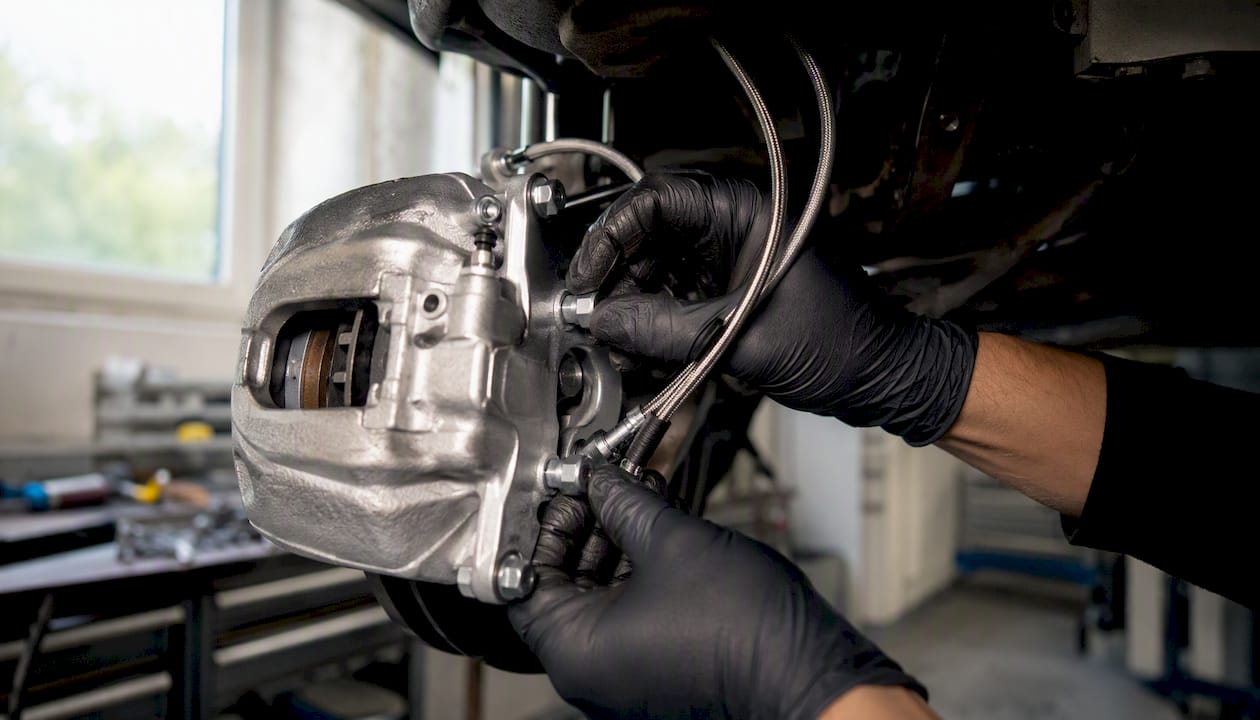
Buying a complete brake kit reduces compatibility mistakes and typically costs less than sourcing pads, rotors, and hardware separately, since components are matched and wear together.
How do rotor designs compare for Canadian driving conditions?
Cross-drilled, slotted, and plain rotors each handle heat and pad contact differently. The right choice depends on how you drive and where.
| Feature | Cross-drilled (engineered) | Slotted | Plain |
|---|---|---|---|
| Cooling/gassing | Strong: holes vent gas and heat | Good: slots sweep gas and debris | Minimal |
| Structural risk | Low when properly engineered | Low | None |
| Pad wear | Moderate | Slightly higher edge wear | Lowest |
| Best use case | Daily driving, towing, spirited use | Track and performance | Budget daily driving |
Road & Track's analysis of rotor engineering summarises the core tradeoff clearly:
This is the problem DBC Brakes addresses directly. Standard drilled rotors weaken the rotor face at each hole. DBC's engineered cross-drilled rotors use structural reinforcements around each drill point to maintain rotor integrity while retaining the gassing and cooling benefits. For Canadian drivers dealing with repeated freeze-thaw cycles and salted roads, that structural durability is not a minor detail.
For more on how rotor design interacts with caliper clamping force, the technical guide on clamping force and brake performance covers the mechanics in detail.
Rotor materials, coatings, and pad compounds for Canadian winters
Rotor metallurgy and pad compound work together. Mismatching them shortens the life of both.
Standard cast iron rotors are adequate for most daily drivers. Two-piece floating rotors, which pair an aluminium hat with a coated friction ring, allow the two sections to expand at different rates under heat. This differential expansion reduces thermal stress cracking, which is a real concern for drivers covering high annual kilometres on salted roads. RIDEZ's Canadian cost analysis notes that two-piece designs can extend rotor life materially in heavy-use salted conditions.
Pad compound options and their best applications:
- Organic: Quiet and gentle on rotors. Suitable for light city driving. Loses effectiveness in cold temperatures below approximately 0°C.
- Semi-metallic: Maintains friction at very low temperatures, including Canadian winters down to approximately -30°C. Produces more dust and causes slightly faster rotor wear, but delivers reliable cold-bite.
- Ceramic: Low dust, quiet, and consistent in moderate temperatures. Less effective in extreme cold or under sustained heavy load.
- Performance compound: Designed for track use and repeated hard stops. Requires heat to activate properly; not suited to cold-start daily driving.
Pro Tip: Semi-metallic pads are the practical choice for most Canadian drivers. They grip reliably on cold mornings and hold up under towing loads. The tradeoff is more wheel dust and marginally faster rotor wear, both of which are manageable with regular cleaning and inspection.
How to confirm a kit fits your vehicle before buying
Fitment is the step most buyers skip, and it is the one most likely to cause problems after delivery. Confirm these items before checkout:
- Wheel bolt pattern: Must match your hub exactly.
- Rotor diameter and minimum thickness: Check OEM specs for your year, make, and model.
- Hat depth: Affects how the rotor sits relative to the hub face.
- Caliper clearance: Larger rotors require adequate clearance inside the wheel.
- Parking brake compatibility: Rear rotor upgrades must accommodate the existing parking brake mechanism.
- Hub fit: Confirm centre bore diameter matches your hub.
DBC Brakes provides fitment support directly. Contact their team before purchasing if you have a non-standard setup or are planning a caliper upgrade. For provincial inspection readiness, request engineering compliance documentation from the seller. This is standard practice for any brake component that deviates from OEM specifications. The brake kit compatibility guide for performance vehicles covers fitment checks for modified and performance applications in detail.
What to check before buying a brake kit
A short decision checklist prevents the most common buying mistakes.
- Fitment guarantee: Does the seller confirm compatibility for your exact year, make, and model?
- Rotor design and metallurgy: Is the rotor engineered for structural integrity, or is it a basic drilled design?
- Pad compound options: Can you select a compound suited to your climate and use case?
- Caliper piston count or upgrade path: Does the kit support a caliper upgrade if needed?
- Kit inclusions: Are brackets, hardware, and lines included, or priced separately?
- Warranty terms: Is the warranty clearly stated, or vague about what it covers?
- Inclusive pricing: Are shipping and applicable fees included, or added at checkout?
Red flags to avoid: unclear fitment, no engineering documentation, hidden shipping or import fees, and warranties with no stated duration or coverage scope.
Questions to ask DBC or any seller before checkout: "Do you provide engineering fitment documentation for provincial inspection?" and "Is the listed price inclusive of shipping within Canada?"
Installation options, costs, and bedding in your new brakes
DIY installation is straightforward for a standard pad-and-rotor swap on most passenger vehicles. A caliper exchange, proportioning valve change, or master cylinder update requires professional installation.
Typical Canadian installed cost ranges (labour only, excluding kit price):
RIDEZ's cost analysis confirms that Canadian-distributed kits avoid the roughly 6% duty plus 5% GST that applies to US-shipped brake components, which materially affects total installed cost. Buying from a Canadian distributor like DBC Brakes removes that variable entirely.
After installation, bed in the new pads and rotors before driving normally:
- Accelerate to approximately 60 km/h, then apply moderate brake pressure to slow to 10 km/h. Do not stop completely.
- Repeat 6–8 times, allowing 30–60 seconds between each pass for cooling.
- Accelerate to approximately 100 km/h, then apply firm brake pressure to slow to 10 km/h. Repeat 4–6 times.
- Allow brakes to cool completely (15–20 minutes) before normal driving.
How long do brake components last in Canadian conditions?
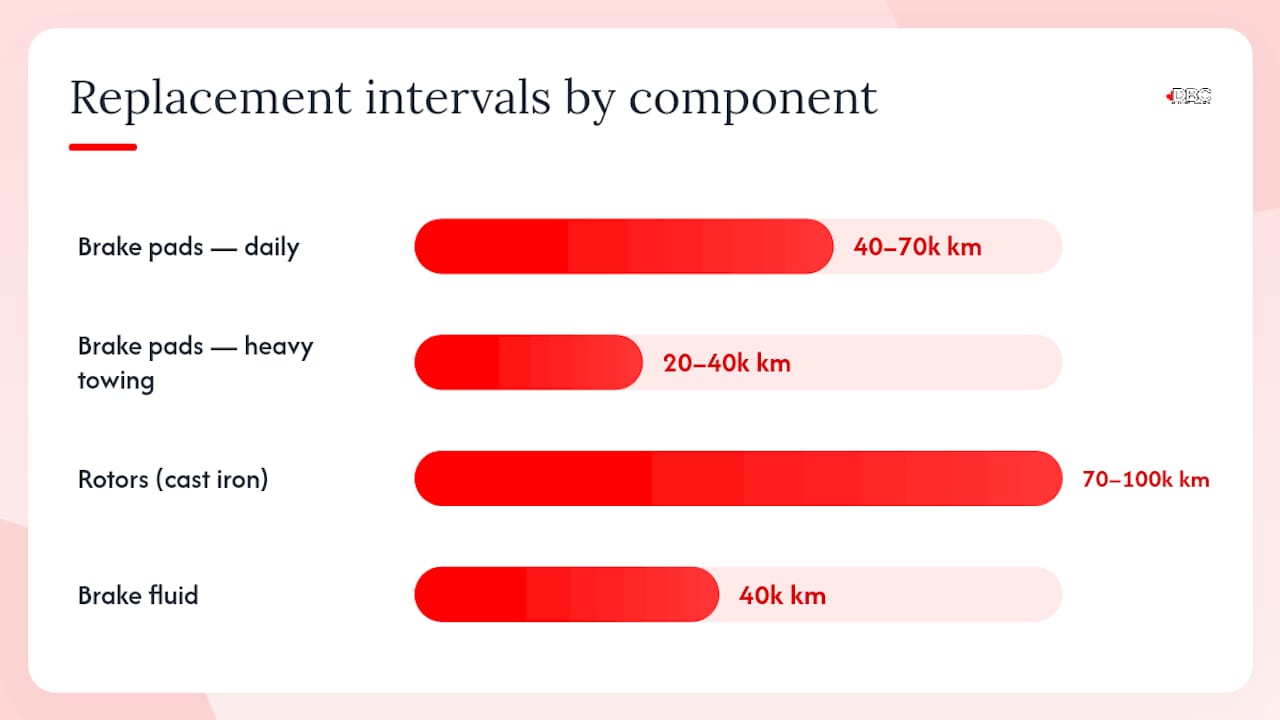
Winter salt and high annual kilometres accelerate wear on both pads and rotors. Coated rotors and two-piece designs slow that process, but regular inspection is still necessary.
Rough replacement windows under normal Canadian driving:
- Brake pads: 40,000–70,000 km for daily driving; 20,000–40,000 km under heavy towing or frequent hard stops.
- Rotors: 70,000–100,000 km for standard cast iron; longer for coated or two-piece designs in comparable use.
- Brake fluid: Every 2 years or 40,000 km, regardless of driving style. Moisture absorption degrades performance over time. The brake fluid upgrade guide covers fluid selection for performance applications.
Check rotor thickness at every pad change. Most rotors have a minimum thickness stamped on the hat. Once a rotor reaches that threshold, replace it. Visually inspect for deep scoring, heat cracks, or significant rust pitting at the same interval. For Canadian-specific maintenance guidance, the brakes and rotors guide for Canadian drivers covers salt exposure and seasonal inspection in detail.
What DBC Brakes premium kits include and why they work in Canada
DBC Brakes builds kits specifically for Canadian driving conditions. Key inclusions and features:
- Engineered cross-drilled rotors with structural reinforcements at each drill point to prevent cracking under thermal stress
- Matched pad compound options, including semi-metallic for cold-climate and towing applications
- Caliper-ready packages with all necessary hardware for direct fitment
- Complete hardware packs including brackets, bolts, and anti-squeal shims
- Fitment documentation available on request for provincial inspection compliance
- Inclusive pricing with no hidden fees at checkout
- Free shipping within Canada on orders over $100
- Human customer support for pre-purchase fitment checks and technical questions
- Warranty coverage stated clearly at the product level
The DBC blog's total cost breakdown gives a clear picture of what buyers should budget for a complete kit, including what is and is not included in the listed price.
A practical view on rotor upgrades for Canadian drivers
Most brake upgrade guides focus on performance metrics without addressing the specific conditions Canadian drivers face: road salt from October through April, cold starts at -20°C or lower, and the cumulative wear of high annual kilometre use. A drilled rotor that looks good on a dry track can develop stress cracks within two winters if the drilling is not engineered with reinforcements.
The case for engineered cross-drilled rotors in Canada is straightforward. They handle gassing and heat better than plain rotors, and when the drilling is done correctly, they do not sacrifice structural integrity to get there. Paired with semi-metallic pads and a proper bedding procedure, they deliver consistent stopping performance across seasons without requiring frequent replacement.
Fitment documentation and inclusive pricing are not optional extras; they are the difference between a kit that passes a provincial inspection and one that creates problems at the shop. DBC Brakes provides both.
How to buy a DBC Brakes kit: what to have ready
DBC Brakes sells directly through Crossdrilledrotors. Before checkout, have your vehicle's year, make, model, and trim ready, along with your current rotor diameter if you know it. The listed price is inclusive: no hidden fees, no surprise charges at checkout.
Free shipping applies to orders over $100 within Canada. Most Canadian orders ship from domestic stock, which avoids cross-border duty and GST charges that add cost to US-shipped kits. For pre-purchase fitment questions, contact DBC's support team directly through the site. They provide fitment checks and can confirm engineering documentation availability for provincial inspection readiness.
Sources
- OEM Big Brake Kit vs Aftermarket: 5 Hidden Cost Traps in Canada — RIDEZ
- Brakes - The Science of Stopping | DSPORT Bolt-On Basics
- Cross‑drilled brake rotors aren't just form over function — Road & Track
- Kit