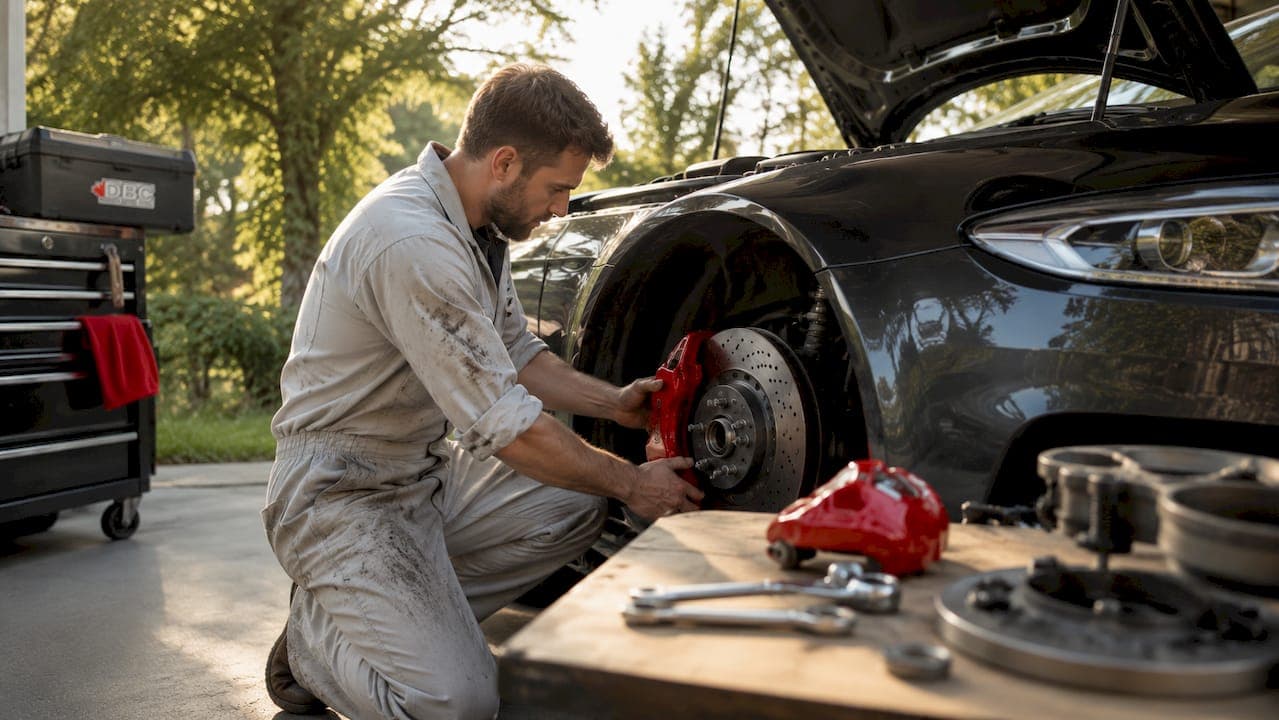
Brake kit compatibility for performance vehicles is defined as the precise match between a brake system's physical dimensions, electronic interfaces, and thermal capacity with a specific vehicle's mechanical and safety architecture. Getting this right means checking wheel barrel clearance, bolt pattern, hub diameter, ABS sensor fitment, and electronic parking brake integration before any purchase. Trim level, engine size, and even production date affect which brake hardware a vehicle left the factory with. This guide covers the top criteria, common pitfalls, and key upgrade features that performance enthusiasts need to know.
1. What does brake kit compatibility mean for performance vehicles?
Brake kit compatibility is the industry term for vehicle-specific fitment. It goes well beyond matching a rotor diameter. A kit must clear the wheel barrel, align with the hub, match the bolt pattern, and integrate with every electronic safety system on the vehicle. Compatibility depends on year, make, model, trim, engine size, drivetrain, and wheel barrel clearance, with larger calipers requiring wheels of 17–18 inches or more. That last point catches many performance enthusiasts off guard when they order a big brake kit and find it physically cannot fit behind their existing wheels.
2. Wheel diameter and barrel clearance
Larger calipers demand more space inside the wheel. Most performance brake upgrades require a minimum wheel diameter of 17–18 inches, and that measurement alone does not guarantee clearance. The barrel depth and spoke design of the wheel determine whether a caliper physically fits. Aftermarket wheels with different offsets or concave designs may not clear upgraded calipers despite sufficient wheel diameter. Requesting a physical wheel clearance template from the manufacturer is the only way to confirm fitment before committing to a purchase.
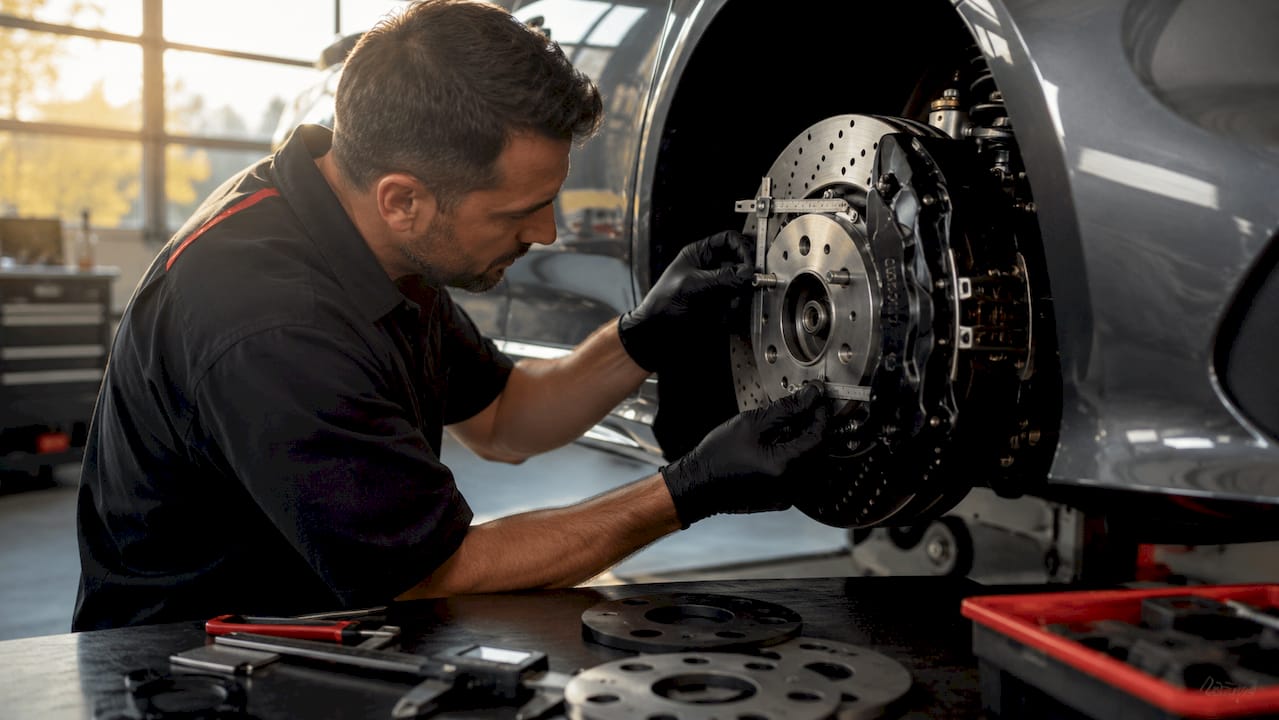
Pro Tip: Ask the brake kit manufacturer for a printed or digital wheel clearance template. Hold it against your actual wheel before ordering. This step takes five minutes and prevents a costly return.
3. Bolt pattern and hub diameter matching
The bolt pattern and hub diameter must match the vehicle exactly. A mismatched hub diameter creates a centring problem that causes vibration at speed, even if the bolts appear to hold. Performance vehicles often share bolt patterns across model families but differ in hub bore size. Always confirm both measurements against your specific build, not just the model name.
4. ABS and electronic parking brake sensor fitment
Modern performance vehicles rely on wheel speed sensors for ABS, traction control, and stability management. Brake kits that preserve wheel speed sensor clearance and avoid interfering with factory tone rings achieve the highest compatibility ratings. Manufacturers who use 3D modelling guarantee bolt-on fitment across the vast majority of models. A kit that physically fits the rotor but clips a sensor wire or blocks a tone ring will trigger warning lights and disable safety systems.
5. Caliper piston count and brake bias
Piston count affects how force distributes across the rotor face and how the system interacts with the factory master cylinder. Installing high-performance kits that shift brake bias can confuse ABS and stability control modules, creating warning lights or erratic behaviour. Kits must state compatibility with the factory master cylinder and electronic systems. A four-piston fixed caliper on the front axle without a corresponding rear upgrade can push brake bias so far forward that the rear wheels lock under hard braking.
6. Rotor diameter and minimum thickness
Rotor diameter must match the caliper bracket mounting position. Rotor thickness affects heat dissipation and the minimum wear threshold before replacement. Performance rotors are typically thicker than OEM units to handle repeated heavy braking. Confirm that the rotor diameter specified in the kit matches the caliper bracket offset for your vehicle's hub. A mismatch of even a few millimetres shifts the pad contact zone off-centre and accelerates uneven wear.
7. Using your VIN for precise fitment
The VIN is the most accurate way to confirm brake kit compatibility. Relying solely on model year leads to errors because manufacturers make mid-year production changes affecting brake hardware based on trim and engine. Two vehicles with the same model year and name can leave the factory with different rotor diameters, caliper brackets, and sensor configurations. Providing your full 17-digit VIN to a brake specialist eliminates this ambiguity entirely.
8. Trim level and production date awareness
Trim level is one of the most overlooked fitment variables. A base trim and a performance trim of the same model often use different rotor sizes, caliper types, and even different master cylinders. Modern vehicles hide multiple brake configurations behind trim levels, engine size, and production changes. Confirming the build date alongside the trim level is the standard practice for any reliable brake kit purchase.
9. How brake kits balance upgrades with electronic safety systems
Matching hydraulic volume is the engineering challenge that separates a well-designed performance kit from one that creates problems. Brake upgrades must balance stopping power with the factory master cylinder and electronic stability systems to avoid erratic behaviour. Matching pads and rotors designed to work together is vital for consistent performance. Kits engineered with 3D modelling and OEM-matching geometry deliver bolt-on fitment that keeps every electronic system functioning correctly.
Bigger rotors or calipers do not automatically mean better brakes. Effective performance depends on system engineering and compatibility with every component the factory installed.
EV and hybrid owners face an additional challenge. Increased curb weight and thermal loads on electric and hybrid vehicles require brake kits matched to higher thermal stress and driving habits. Ceramic pads suit street use, while high-temperature compounds are necessary for track driving. Selecting the right pad compound for your use is as critical as selecting the right rotor size.
10. Common fitment mistakes to avoid
The most frequent errors come from incomplete information at the point of purchase.
- Assuming model year is enough. Two vehicles from the same model year can have entirely different brake hardware depending on trim and engine.
- Ignoring aftermarket wheel geometry. Concave spokes and aggressive offsets block calipers that would otherwise clear a standard OEM wheel.
- Skipping sensor clearance checks. EPB and ABS sensors sit close to the rotor hat. An oversized rotor hat can contact the sensor housing.
- Overlooking brake bias. Upgrading only the front axle shifts bias forward and can cause rear wheel lock under hard braking.
- Choosing oversized kits without thermal data. A larger rotor generates more heat at the hat and hub. Without confirmed thermal clearance, this accelerates bearing wear.
Pro Tip: Always cross-reference your VIN, trim level, and wheel specifications together. Checking any one of these alone leaves gaps that cause incorrect purchases.
Manufacturers providing wheel clearance templates offer the only guaranteed fitment scenario. Without templates, fitment guidance is an expert estimation that may require adjustments such as wheel spacers.
11. Performance features that matter for high-power and track vehicles
High-load driving demands specific engineering. Big brake kits with multi-piston fixed calipers and fully floating two-piece ventilated rotors excel where temperatures exceed 600°C, such as track days or heavy towing. The two-piece floating rotor design allows the aluminium hat to expand independently from the iron rotor face, which prevents warping under repeated thermal cycling.
| Feature | Street use | Track use |
|---|---|---|
| Rotor type | Solid or vented one-piece | Fully floating two-piece vented |
| Caliper type | Single or twin-piston sliding | Multi-piston fixed |
| Pad compound | Ceramic or low-dust semi-metallic | High-temperature racing compound |
| Minimum wheel size | 17 inches | 18 inches or larger |
| Thermal rating | Standard OEM range | 600°C and above |
Matched rotor and caliper sets matter because the pad compound must be selected for the specific rotor metallurgy. A high-temperature compound on a standard grey iron rotor glazes the surface and reduces friction. Caliper type selection for performance vehicles should account for both the thermal demands and the wheel size available on the specific build.
Key takeaways
Brake kit compatibility for performance vehicles requires matching wheel clearance, electronic sensor integration, and thermal capacity before any other consideration.
| Point | Details |
|---|---|
| VIN is the fitment standard | Always provide the full 17-digit VIN to confirm brake hardware variations by trim and production date. |
| Wheel templates confirm clearance | Request physical or digital clearance templates before purchasing any big brake kit. |
| Electronic systems must stay intact | Select kits that maintain factory hydraulic balance to avoid ABS and stability control errors. |
| Thermal capacity drives kit selection | Track and high-power use requires kits rated above 600°C with floating two-piece rotors. |
| Trim level changes brake hardware | Never assume identical brake specs across trims of the same model and year. |
Sam's take on getting fitment right the first time
The detail that most performance enthusiasts miss is not the rotor size or the caliper piston count. It is the trim level and production date combination. I have seen owners order a kit that fits 90% of a given model, only to find their specific build received a different caliper bracket because of a mid-year factory change. The VIN lookup step feels tedious, but it is the single action that separates a clean install from a return shipment.
The second thing I would push back on is the instinct to go as large as possible. A big brake kit that shifts brake bias forward without a matched rear upgrade creates a vehicle that stops worse under hard braking, not better. The factory engineers calibrated the ABS thresholds around a specific front-to-rear bias. Disrupting that calibration with an oversized front kit produces exactly the erratic pedal behaviour that performance drivers are trying to eliminate. Prioritise a matched system over maximum rotor diameter every time.
Wheel clearance templates are non-negotiable if you run aftermarket wheels. Factory compatibility data assumes OEM wheel geometry. A concave spoke design that looks like it clears a caliper in a photo can contact the caliper body under load when the wheel flexes. Get the template, hold it against the wheel, and confirm before ordering. That process takes less time than a return shipment and saves the frustration of a delayed build.
For anyone running an EV or a heavy performance SUV, the thermal demands are higher than most brake kit listings acknowledge. Match the pad compound to the actual use case, not just the vehicle category. A brake kit built for reliability on a heavy vehicle needs a higher thermal rating than the same kit on a lighter sports car.
— Sam
DBC Brakes and CrossDrilledRotors.ca for Canadian performance builds
Performance enthusiasts in Canada have a direct resource for vehicle-specific brake fitment through CrossDrilledRotors.ca. DBC Brakes supplies cross-drilled rotors engineered to resist warping under repeated thermal cycling, with fitment data covering a wide range of performance vehicles. The catalogue includes kits for muscle cars, performance SUVs, and track-day builds, with knowledgeable support available without automated responses.
Free shipping applies to orders over $100, and pricing is listed without hidden fees. For owners of classic performance vehicles, dedicated pages cover specific makes and models, including Pontiac brake kits for builds that require period-correct or upgraded stopping power. Confirm your VIN and trim level before browsing, and the fitment process becomes straightforward.
FAQ
What does brake kit compatibility mean?
Brake kit compatibility means a brake system physically fits the vehicle's wheel clearance, bolt pattern, and hub diameter while integrating correctly with ABS, EPB, and stability control sensors. It is also called vehicle-specific fitment.
How does trim level affect brake kit fitment?
Trim level frequently determines rotor diameter, caliper type, and master cylinder specification. Two vehicles with the same model year can have entirely different brake hardware depending on trim and engine size.
What wheel size do performance brake kits require?
Most performance brake upgrades require a minimum wheel diameter of 17–18 inches. Larger multi-piston fixed caliper kits for track use typically require 18 inches or more to clear the caliper body.
Why does brake bias matter when upgrading brakes?
Brake bias is the front-to-rear distribution of braking force. Upgrading only the front axle shifts bias forward and can cause rear wheel lock or ABS errors because the factory module was calibrated for the original balance.
How do I confirm brake kit compatibility before purchasing?
Provide your full 17-digit VIN to the brake kit supplier, confirm your trim level and production date, and request a wheel clearance template if you run aftermarket wheels. These three steps cover the most common sources of incorrect purchases.