
For Canadian vehicle owners, the best brake rotors and parts combine corrosion-resistant coatings, precise tolerances, and materials suited to cold weather and salted roads. The top options available in Canada include:
- Cross-drilled rotors — prevent warping and improve heat dissipation, well suited to Canadian winters
- Vented disc rotors — standard on most passenger vehicles, offering reliable cooling for daily driving
- Slotted rotors — channel gas and debris away from the pad surface, improving wet-weather bite
- Ceramic-coated rotors — resist rust from road salt, extending rotor life through freeze-thaw cycles
- Brake pads — semi-metallic, ceramic, and organic compounds, each matched to specific rotor types
- Brake kits — rotor and pad sets sold together for confirmed compatibility
- Calipers and hardware — brackets, bolts, and slides that must be replaced or serviced alongside rotors
DBC Brakes manufactures and machines its disc brake rotors in Canada, with over 20 years of production experience, and sets the standard for tolerances and premium metals among Canadian-made options.
Table of Contents
- What types of brake rotors and parts are available in Canada?
- How to choose the right brake rotors for your vehicle in Canada
- Installation tips and best practices for brake rotors
- Why DBC Brakes stands out for Canadian drivers
- Pricing and availability in the Canadian market
- Common signs of brake rotor wear and when to replace them
- DBC Brakes: premium Canadian brake parts, ready to ship
- Key takeaways
What types of brake rotors and parts are available in Canada?
Canadian drivers can choose from five main rotor designs, each with a distinct performance profile.
- Solid rotors — single-piece cast iron, found on lighter vehicles and rear axles; lower cost but limited heat capacity
- Vented rotors — two friction faces separated by cooling fins; the most common design on front axles of passenger cars and SUVs
- Cross-drilled rotors — holes drilled through the rotor face allow heat and gas to escape, preventing the fade that builds during repeated hard stops
- Slotted rotors — machined grooves sweep debris and water off the pad face; popular for trucks and performance vehicles
- Ceramic-coated rotors — a protective layer applied over the rotor body resists the surface rust that forms overnight in humid or salty conditions
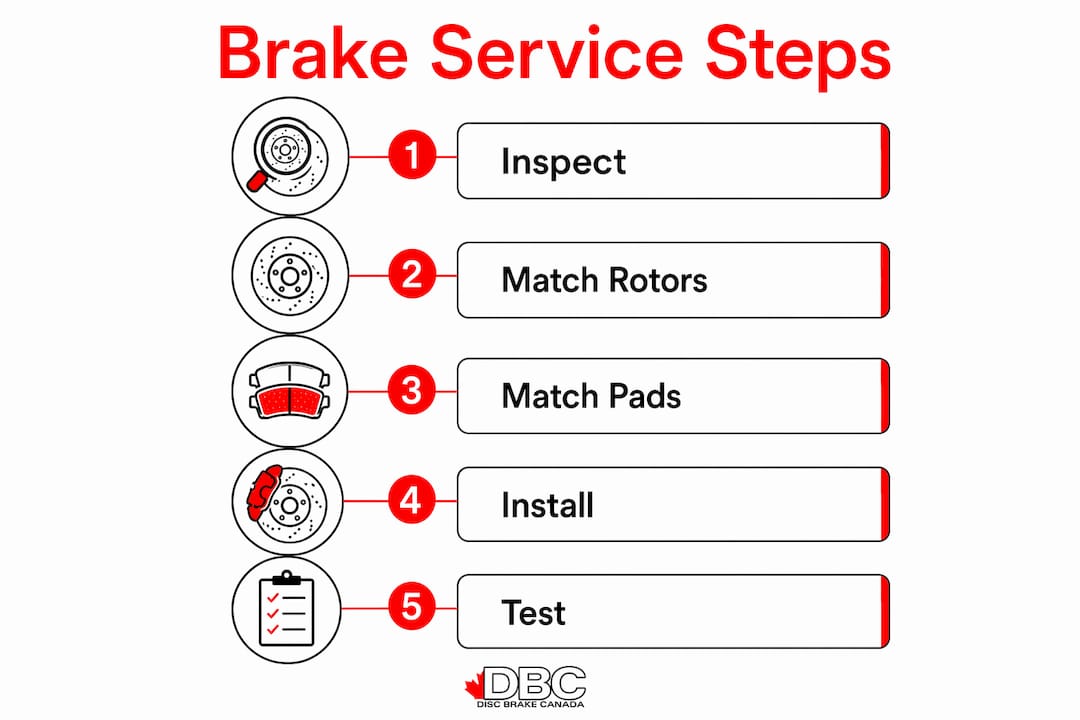
Beyond the rotor itself, a complete brake service typically involves pads, calipers, and hardware. Mismatched brake components reduce braking efficiency and accelerate wear on both the pad and rotor. For heavy-duty trucks and commercial fleets, remanufactured air disc brake calipers certified to ISO 16949 standards offer 50–70% cost savings compared to new OEM units without sacrificing safety.
Pro Tip: When buying a brake kit, confirm the rotor and pad are sold as a matched set. Manufacturers test them together, so the friction coefficient is already dialled in.
How to choose the right brake rotors for your vehicle in Canada
Rotor selection depends on four factors: vehicle type, driving conditions, load, and climate.
- Vehicle type — a half-tonne pickup towing a trailer needs a heavier vented or slotted rotor than a compact sedan used for city commuting
- Driving conditions — highway drivers generate less heat than urban stop-and-go drivers; performance or mountain driving demands cross-drilled or slotted designs
- Load — gross vehicle weight rating (GVWR) determines the minimum rotor diameter and thickness your vehicle requires
- Climate — Canadian winters and salted roads accelerate corrosion; ceramic coatings and premium metals extend rotor life significantly in these conditions
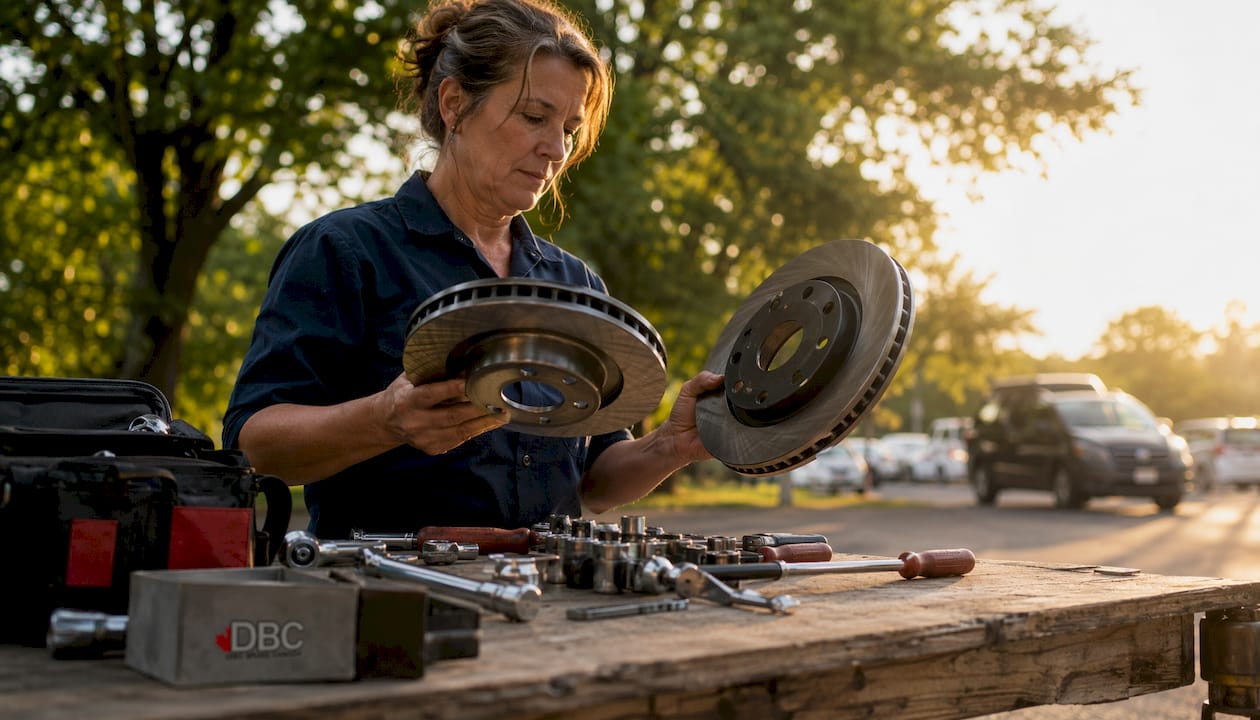
OEM rotors are engineered to the vehicle manufacturer's exact specifications and fit without modification. Quality aftermarket rotors can match or exceed OEM performance when they are produced to equivalent tolerances, but generic low-cost imports often use softer metals that wear faster and warp under heat. Verifying fitment means checking the rotor's diameter, thickness, bolt pattern, and hat depth against your vehicle's service manual or a trusted fitment guide.
Pro Tip: For vehicles driven year-round in provinces that use road salt from November through April, prioritise rotors with a factory-applied corrosion-resistant coating rather than adding aftermarket paint. The coating bonds to the metal during machining and holds up far better through repeated wet-dry cycles.
Installation tips and best practices for brake rotors
Correct installation is as important as the rotor itself. A rotor torqued unevenly or paired with a worn caliper slide will develop lateral runout within a few thousand kilometres, producing the pedal pulsation that most drivers mistake for warping.
- Clean the hub face — remove rust and debris from the hub before seating the new rotor; even a thin layer of corrosion causes runout
- Use a torque wrench on wheel fasteners — follow the manufacturer's torque specification for lug nuts; overtightening distorts the rotor hat
- Bed the pads and rotors — perform 8–10 moderate stops from 60 km/h to 10 km/h without coming to a full stop, then allow 10 minutes for cooling before driving normally
- Inspect caliper slides and hardware — seized slides create uneven pad pressure, which wears one side of the rotor faster than the other
- Replace pads and rotors together — installing new rotors under old pads transfers the pad's wear profile onto the fresh rotor surface within the first few stops
Proper torque specs and pad compatibility are the two most common points where DIY installations go wrong. Cold-weather installation adds one more variable: brake fluid absorbs moisture over time, and Canadian winters accelerate this. Flush the fluid if it has not been changed in two years.
Pro Tip: Apply a thin layer of high-temperature anti-seize to the hub contact surface before mounting the rotor. This prevents the rotor from bonding to the hub over winter, making future removal straightforward.
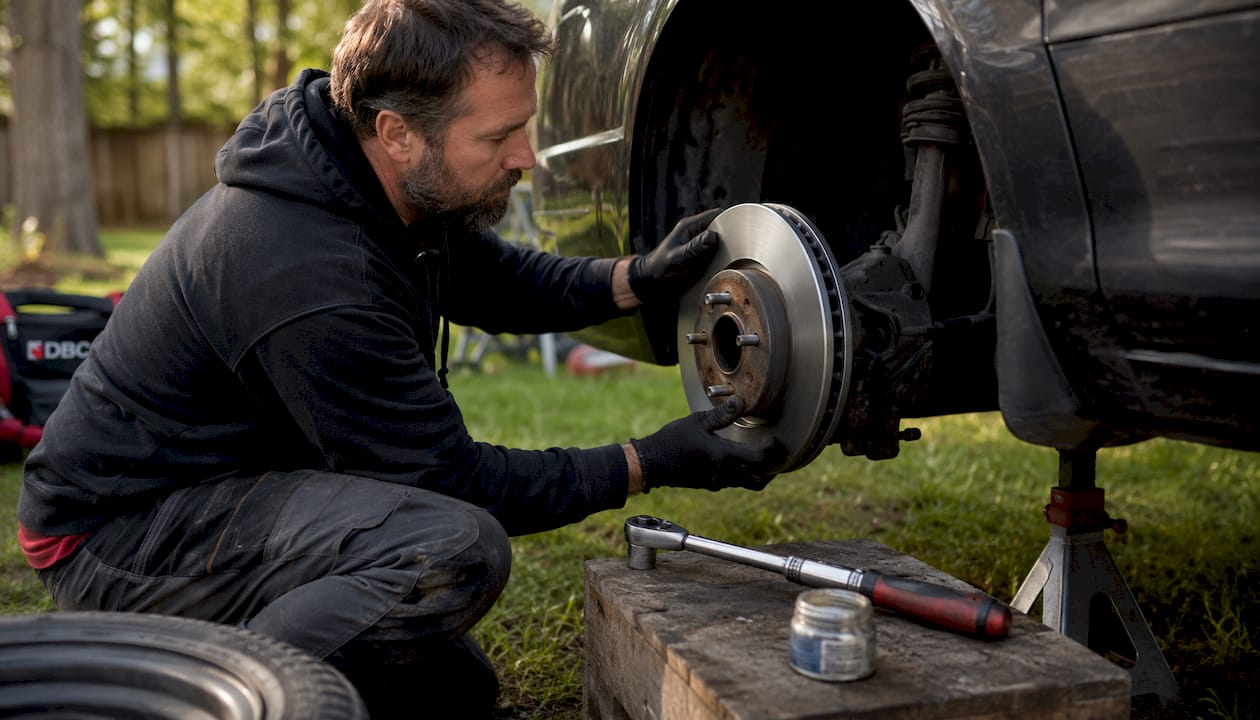
Safety precautions apply throughout. Always chock the wheels before lifting the vehicle, use rated jack stands rather than a floor jack alone, and wear gloves when handling rotors. New rotors arrive with a protective oil coating from machining; wipe each face with brake cleaner before installation.
Why DBC Brakes stands out for Canadian drivers
DBC Brakes engineers and machines its rotors in Canada, drawing on extensive manufacturing experience. The company sets its own tolerances for metal composition and surface finish rather than sourcing generic castings, which is the practice that separates a precision rotor from a commodity part.
Customer feedback on DBC Brakes products consistently highlights improved braking feel and durability through Canadian winters, particularly for drivers who previously used generic aftermarket parts. The difference shows up most clearly in cold weather, where inferior metals contract unevenly and cause pedal pulsation within the first season.
| Performance factor | DBC Brakes |
|---|---|
| Manufacturing location | Canada |
| Production experience | 20+ years |
| Metal and tolerance standard | Premium, proprietary specification |
| Corrosion resistance | Coated during Canadian machining process |
| Climate suitability | Tested for Canadian road and weather conditions |
| Customer satisfaction | Positive reviews on cold-weather performance and durability |
For brake performance in cold weather, the combination of premium metals and a factory-applied coating is what separates a rotor that lasts three Canadian winters from one that rusts through in the first.
Pricing and availability in the Canadian market
Brake rotor pricing in Canada varies by rotor type, vehicle application, and whether the part is OEM or aftermarket. Entry-level solid rotors for common passenger cars sit at the lower end of the price range, while cross-drilled or slotted performance rotors for trucks and SUVs cost more. Ceramic-coated rotors carry a modest premium over uncoated equivalents, but the extended service life in salt-heavy provinces makes the difference worthwhile over two or three seasons.
OEM rotors are available through dealerships and carry the manufacturer's part number, but lead times can stretch if the part is not stocked locally. Quality aftermarket rotors ship faster and are widely stocked across Canadian online retailers and auto parts stores. Free shipping thresholds vary by retailer; DBC Brakes offers free shipping on orders over $100, which typically covers a full axle set of rotors or a complete brake kit.
For commercial and heavy-duty operators, fleet vehicle maintenance planning benefits from sourcing remanufactured air disc brake components well in advance of scheduled service intervals to avoid downtime.
Common signs of brake rotor wear and when to replace them
Rotors do not last indefinitely. Each rotor has a minimum thickness specification stamped or cast into the hat; once the friction surface wears to that measurement, the rotor must be replaced regardless of its visual condition.
Visible and tactile signs that replacement is due:
- Pedal pulsation — a rhythmic vibration through the brake pedal under moderate pressure indicates lateral runout or thickness variation
- Scoring and grooves — deep grooves cut into the rotor face by worn pads accelerate heat buildup and reduce pad contact area
- Surface rust — light surface rust after a wet night is normal and clears within a few stops; heavy pitting or rust that does not clear indicates corrosion through the friction surface
- Squealing or grinding — squealing often signals worn pads; grinding means metal-on-metal contact and immediate replacement is required
- Visible lip at the rotor edge — a raised ridge around the outer edge shows how much material has worn from the centre of the rotor face
Rotors on vehicles driven through Canadian winters typically show accelerated wear on the inner face due to salt and moisture trapped behind the rotor hat. Inspecting both faces during every pad change catches this early.
DBC Brakes: premium Canadian brake parts, ready to ship
DBC Brakes offers a direct path to premium, Canadian-machined brake rotors without the guesswork of sorting through generic imports. The product range covers cross-drilled rotors, vented disc sets, complete brake kits, and pads, all engineered to the tolerances described throughout this guide. Orders over $100 ship free across Canada, and the team provides knowledgeable support rather than automated responses, which matters when you need to confirm fitment for a specific make and model.
For Canadian drivers who want rotors built for salted roads and hard winters, CrossDrilledRotors.ca is the place to start. Select your vehicle make and model to see the confirmed-fit options for your application.
Key takeaways
Premium Canadian-made brake rotors, such as those from DBC Brakes, outperform generic aftermarket parts in corrosion resistance, braking consistency, and durability across Canada's varied driving climates.
| Point | Details |
|---|---|
| Rotor type matters for climate | Cross-drilled and ceramic-coated rotors resist warping and corrosion on salted Canadian roads. |
| OEM vs. aftermarket | Quality aftermarket rotors match OEM performance when produced to equivalent tolerances; generic imports often use softer metals. |
| Installation precision | Correct torque, clean hub surfaces, and matched pads prevent premature rotor wear and pedal pulsation. |
| Replace at minimum thickness | Each rotor has a stamped minimum thickness; once reached, replacement is required regardless of visual condition. |
| DBC Brakes recommendation | DBC Brakes machines rotors in Canada with 20+ years of experience and ships free on orders over $100. |