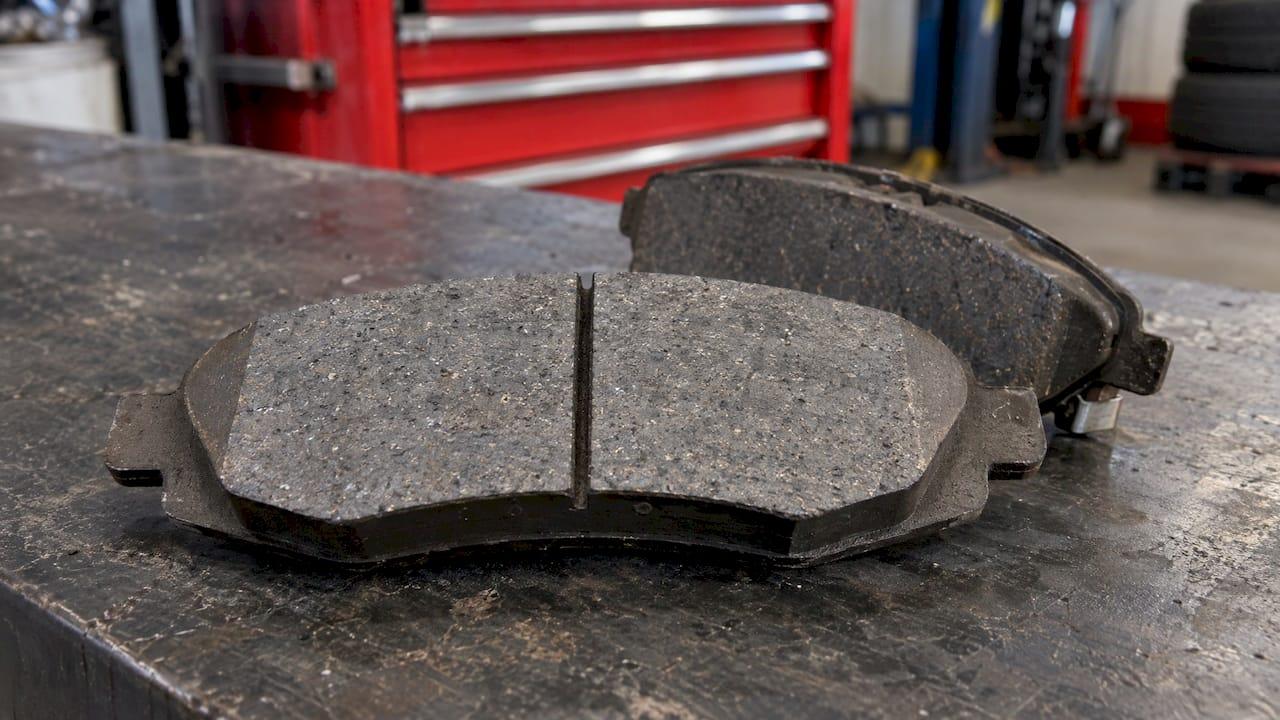
A chamfer is an angled cut on the leading and trailing edges of the pad's friction material. A slot is a groove cut across the face of the pad. Chamfers control how the pad edge meets the rotor. Slots break up the friction block and give hot gas and debris a way out. Both exist mainly to manage noise, vibration and heat. Neither replaces a correct fit, proper hardware and a matched rotor.
This guide explains each feature, how they work together, and what to check when buying or installing pads in Canada.
TL;DR
- A chamfer is an angled edge cut on the friction material. It reduces edge contact problems and helps limit noise.
- A slot is a groove across the pad face. It breaks up the friction block and lets gas and debris escape.
- Not every pad needs a chamfer. Design depends on the friction material and the brake system.
- Squeal after a pad change is more often a hardware, lubrication or bedding issue than a chamfer issue.
- Pads, rotors and hardware work best bought as a matched set for the exact vehicle.
Table of Contents
- Where chamfers and slots are on a brake pad
- What a chamfer does
- What a slot does
- How chamfers and slots work together
- Slotted pads and slotted rotors are different things
- Noise after a pad change: chamfer or something else?
- What to look for when choosing pads
- Where DBC fits
- Our view on pad design
- FAQ
- Sources
Where chamfers and slots are on a brake pad
A brake pad has two main parts: a steel backing plate and a block of friction material bonded to it. The caliper presses the backing plate, and the friction block grips the rotor.
Chamfers and slots are cut into the friction block.
- Chamfer: the angled cut at the leading edge (where the rotor enters the pad) and the trailing edge (where it leaves). Brake & Frontend describes a chamfer as an angled cut on those edges of the friction puck.
- Slot: a channel running across the face, often down the centre. A pad can have one slot, several, or none.
- Shim: a thin layer on the back of the backing plate. It is not part of the friction block, but it works alongside these features on noise.
Some pads have a chamfer only, some a slot only, and many have both. Some have neither.
What a chamfer does
A pad is never perfectly rigid. Under caliper force the backing plate and friction material flex by tiny amounts. The result is that the pad's edge can catch the rotor instead of sliding across it.
According to Brake & Frontend, a chamfer does several jobs:
- It controls how the pad edge interacts with the rotor.
- It helps make sure the largest possible edge area contacts the rotor.
- It compensates for flex on long pads.
- It can help the pad bed into the rotor.
A straight, square-cut edge can bounce on the rotor. RacingJunk calls this "tip drag": micron-scale flex makes the pad tips bounce, which produces squeal. The same source says that bouncing can glaze the rotor and lead to pad lift, where the friction material starts to separate from the backing plate. A chamfered edge reduces that bouncing.
Chamfer shapes
Two shapes appear most often on long pads:
- Radial chamfer: follows the curve of the rotor radius. It suits longer pads that wrap along the rotor.
- Compound chamfer: combines two angles on the edge, so the cut changes along the pad.
The shape is chosen per application. Brake & Frontend notes that chamfer design is application-specific and sometimes proprietary. A pad built for one caliper is not simply improved by a different chamfer.
Some pads do not need one
The same source says some pads need no chamfer, because of the friction material or the design of the brake system. It also calls grinding chamfers into modern pads a 1970s-era shop habit that is a waste of time in most cases.
The practical point: a pad without a visible chamfer is not defective. A pad whose chamfer was ground by hand is not improved. The manufacturer's design is the reference.
What a slot does
Brake & Frontend gives slots two functions:
- Shifting the pad's natural frequency. Breaking the friction material into smaller blocks changes how the pad vibrates, which helps avoid the frequency that produces squeal.
- Letting gas escape. Heat from hard braking releases gas from the friction material. A slot gives it a path out.
RacingJunk's description of a centre slot adds three purposes: flexibility, cooling and venting. It says the slot:
- prevents chunking of solid friction material on flexing pads;
- vents hot gases to prevent overheating;
- lets hot debris from pad wear and road pickup escape from between pad and rotor.
The flexibility point matters on large pads. A slot lets the block follow small changes in the rotor surface without cracking.
How chamfers and slots work together
The two features address different parts of the same problem. The chamfer deals with the edge. The slot deals with the middle of the block.
A published engineering study, Optimal design of a brake pad for squeal noise reduction, modelled these factors. It found that a larger chamfer combined with a smaller distance between two slots reduced squeal in the model, as did a stiffer pad material. This is a simulation result, not a promise for any specific pad, but it shows the design choices are linked.
| Feature | Where | Main job | Helps with |
|---|---|---|---|
| Chamfer | Leading and trailing edges | Controls edge contact | Squeal, edge bounce, bedding |
| Slot | Across the friction face | Breaks up the block, vents gas and debris | Heat, gas, flex, vibration frequency |
| Shim | Back of the backing plate | Damps vibration | Squeal and clicking |
| Hardware kit | Clips and pins | Keeps the pad seated and sliding | Rattle, drag, uneven wear |
Slotted pads and slotted rotors are different things
Pad slots are cut in the pad. Rotor slots are cut in the rotor face. Cross-drilled holes are drilled through the rotor. Searches for these terms often mix them up.
The features pair up in a system:
- Rotor slots and holes give gas, water and debris a path off the rotor surface.
- Pad slots and chamfers do the same job from the pad side.
A drilled or slotted rotor still needs a pad that suits it and is bedded in correctly. DBC's guide to bedding performance brakes covers that process, and the pad and rotor matching guide covers pairing and the 0.10 mm runout check.
Noise after a pad change: chamfer or something else?
Most new-pad noise does not come from a missing chamfer. Check the common causes first, in this order.
1. Hardware and shims
Missing, misaligned or reused clips and shims cause clicking and squeal. Pads must sit fully in the bracket and slide freely. Pins must move freely with their boots intact. Caliper slides and pad contact points take a high-temperature brake grease, never on the friction face or the rotor.
2. Bedding
New pads and rotors need a bedding procedure to lay down an even transfer layer. Skipping it can cause noise and judder. DBC's new brake noise checklist covers what to check in the first 200 to 300 miles.
3. Glazing
A glazed pad has a smooth, shiny, hard face. It comes from overheating or from hard use without proper bedding. It causes squeal under light braking and reduced bite. Fixes depend on how bad the glaze is, and the pad glazing guide sets out when to sand and when to replace.

Brake dust and film on the wheels also complicate diagnosis. A clean wheel and caliper make it easier to see contact marks and pad condition. This walkthrough on how to remove brake dust safely covers cleaning before an inspection.
4. Rotor surface or wrong pairing
A scored, uneven or mismatched rotor makes noise whatever the pad shape. Diagnosing drilled rotor noise takes about ten minutes.
5. Normal surface rust
A light squeak after rain or overnight is usually surface rust that wipes off in the first stops. Canadian winters and road salt make this common.
A quick wheel-off check
- Spin the rotor by hand. A steady scrape and an intermittent one point to different causes.
- Look for fresh shiny contact marks on the rotor.
- Confirm the pad ears are seated and slide smoothly.
- Confirm clips are seated and shims aligned.
- Check that the rotor sits flush on the hub with no debris behind it.
A harsh grinding noise with weaker braking is a different situation. It can mean the friction material is gone and metal is touching the rotor. Stop driving and have the brakes inspected by a qualified technician before the vehicle is used again. The brake pad wear guide shows what grinding, squealing and thin pads each indicate. The squeal diagnosis guide helps rule out cheap causes before buying parts.
What to look for when choosing pads
For a daily driver, the aim is quiet, predictable stopping. For a performance vehicle, heat handling matters more. In both cases:
- Fitment first. The pad shape, chamfer and slot layout are designed for a specific caliper and bracket. Match the pad to the exact make, model, year and trim.
- Hardware included. New clips and shims are part of a correct installation. Kits that include a hardware set remove one common source of noise.
- Matched rotor. Pads and rotors designed to work together bed in faster and wear more evenly.
- Use case. Heavier vehicles and hard braking put more heat into the pad. Slots help vent it. Daily driving in town is less demanding.
- Do not modify the pad. Hand-cutting chamfers or slots changes a designed part. Pad design is cheaper to get right at purchase.
Clamping force and pad area also change how a brake behaves, as covered in DBC's technical guide to clamping force.
Where DBC fits
DBC is a Canadian manufacturer of brake kits with cross-drilled rotors engineered to prevent warping and improve durability. It sells rotors, pads, kits and wheel bearings and hubs for cars, trucks and performance vehicles. Its kits pair rotors with high performance carbon brake pads and a hardware kit, such as this front slotted kit with carbon pads and hardware. The brake pads collection lists pads by vehicle, and the vehicle selector by make narrows the choice to the right fit.
Orders over $100 ship free within Canada, pricing is inclusive with no hidden fees, and expedited shipping is $29.99 per order. Support is by people, not automated replies.
Browse the full range of brake rotors, pads and kits to build a matched set for the vehicle.
Our view on pad design
Chamfers and slots are small details with a clear purpose. They manage edge contact, vibration, gas and debris. They work best when the whole system is designed around them.
That is why we sell brakes as matched sets. Our kits pair engineered cross-drilled rotors with carbon performance pads and a hardware kit, so the parts are chosen to work together on a specific vehicle.
Most noise complaints we hear about come down to fit, hardware and bedding. Get those right and the pad's design can do its job. We stand behind fitment, and our support team answers questions about which kit suits which vehicle.
Sam
FAQ
What is the purpose of a chamfer on a brake pad?
A chamfer is an angled cut on the pad's edges. It controls how the edge meets the rotor, helps the pad bed in, and reduces the edge bounce that can cause squeal. Its shape depends on the pad and caliper design.
Do all brake pads have slots?
No. Slots are a design choice. They break up the friction block to shift its vibration frequency and let gas escape. Some pads have one slot, some several, and some none at all, depending on the friction material and brake system.
Should I cut chamfers or slots into my own pads?
No. The shape was designed for the pad and caliper. Hand cutting is an old shop habit that rarely helps modern pads. Buy pads made for the vehicle and install the supplied hardware instead.
Why do new pads squeal if they have chamfers?
The usual causes are missing or misaligned shims and clips, dry slides, skipped bedding or a glazed surface. Check hardware, lubrication and bedding first. Persistent noise needs a technician's inspection.
Sources
- Brake Pad Chamfers, Slots And Shapes: Controlling Brake Noise
- Brake Tech: Disc Brake Pads, Rotors, and Multi-Piston Calipers
- Optimal design of a brake pad for squeal noise reduction using response surface methodology