
What does a professional brakes shop actually do?
A professional brake shop covers the full range of brake system maintenance and repair, not just pad swaps. Here is what to expect from a complete service offering:
- Brake pad inspection and replacement: Technicians measure pad thickness in millimetres. Pads worn below 3-4 mm safe thickness are unsafe and require prompt replacement to prevent rotor damage.
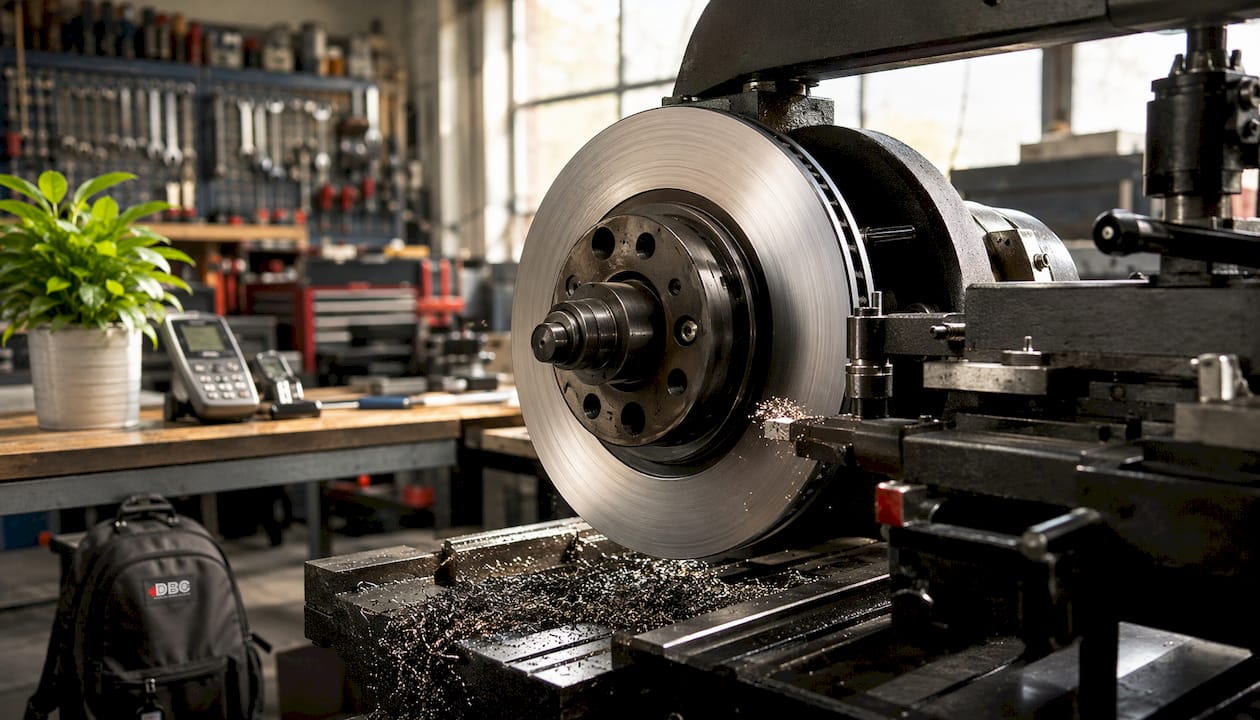
- Rotor resurfacing or replacement: Rotors are either machined flat or replaced outright, depending on thickness and condition. Vibrations felt through the pedal often point to rotor issues requiring immediate attention.
- Brake line and caliper service: Technicians check for leaks in brake lines and verify caliper function. Seized or leaking calipers cause uneven braking and accelerated pad wear.
- Brake fluid flush: Brake fluid absorbs moisture over time, reducing boiling point and hydraulic performance. A flush removes contaminated fluid and restores system integrity.
- ABS diagnostics and repair: Electronic brake system checks confirm that ABS sensors, modules, and wiring are functioning correctly for safe emergency stops.
- Noise and grinding diagnostics: Grinding sounds signal metal-on-metal contact, meaning pads are fully worn. Prompt diagnosis prevents rotor damage and higher repair costs.
A quality brake shop distinguishes between a simple pad replacement and a full system service covering rotors, calipers, and fluid.
Understanding each brake service and why it matters
Brake pads: types, wear, and replacement timing
Brake pads come in three main compounds: organic, semi-metallic, and ceramic. Organic pads are quieter but wear faster. Semi-metallic pads handle heat well and suit most Canadian driving conditions, including winter. Ceramic pads produce less dust and last longer, making them a strong choice for daily drivers. Visual inspection alone is not enough to judge pad condition accurately. Certified technicians measure pad thickness with a gauge to confirm safe replacement timing.
Pro Tip: Ask your technician for the measured pad thickness in millimetres, not just a verbal "they look okay." A number gives you a clear baseline for the next service.
Rotors: resurfacing versus replacement
Rotors can be resurfaced if enough material remains above the minimum thickness specification. Once a rotor is below that threshold, replacement is the only safe option. Resurfacing costs less, but a rotor that is already near minimum thickness will need replacement soon regardless. Pairing new pads with worn rotors shortens pad life and degrades braking feel.
Calipers and brake lines
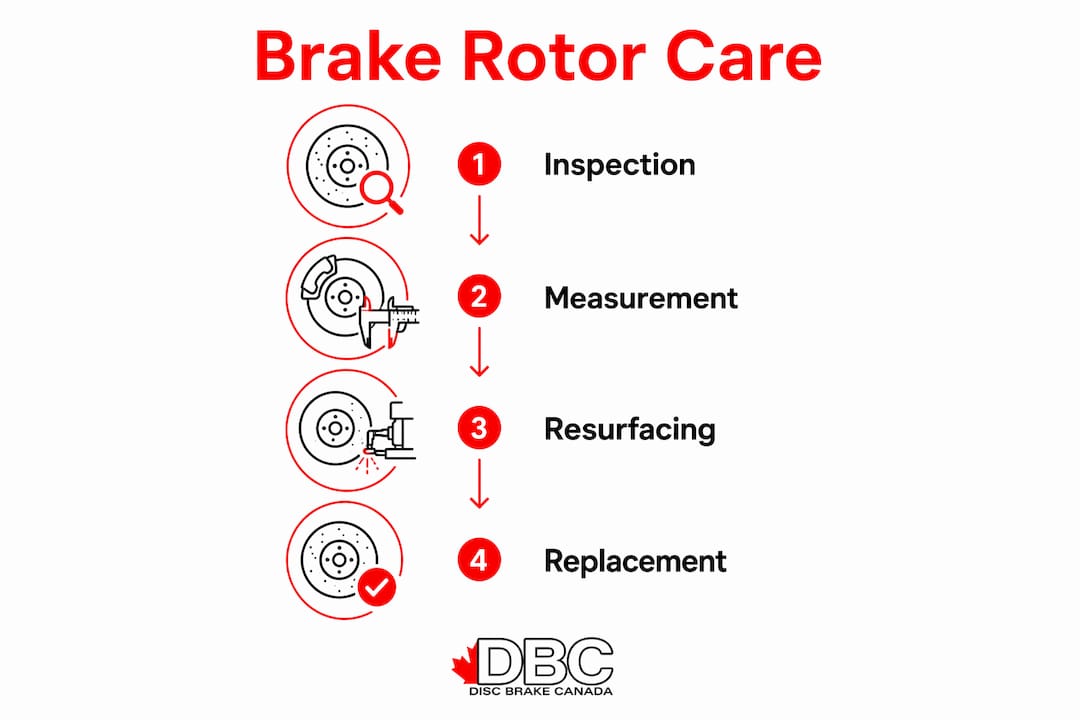
Calipers apply clamping force to the rotor through hydraulic pressure. A sticking caliper drags against the rotor constantly, generating heat and wearing pads unevenly. Brake lines carry that hydraulic pressure; any crack, corrosion, or leak reduces braking force. Canadian winters accelerate corrosion on brake lines, so annual inspection is practical, not optional.
Brake fluid: why scheduled flushes matter
A soft or spongy pedal often signals air in the lines or a failing master cylinder, not just worn pads. Brake fluid service removes moisture and contaminants that degrade hydraulic performance. Most manufacturers recommend a fluid flush every two to three years.
ABS system checks
ABS prevents wheel lock-up during hard braking, particularly on wet or icy roads. An illuminated ABS warning light requires a diagnostic scan to identify the fault, whether it is a wheel speed sensor, wiring issue, or module failure. Ignoring the light leaves the vehicle without electronic braking assistance in an emergency.
OEM versus aftermarket parts
OEM parts offer better fit and longevity; aftermarket parts can reduce cost but vary widely in quality. A reputable shop explains both options and their warranty implications before any work begins. Cross-drilled and slotted rotors, for example, are an aftermarket upgrade that improves heat dissipation and braking consistency under repeated hard stops.
After new pads are installed, brake burnishing transfers pad material evenly onto the rotor surface. Shops that skip this step risk premature noise and reduced performance from the first drive.
What does brake repair cost in Canada?
Entry-level brake services start at a baseline cost that includes parts, labour, and a test drive. The final cost depends on several factors:
- Vehicle make and model: European and luxury vehicles typically require more expensive OEM parts and longer labour times.
- Part quality: OEM parts cost more upfront; quality aftermarket parts can reduce the bill without sacrificing safety.
- Repair complexity: A pad-only replacement costs less than a full axle service covering pads, rotors, and caliper inspection.
- Additional services: If pad wear has already damaged rotors, replacement adds to the total. A brake system cost breakdown helps clarify what each line item covers.
Always request an itemised estimate that separates parts, machining, labour, and fluid service. A single lump-sum quote makes it impossible to compare shops or spot unnecessary charges.
Statistic callout: Professional brake inspections typically take 30-45 minutes and should be performed at least annually or during major service intervals. Catching wear early avoids the cost of full rotor replacement.
Preventive maintenance consistently costs less than reactive repair. Waiting until grinding starts usually means replacing rotors that could have been saved with an earlier pad change.
How to choose the right brake shop for your vehicle
Selecting a brake shop comes down to a short list of verifiable criteria:
- Certified technicians: Look for ASE certification or equivalent provincial credentials. Certification and transparent pricing are the two most reliable trust indicators when evaluating a shop.
- Itemised estimates: A reputable shop provides a written estimate before work begins, listing parts, labour, and any fluid service separately.
- Warranties on parts and labour: Ask specifically what the warranty covers and for how long. A shop that cannot answer clearly is worth skipping.
- Customer reviews: Check Google ratings and read recent reviews, focusing on comments about pricing accuracy, wait times, and whether the shop explained the work clearly.
- OEM versus aftermarket options: A good shop presents both choices and explains the trade-offs rather than defaulting to the cheapest part available.
- Appointment clarity: Shops that provide a specific appointment time and communicate expected service duration respect your schedule.
Pro Tip: Ask whether the shop includes a brake fluid check as part of every service. A shop that only replaces pads without checking fluid condition is not offering complete brake care.
What warranties and service guarantees should you expect?
Reputable brake shops back their work with written warranties covering both parts and labour. A standard pad replacement typically carries a warranty ranging from 12 months to lifetime coverage on parts, depending on the brand and shop. Labour warranties commonly run 12 months or 12,000 kilometres, though some shops extend that to 24 months when a fluid exchange is included. The warranty should be honoured at the shop where the work was performed, and the terms should be printed on your invoice, not just stated verbally. Before authorising any repair, confirm whether the warranty is voided by using aftermarket parts or by having subsequent work done elsewhere.
What qualifications should brake technicians hold?
ASE certification is the recognised standard for brake technicians in North America, specifically the ASE A5 Brakes certification. Technicians with this credential have passed standardised testing on brake system diagnosis, repair, and service procedures. In Canada, provincial apprenticeship programmes through the Red Seal trade certification also qualify technicians to work on brake systems. A shop staffed by Red Seal or ASE-certified technicians is more likely to follow manufacturer specifications and use proper measurement tools rather than relying on visual estimates alone. Ask the shop directly about technician credentials before booking.
How to evaluate a brake shop's reputation
Start with Google reviews, filtering for the most recent 20 to 30 entries. Look for patterns rather than outliers: consistent comments about honest pricing, clear explanations, and accurate time estimates carry more weight than a single five-star review. A shop with a high volume of detailed reviews is generally more trustworthy than one with a handful of generic ratings. Check whether the shop responds to negative reviews professionally. That response behaviour signals how the business handles problems when they arise. Word-of-mouth referrals from neighbours or colleagues who drive similar vehicles remain one of the most reliable indicators of consistent service quality.
What to expect for wait times and booking
Most brake pad replacements take one to two hours once the vehicle is on the lift. A full axle service covering pads, rotors, and fluid can run two to three hours. Shops that offer online booking and confirm appointment times specifically, rather than giving a broad morning or afternoon window, make the process easier to plan around. Same-day service is available at many shops for straightforward pad replacements, but complex repairs or parts that need to be ordered may require a next-day appointment. Calling ahead to describe the symptoms you are experiencing helps the shop prepare the correct parts and allocate the right amount of time.
DBC Brakes: premium brake kits for Canadian drivers
DBC Brakes offers a direct alternative to sourcing brake components through a shop at retail markup. As a Canadian manufacturer, DBC Brakes supplies premium brake kits built around engineered cross-drilled rotors designed to resist warping and improve stopping consistency under repeated use.
Pricing is all-inclusive with no hidden fees, and orders over $100 ship free across Canada. The kits are vehicle-specific, covering a broad range of makes and models, so fitment is straightforward. Support comes from knowledgeable staff, not automated responses, which matters when you need to confirm compatibility before ordering. For drivers who want to bring quality parts to their preferred local shop, or who are comfortable with a professional installation using parts they sourced directly, DBC Brakes is a practical, cost-transparent option. Visit crossdrilledrotors.ca to find the right kit for your vehicle.
Key takeaways
A professional brake shop should cover the full system, not just pads, and entry-level brake services in Canada start around $399 CAD inclusive of parts and labour.
| Point | Details |
|---|---|
| Pad replacement threshold | Replace brake pads when thickness is below the manufacturer's recommended limit to prevent rotor damage and maintain safe stopping. |
| Inspection frequency | Brake inspections should be done periodically, such as annually or during major service intervals, and typically require 30-45 minutes to complete. |
| Cost baseline | Entry-level brake services in Canada start around $399 CAD, covering parts, labour, and a test drive. |
| Technician credentials | Look for ASE A5 or Red Seal certification to confirm technicians meet recognised brake service standards. |
| DBC Brakes | Supplies vehicle-specific brake kits with cross-drilled rotors, transparent pricing, and free shipping on orders over $100 across Canada. |