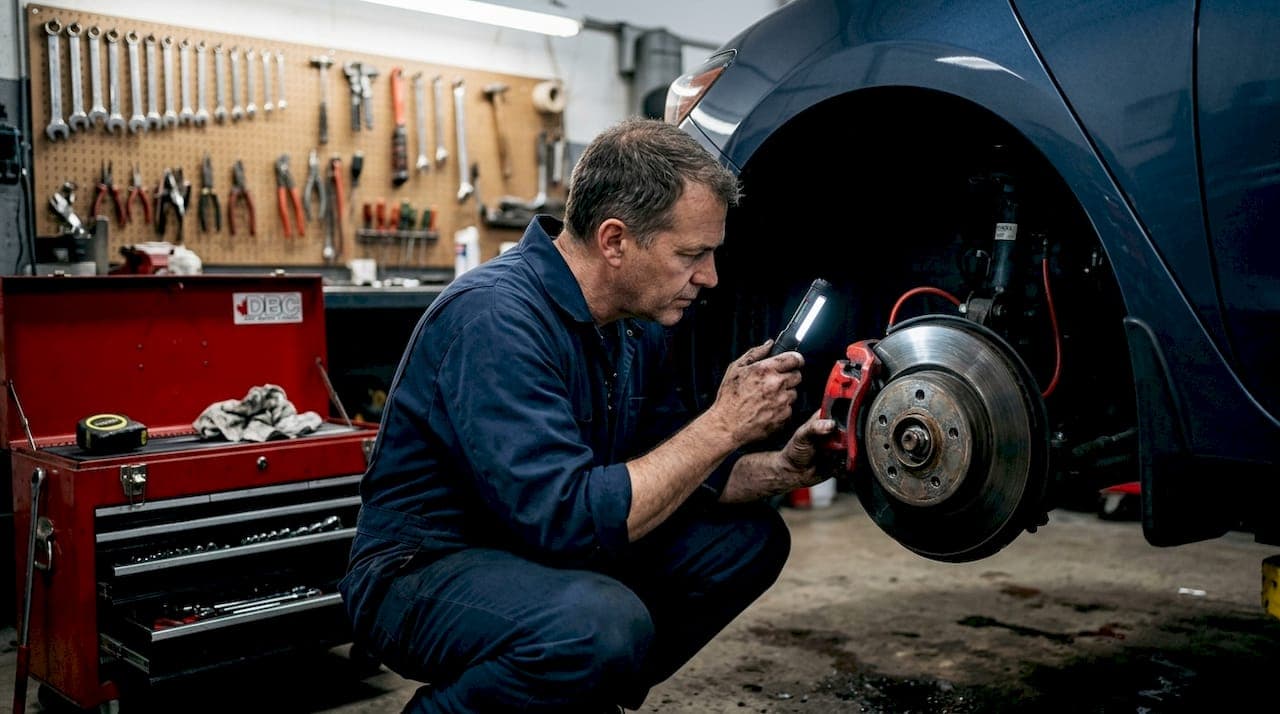
A brake grinding noise is defined as a harsh, metallic sound produced by direct metal-on-metal contact inside your brake system. It signals that the friction material on your brake pads has worn away, leaving the steel backing plate rubbing against the rotor. This is not a noise to monitor and wait on. Persistent grinding worsening with each stop requires immediate attention before it causes rotor damage and significantly higher repair costs. Squealing is an early warning; grinding is the final warning before brake failure, and the difference between the two is the difference between a pad replacement and a full rotor job.
What does brake grinding noise mean and what causes it?
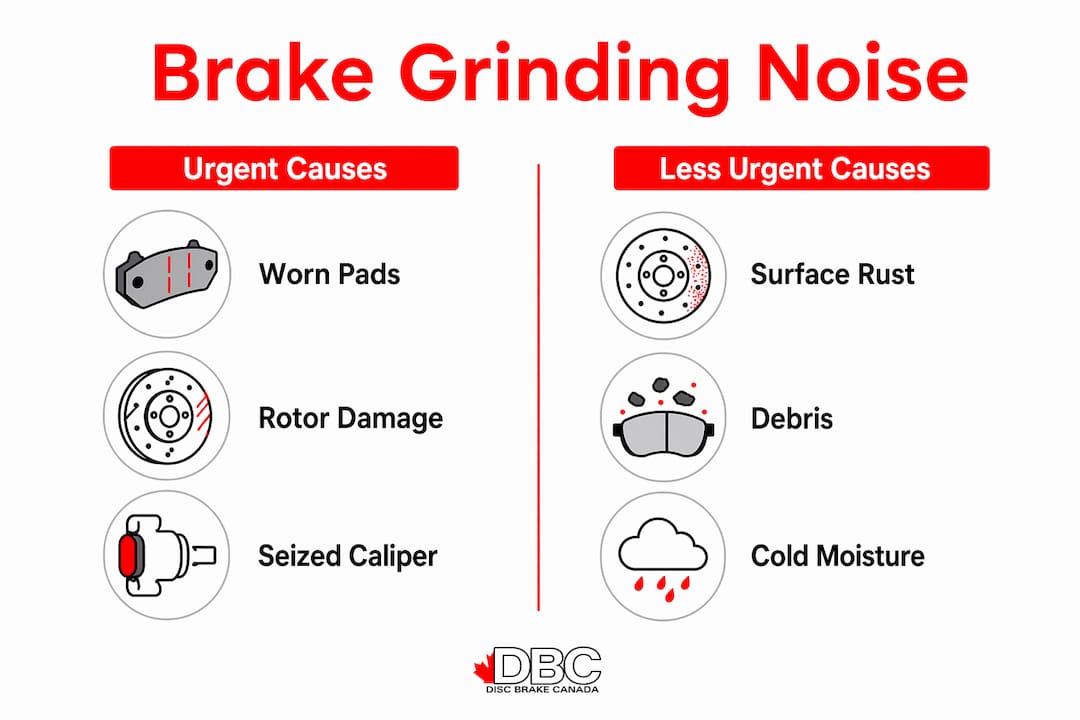
Brake grinding noise, known in the industry as metal-on-metal brake contact, has several distinct causes. Identifying which one applies to your vehicle determines how urgently you need to act.
-
Worn brake pads. This is the most common cause. Once the friction material wears down completely, the steel backing plate contacts the rotor directly. Grinding every time brakes are applied is the clearest sign of this failure. The noise will worsen with every stop until the rotor itself is scored and damaged.
-
Surface rust on rotors. Vehicles left sitting overnight or through wet weather develop a thin layer of rust on the rotor surface. This produces a brief grinding sound on the first one or two stops. Surface rust clears within 2–3 stops; if the noise disappears quickly, this is the likely cause and is generally harmless.
-
Debris lodged between rotor and pad. Small stones, gravel, or road debris can wedge between the brake pad and rotor. Debris and seized calipers are common secondary causes of grinding that drivers often overlook. This type of grinding is usually intermittent and may resolve on its own, but it can score the rotor if left in place.
-
Sticking or seized brake caliper. A seized caliper keeps constant pressure on the brake pad against the rotor, even when you are not braking. Grinding without brake pressure is a reliable indicator of a stuck caliper and requires professional inspection. Understanding the role of the brake caliper helps clarify why a seized one creates so much friction and heat.
-
Wheel bearing noise misdiagnosed as brake grinding. Not every grinding sound comes from the brakes. Wheel bearing noise varies with cornering rather than with brake application. If the grinding changes pitch when you turn the steering wheel but disappears when you brake, the wheel bearing is the more likely culprit.
-
ABS activation. Anti-lock braking systems produce a pulsing, grinding sensation during hard stops. This is normal system behaviour and not a sign of brake damage.
Pro Tip: Pay attention to whether the noise happens only when braking or also when rolling at speed. That single observation narrows the cause significantly before you even look at the wheels.
How do you tell urgent grinding from a harmless noise?
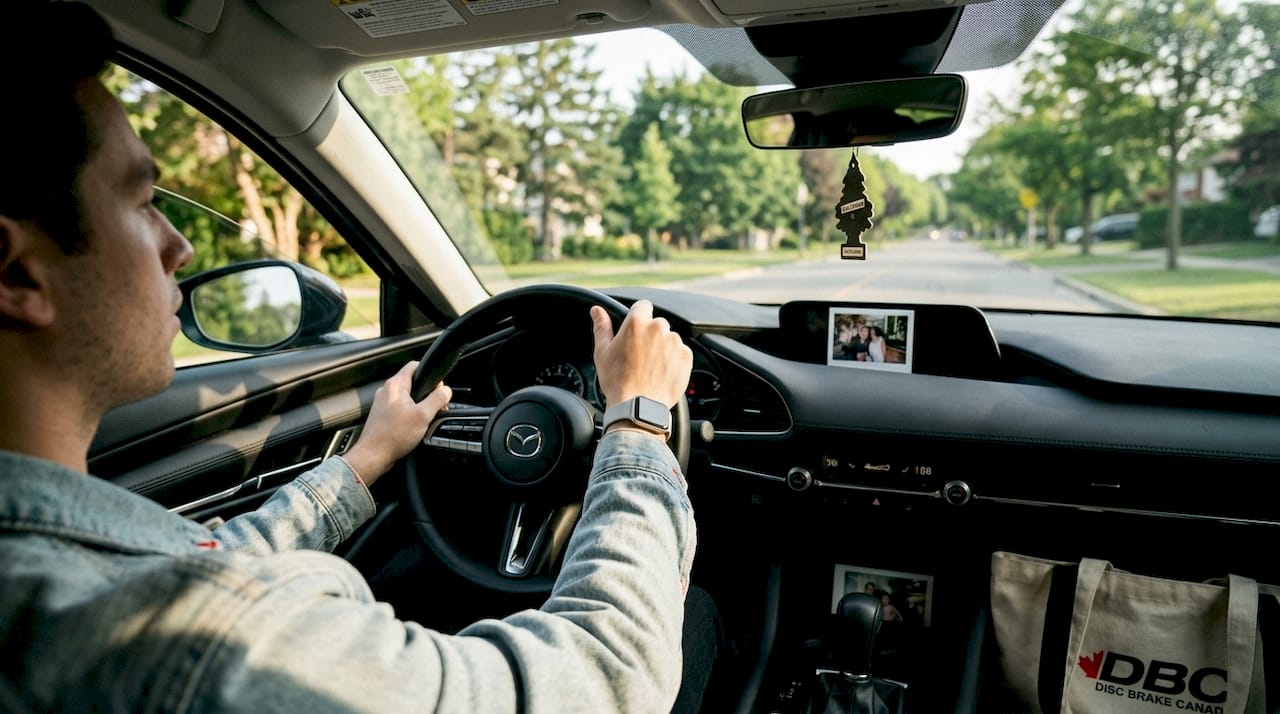
Not every grinding sound carries the same level of urgency. The timing, consistency, and conditions of the noise are the fastest way to sort a serious problem from a minor one.
The table below maps noise patterns to their most likely cause and urgency level.
| When the noise happens | Most likely cause | Urgency |
|---|---|---|
| Every brake application | Worn pads, metal-on-metal contact | Immediate |
| First 2–3 stops of the day only | Surface rust on rotors | Low |
| Turning without braking | Wheel bearing | Moderate to high |
| Constant, no braking required | Seized caliper | Immediate |
| Intermittent, random stops | Debris between pad and rotor | Moderate |
Two additional symptoms confirm rotor damage is already occurring. Pedal pulsation, a vibrating or pulsing feeling through the brake pedal, signals that the rotor surface has become uneven. Pedal pulsation accompanying grinding means the rotor requires machining or full replacement. A burning smell after driving, particularly near one wheel, points to a caliper dragging continuously against the rotor.
Rust grinding fades fast as the rotor surface cleans itself. If the noise is completely gone after three stops and does not return, surface rust is almost certainly the cause. If it persists or returns every time you drive, the problem is mechanical and requires a proper inspection.
Pro Tip: After a drive, carefully hold your hand near each wheel without touching it. If one wheel radiates noticeably more heat than the others, a sticking caliper is likely dragging on that side.
What happens if you ignore brake grinding noise?
Ignoring a grinding brake noise does not make the problem smaller. Every kilometre driven on metal-on-metal contact makes the repair more expensive and the vehicle less safe.
-
Rotor damage. The steel backing plate of a worn pad scores deep grooves into the rotor surface. Delaying repairs increases total costs because a rotor that could have been saved with an early pad replacement now needs machining or full replacement.
-
Reduced stopping power. Metal grinding against metal does not generate the same friction as a proper brake pad. Stopping distances increase, and the vehicle becomes harder to control in an emergency.
-
Caliper and hardware damage. Prolonged metal contact generates extreme heat. That heat warps rotors, damages caliper seals, and can cause brake fluid to boil inside the lines. The repair scope grows from pads alone to pads, rotors, calipers, and potentially brake lines.
-
Increased total repair cost. A standard brake pad replacement is a fraction of the cost of replacing rotors and calipers together. The longer the grinding continues, the more components fail, and the higher the final bill.
-
Safety risk. A brake system operating on metal-on-metal contact is a compromised safety system. Brake failure at highway speed or in an emergency stop is a direct consequence of ignoring this noise.
What should you do when your car makes a grinding noise when braking?
The right response depends on how severe and consistent the noise is. These steps move from immediate safety checks to longer-term maintenance.
-
Stop driving if the noise is constant. A grinding sound on every stop, or a grinding sound without any braking at all, means the brake system is actively damaging itself. Continuing to drive risks complete brake failure.
-
Check pad thickness visually. Look through the wheel spokes at the brake caliper and rotor. The pad should be visible pressed against the rotor. Less than 3 mm of friction material visible on the pad signals urgent replacement. Many wheels allow a clear enough view to make this check without removal.
-
Check for uneven wheel heat. After a short drive, hold your hand near each wheel without touching it. One wheel hotter than the others indicates a possible stuck caliper dragging the brake on that side.
-
Clear debris if safe to do so. If the grinding is intermittent and you suspect a stone or gravel is lodged near the rotor, a visual inspection may reveal it. A short drive at low speed sometimes dislodges small debris. Do not attempt to remove debris from a hot brake assembly.
-
Book a professional inspection. A technician can measure pad thickness accurately, check rotor surface condition, test caliper operation, and assess brake fluid condition. Reviewing the role of brake fluid in safety is worthwhile before any brake service, as degraded fluid compounds heat-related damage.
-
Replace components with quality parts. When pads and rotors need replacement, the quality of the parts matters. Cross-drilled rotors, like those offered by DBC Brakes, dissipate heat more effectively and resist the warping that leads to pedal pulsation and noise recurrence.
A winter car care checklist that includes brake inspection is a practical habit for Canadian drivers, where road salt and freeze-thaw cycles accelerate rotor rust and pad wear.
Key takeaways
Brake grinding noise is metal-on-metal contact caused by worn pads, debris, rust, or a seized caliper, and it requires immediate diagnosis to prevent rotor damage and rising repair costs.
| Point | Details |
|---|---|
| Grinding means metal contact | Worn pads expose the steel backing plate, which scores the rotor with every stop. |
| Noise timing identifies the cause | Grinding on every stop means worn pads; morning-only grinding usually means surface rust. |
| Pedal pulsation confirms rotor damage | A vibrating pedal alongside grinding means the rotor surface is already uneven. |
| Ignoring it multiplies the cost | Delaying repair turns a pad job into a rotor, caliper, and hardware replacement. |
| Less than 3 mm pad thickness is urgent | Visually check pad thickness through the wheel; replace immediately at or below 3 mm. |
Sam's take on brake noises drivers get wrong
Drivers consistently underestimate brake grinding noise, and I think it comes down to one misconception: they assume the car will tell them when it is truly dangerous. The reality is that grinding is already the final warning. The earlier signal, the high-pitched squeal from the wear indicator, already passed.
The other mistake I see regularly is drivers describing the noise as "just a little grinding in the morning." Morning-only grinding from surface rust is genuinely harmless. But that description also fits the early stages of a worn pad problem, where the noise has not yet become constant. A technician needs to know whether the noise disappears after two stops or persists through an entire drive. That detail changes the diagnosis completely.
My practical advice: when you describe a brake noise to a technician, tell them exactly when it happens. Does it occur on every stop? Only when turning? Only at low speed? Only after the car sits overnight? That information is more useful than any description of the sound itself. Accurate timing narrows the cause before the car is even on the lift.
Preventing brake grinding is straightforward. Check pad thickness at every tyre rotation. Replace pads before the wear indicator contacts the rotor. Keep brake fluid fresh, as degraded fluid lowers the boiling point and accelerates caliper seal failure. These habits cost very little and prevent the expensive cascade of rotor and caliper damage that follows neglected pads.
— Sam
Brake grinding solutions from DBC Brakes
Brake grinding noise points to a specific mechanical problem, and the fix requires quality parts installed correctly.
DBC Brakes is a Canadian manufacturer offering premium brake kits built for daily drivers and performance enthusiasts. Their cross-drilled rotors are engineered to prevent warping and manage heat more effectively than standard rotors, which directly reduces the conditions that lead to noise and pedal pulsation. DBC Brakes provides transparent, all-inclusive pricing with no hidden fees, and free shipping on orders over $100. If you need replacement rotors, pads, or a full brake kit for your vehicle, DBC Brakes offers knowledgeable support from real people, not automated responses. Getting the right parts the first time prevents the repeat grinding that comes from low-quality replacements.
FAQ
What does brake grinding noise mean?
Brake grinding noise means the brake pads have worn down to the steel backing plate, which is now rubbing directly against the rotor. It can also indicate debris, a seized caliper, or surface rust, depending on when and how the noise occurs.
Is grinding noise bad for brakes?
Persistent grinding is serious and causes direct rotor damage with every stop. Surface rust grinding that clears within two or three stops is generally harmless, but any grinding that continues through a full drive requires immediate inspection.
Why are my brakes grinding only in the morning?
Morning-only grinding that disappears after a few stops is almost always surface rust. Rotors develop a thin rust layer overnight, especially in wet or humid conditions, and the pads clean it off quickly during the first stops of the day.
Can I drive with a grinding brake noise?
Driving with constant brake grinding accelerates rotor damage and reduces stopping power. Short, low-speed driving to reach a repair shop is acceptable, but highway driving or extended use on a grinding brake system is unsafe.
How do I fix brake grinding noise?
The fix depends on the cause. Worn pads require pad replacement, often with rotor resurfacing or replacement. Debris may clear on its own. A seized caliper requires professional repair. Less than 3 mm of pad thickness visible through the wheel means replacement is overdue.