
Brake torque is the rotational force a brake system applies at the wheel to slow or stop it. It's measured in Newton-metres (N·m) or pound-feet (lb-ft), and it comes from a simple relationship: clamp force multiplied by the pad's friction coefficient, multiplied by the rotor's effective radius. SAE J992 treats brake torque as the standard measurement for describing how hard a braking system fights wheel rotation, distinct from other torque figures you'll see on a spec sheet.
In symbolic form, it looks like this: Tb = Fc × μ × r.
- Fc = clamp force (from hydraulic pressure acting on the caliper pistons)
- μ = the pad's friction coefficient (how "grippy" the pad material is against the rotor)
- r = effective radius (the average distance from the rotor centre to where the pad contacts it)
One more definition worth knowing: brake torque is technically the product of the tangential frictional forces in the brake assembly and their distance from the axis of rotation, which is exactly what that formula captures in numbers you can calculate yourself.
Key Takeaways
Brake torque is the clamp force, friction coefficient, and effective radius working together to produce the rotational force that slows a wheel, and it drops when heat pushes pad friction past its stable range.
| Point | Details |
|---|---|
| Core definition | Brake torque is the twisting force brakes apply at the wheel, measured in N·m or lb-ft. |
| Formula to remember | Torque equals clamp force × friction coefficient × effective radius, doubled for two pad faces. |
| Heat changes everything | Pad friction coefficient shifts with temperature, so sustained torque matters more than peak torque. |
| Calculations are comparative | Use hand calculations to compare setups, not as a substitute for dynamometer or instrumented test data. |
| Matched kits raise sustained torque | DBC Brakes builds cross-drilled rotor kits designed to manage heat and keep torque more consistent under repeated stops. |
Table of Contents
- What does brake torque mean in terms of how it's generated?
- How to calculate brake torque step by step
- What factors change how much brake torque a vehicle produces?
- How is brake torque actually measured or tested?
- What does higher brake torque actually mean for your driving?
- Common mix-ups: engine torque, lug-nut torque, and brake torque
- Using brake torque to choose the right upgrade
- A note on where this explanation comes from
- How DBC Brakes engineers for higher sustained torque
- Where to read more on brake torque
- Frequently asked questions
- Sources
What does brake torque mean in terms of how it's generated?
Press the brake pedal, and you start a chain reaction. The pedal pushes a rod into the master cylinder, which pressurizes brake fluid. That pressure travels through the lines to the caliper, where it pushes on the caliper pistons. The pistons clamp the pads against the rotor. Friction between pad and rotor resists the wheel's rotation, and that resistance, measured at the hub, is your brake torque.
Two multiplications drive the whole system:
- Piston area × hydraulic pressure = clamp force
- Clamp force × pad friction coefficient × effective radius = torque
A standard disc brake has pads on both sides of the rotor, so you get two friction faces working at once. That doubles the friction force compared to a single-sided setup, which is one reason disc brakes outperform old-style single-shoe designs so decisively.
Pro Tip: Bigger rotors and multi-piston calipers tend to show up together on performance builds for a reason. A larger rotor increases effective radius (more leverage), but only a caliper with enough piston area and clamping force can put that extra leverage to use. Upgrade one without the other and you leave torque on the table.
How to calculate brake torque step by step
You don't need an engineering degree to run this math. Here's the order:
- Find your hydraulic pressure (from the master cylinder, typically in kPa or psi).
- Find your caliper's total piston area (add up all pistons on that caliper).
- Multiply pressure by piston area to get clamp force.
- Find your pad's apparent friction coefficient (typically listed by the pad manufacturer, often between roughly 0.35 and 0.55 for street compounds).
- Find your rotor's effective radius (distance from centre to the middle of the pad contact patch, not the outer edge).
- Multiply clamp force × friction coefficient × effective radius (then double it for two friction faces) to get total brake torque at that corner.
Worked example: Say a caliper produces 8,000 N of clamp force per piston pair, the pad has a friction coefficient of 0.40, and the rotor's effective radius is 0.11 metres (110 mm). Friction force works out to 8,000 × 0.40 = 3,200 N. Multiply by the effective radius: 3,200 × 0.11 = 352 N·m per friction face. With two faces contributing, you land around a calculated 704 N·m of brake torque at that wheel, or roughly 519 lb-ft.
Online brake torque calculators run exactly this arithmetic, but they're comparison tools, not certification results. A calculator tells you whether Setup A produces more theoretical torque than Setup B. It can't tell you what either setup will do after ten minutes of mountain-pass braking.
That gap matters because real brake torque shifts constantly during a stop. Pad temperature, bed-in condition, and rotor surface condition all move the actual friction coefficient away from the number printed on the pad box. Treat any hand-calculated figure as a starting point for comparing options, never as a guaranteed output.
What factors change how much brake torque a vehicle produces?
Hardware sets the ceiling. Conditions decide how close you get to it.
On the hardware side, piston area and the number of pistons determine how much clamp force a caliper can generate for a given hydraulic pressure. Caliper mechanical advantage (fixed calipers versus floating designs) changes how efficiently that clamp force gets applied. Pad material sets the friction coefficient, and rotor diameter sets the effective radius, which is the leverage arm the whole system multiplies against.
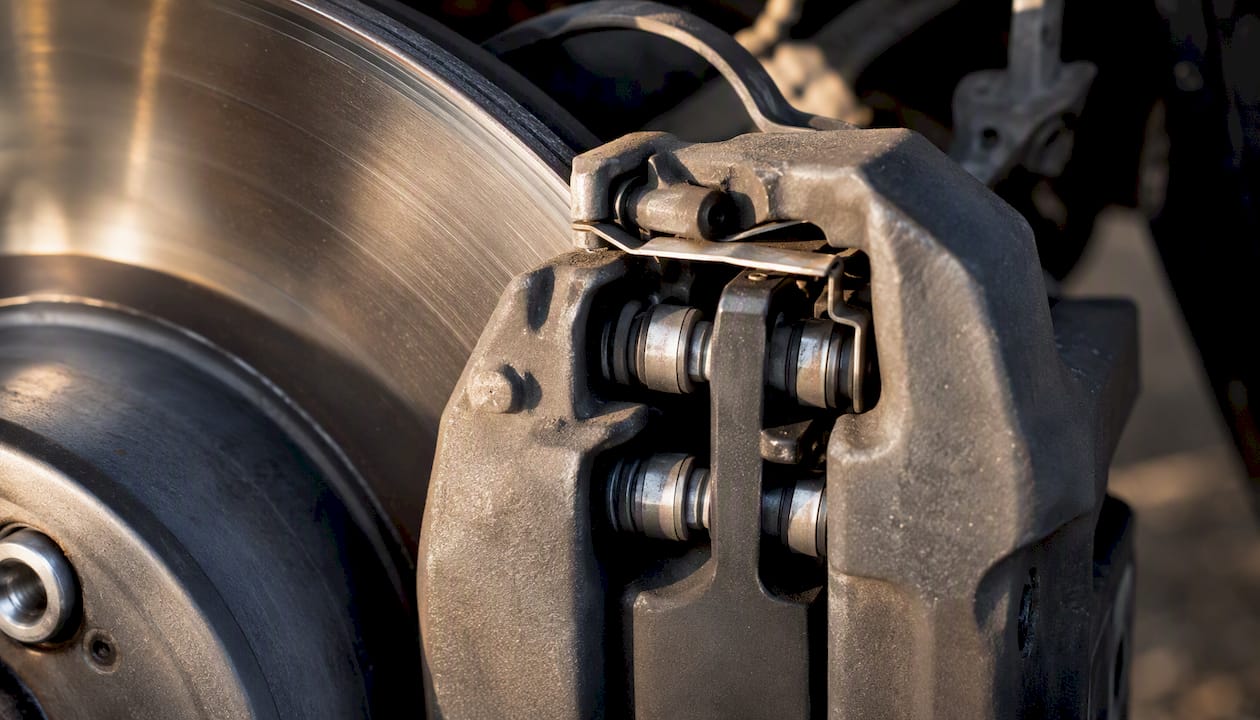
On the condition side, hydraulic pressure depends on pedal effort and any power assist. Pad temperature swings the friction coefficient up or down depending on compound chemistry, which is why temperature dependence in brake friction materials is such a well-studied problem in brake engineering. Rotor surface condition (glazing, rust, uneven wear) and brake fluid condition (moisture content lowering the boiling point) both chip away at consistent torque output.
Every upgrade path involves a trade-off:
- Bigger rotors raise effective radius and heat capacity, but add unsprung weight and may need larger wheels to clear.
- Multi-piston calipers increase clamp force and even out pad wear, but cost more and can change pedal feel if not matched properly.
- Higher-friction pads raise the friction coefficient, but often trade off cold bite, noise, or dust for that extra grip.
Pro Tip: If everyday drivability matters as much as outright stopping power, prioritize pad compound changes before rotor diameter changes. A well-matched street-performance pad raises sustained torque without disrupting the pedal feel you're used to, while a rotor swap can shift bite point and modulation in ways that take adjustment.
How is brake torque actually measured or tested?
Published torque figures come from a handful of standard methods, and each one tells you something slightly different.
Brake dynamometers spin a wheel and brake assembly on a bench, applying controlled hydraulic pressure while a torque sensor logs output. This isolates the brake corner from the rest of the vehicle, which is why manufacturers and engineering references rely on dynamometer data for design validation.
Wheel torque sensors measure torque directly at the hub on an instrumented vehicle, capturing real-world behaviour including suspension and driveline effects the dynamometer can't replicate.
Torque arms on test rigs measure the reaction force transmitted through a fixed arm, a simpler mechanical method often used in lower-cost test setups or classroom demonstrations.
| Method | What it measures | Best application |
|---|---|---|
| Brake dynamometer | Steady-state and peak torque under controlled thermal load | Product development, QA validation |
| Wheel torque sensor | Real torque at the hub under actual driving loads | Instrumented on-vehicle testing |
| Torque arm rig | Reaction torque transmitted through a fixed lever | Basic bench testing, teaching demonstrations |
On-vehicle tests capture something dynamometers can't: driveline drag and rotational inertia from the whole vehicle. But that also means the number reflects more than just the brake corner. Bench dynamometers strip those variables out, which makes them the more precise tool for comparing one brake component against another.
What does higher brake torque actually mean for your driving?
Torque numbers translate into outcomes you feel behind the wheel, and the biggest one is stopping distance under repeated hard braking.
A brake system with higher sustained torque holds its stopping power through multiple hard stops because it manages heat better, not because the first stop is dramatically shorter. Brake torque directly shapes stopping distance and pedal feel, and the difference shows up most on a mountain descent or a track day, where consecutive stops push pad temperature high enough to trigger fade in an underbuilt system.
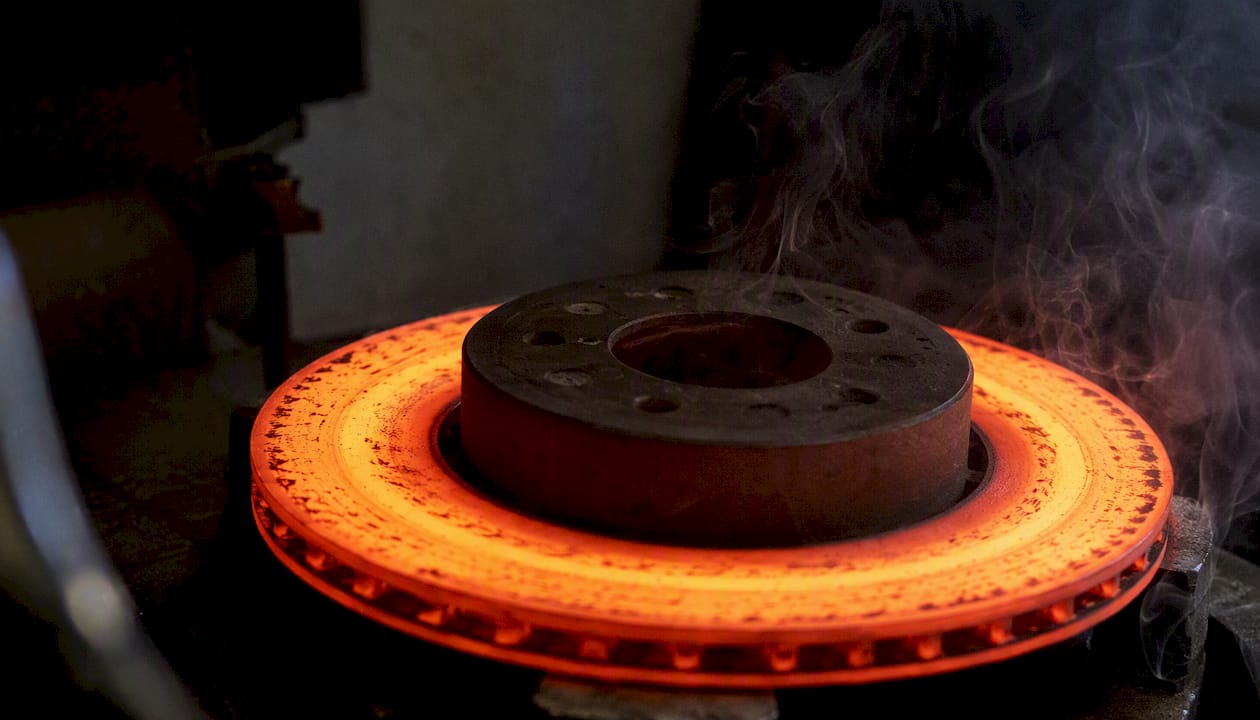
Pedal feel and raw stopping power aren't the same thing, and it's worth separating them. A system can produce strong peak torque but feel wooden or grabby under your foot if the caliper and master cylinder aren't matched well. Modulation, meaning how predictably torque builds as you press harder, matters as much as the maximum number for everyday confidence in traffic.
Upgrade outcomes follow a predictable pattern:
- Larger rotors typically raise sustained torque by adding heat capacity, so friction coefficient doesn't fall off as quickly during repeated stops.
- Multi-piston calipers spread clamp force more evenly across the pad, reducing hot spots and uneven wear that would otherwise erode torque over time.
- Combining both usually beats either change alone, since rotor heat capacity and caliper clamping force reinforce each other.
Pro Tip: When budget or fitment limits you to one change, start with pads. A higher-friction, higher-temperature-rated pad compound is the cheapest way to raise sustained torque, and it doesn't require new rotors, calipers, or wheel clearance checks.
Common mix-ups: engine torque, lug-nut torque, and brake torque
These three terms share a word and nothing else, and mixing them up leads to confused conversations at the parts counter.
Engine torque vs. brake torque: Engine torque describes rotational force the engine produces to drive the wheels forward. Brake torque describes rotational force the brake system applies to resist that motion. They act on the same driveline but in opposite directions, and SAE standards treat them as entirely separate measurements that should never be conflated in a spec conversation.
Lug-nut torque vs. brake torque: Lug-nut torque is a fastening spec, usually in the 80 to 140 lb-ft range depending on the vehicle, that tells you how tight to make the wheel-to-hub connection with a torque wrench. It has nothing to do with the rotational braking force generated at that same wheel. Confusing the two is common simply because both terms include the word "torque" and both relate to the wheel assembly.
Quick answers to the questions people ask most:
- Is brake torquing bad? No. "Torquing" brakes usually refers to torquing the caliper bolts or wheel lugs to spec, which is a required, routine step in any brake job.
- What should brakes be torqued to? Caliper bracket bolts and lug nuts each have a manufacturer-specified torque value, typically found in the vehicle's service manual. These values vary by make and model, so always check your own specification rather than a generic number.
- Do rotors need to be torqued? Rotors themselves aren't torqued. The bolts or lug nuts holding the wheel and, in some designs, the rotor retention screws, are torqued to spec during installation.
Using brake torque to choose the right upgrade
A torque calculation only earns its keep if it changes what you buy. Here's a straightforward way to use it:
- Measure your current specs: piston area, hydraulic pressure range, pad friction coefficient, and rotor effective radius.
- Run the calculation from the formula above to get a baseline torque figure for your current setup.
- Set a realistic target torque increase based on your driving needs (track days demand more than daily commuting).
- Check that any pad upgrade's heat capacity and friction range actually match your rotor and driving style, not just the highest number on the shelf.
- Confirm fitment and ABS compatibility before ordering, since larger rotors can affect wheel clearance and sensor tolerances.
Example: Take that earlier baseline of roughly 704 N·m. Increase the rotor's effective radius from 110 mm to 125 mm, a modest bump, and swap to a pad with a friction coefficient of 0.45 instead of 0.40. Recalculating: 8,000 × 0.45 = 3,600 N of friction force, times 0.125 m = 450 N·m per face, or about 900 N·m total.
Pro Tip: Before committing to parts, cross-check your numbers against measured test data or a dynamometer report where one is available, since a hand calculation is an estimate, not a certified figure. If you're shopping for compatible rotor and caliper combinations, start there before finalizing your target torque.
A note on where this explanation comes from
Brake torque gets muddied online because so many articles copy the same vague definition without showing the arithmetic behind it. This piece leans on published engineering references and standard formulas rather than marketing language, because a reader trying to compare two setups needs numbers that hold up, not adjectives.
- For a deeper look at how clamp force is generated and why it matters more than pad grip alone, see this technical guide on clamping force and brake performance.
- For caliper piston configurations and how they interact with rotor size, see this guide to brake caliper types for performance vehicles.
How DBC Brakes engineers for higher sustained torque
DBC Brakes is the practical next step once you understand why heat capacity, not just peak clamp force, decides real-world stopping performance. DBC's cross-drilled rotors are engineered to dissipate heat faster than a solid rotor of the same diameter, which keeps the pad's friction coefficient more stable through repeated hard stops instead of falling off as temperatures climb. That directly supports the sustained brake torque this article has walked through, rather than just a strong first stop that fades on the second or third.
Matched kits pair rotor design with a compatible caliper and pad combination, so you're not left guessing whether a bigger rotor will actually convert into more usable torque at the hub. Every kit ships with inclusive pricing and no hidden fees, and orders over $100 qualify for free shipping within Canada.
Pro Tip: If you're upgrading based on the torque math in this article, check the big brake kits collection for larger rotor and multi-piston caliper pairings, or browse the full brake kit collection to confirm fitment for your vehicle before ordering.
Where to read more on brake torque
- SAE J992 — Brake System Performance Requirements, the standard reference for how brake torque is defined and measured across truck and bus applications.
- ScienceDirect's engineering overview of brake torque, useful for readers who want the underlying physics in more technical detail.
- Temperature dependence of friction in brake materials (PMC), the clearest published explanation of why pad friction, and therefore torque, changes as brakes heat up.
- Braking torque calculator, formula and calculation (Electrical4u), which walks through an alternate engineering expression relating load, inertial, and friction torque.
Frequently asked questions
What does brake torque mean in simple terms? It's the twisting force your brakes apply to a wheel to slow it down, calculated from clamp force, pad friction, and rotor radius.
Is brake torquing bad? No. Torquing refers to tightening caliper bolts or wheel lugs to the manufacturer's spec, a normal and necessary step in any brake service.
What should brakes be torqued to? Caliper bolts and lug nuts each carry a specific torque value from the vehicle manufacturer, so check your service manual rather than assuming a universal number.
Do rotors need to be torqued? The rotor itself isn't torqued, but the wheel lugs and any retention screws holding it in place are torqued to spec during installation.
How is brake torque different from engine torque? Engine torque drives the wheels forward; brake torque resists that rotation to slow the vehicle. They're measured separately and act in opposite directions on the same driveline.
Sources
- SAE J992 — Brake system performance requirements (overview)
- Brake torque calculator — FormulaFactory
- Braking torque calculator, formula and calculation — Electrical4u
- Brake torque — ScienceDirect topics
- Temperature dependence of friction in brake materials — PMC