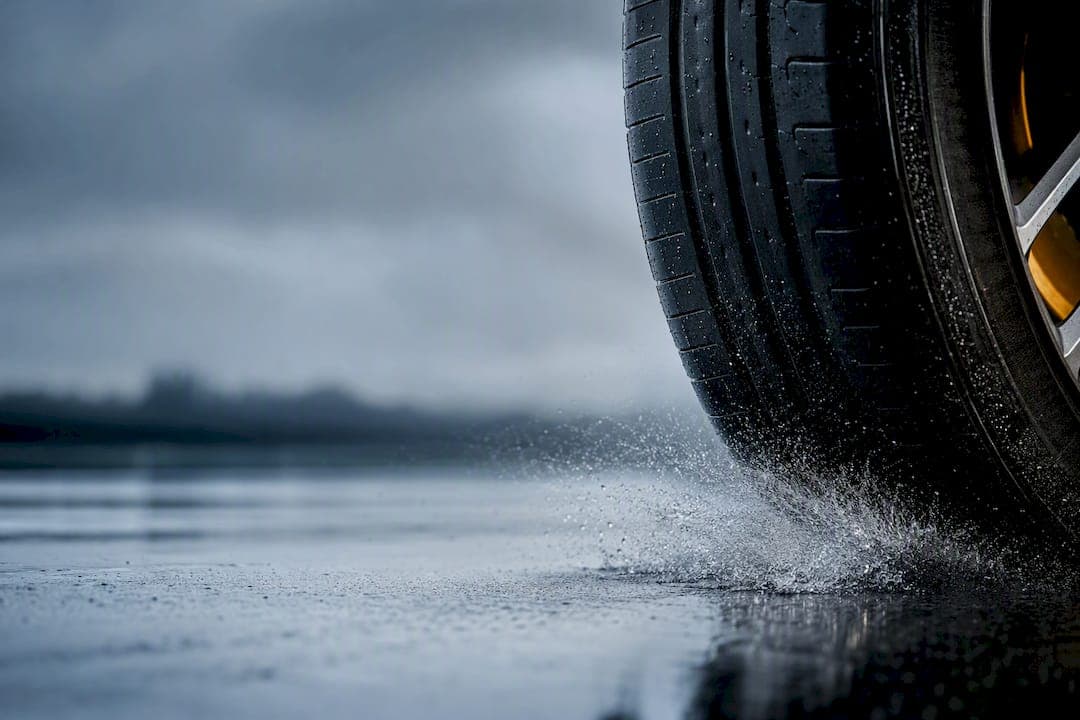
Check tyre pressure and tread first, then pad thickness and brake fluid condition. Those three checks fix most sluggish braking within a weekend. Beyond that, matched pads with slotted or cross-drilled rotors, and stainless braided lines, give the most reliable, repeatable gains. For anyone starting from scratch, a matched kit with engineered options removes the guesswork of pairing parts yourself.
TL;DR:
- Maintaining proper tyre pressure and tread condition is crucial, as underinflation and worn tyres significantly increase stopping distance and reduce control.
- Upgrading to high-quality pads with compatible rotors and flushing brake fluid can improve stopping performance within days for most daily drivers.
- Slotted rotors generally offer better heat dissipation and fade resistance on street and occasional track use, but drilled rotors can crack under extreme stress if not properly engineered.
- A properly matched brake kit ensures components work together effectively, avoiding the common pitfalls of incompatible parts and providing reliable stopping power.
- Regular system checks, including weight management and suspension maintenance, optimize brake effectiveness but cannot compensate for worn tyres or poor road contact conditions.
Table of Contents
- How do you improve stopping power today?
- Which brake pad compound actually stops better?
- Do slotted or drilled rotors reduce brake fade?
- What brake fluid keeps pedal feel firm under heat?
- What hardware upgrades make the pedal feel consistent?
- Why tyres and suspension limit your braking upgrades
- What's the smartest order to upgrade your brakes?
- Expert guidance from Sam and DBC Brakes
- Brake system upgrade options: calipers and master cylinders
- How much do ABS and electronic aids affect stopping power?
- How do you bed in new brake pads and rotors?
- Does cutting vehicle weight actually improve braking?
- Sam's take: when to maintain and when to buy a kit
- Where to find matched brake kits built for real stopping power
- Sources
- FAQ
How do you improve stopping power today?
The biggest gains often cost nothing but time. Before spending a dollar on parts, run through this checklist.
- Check tyre pressure cold, before the vehicle has driven more than a few kilometres, and inflate to the number on the driver's door jamb, not the tyre sidewall. Transport Canada's tyre guidance points to underinflation as a direct cause of reduced control and longer stopping distances.
- Inspect tread depth and sidewalls. Look for cracking, bulges, or worn tread that reduces grip and safety. A tyre in poor condition undercuts every other improvement you make to the brakes.
- Measure pad thickness. Most pads start around 10 to 12mm. Replace them once they reach a low thickness indicative of wear, and check both sides since inner and outer pads wear at different rates.
- Look at the rotor surface. Deep grooves, blue discolouration, or a glazed, glossy look mean the rotor has been overheated or is due for resurfacing or replacement.
- Check the brake fluid. Old fluid looks darker and cloudier than fresh fluid, which is nearly clear. Dark fluid usually means it has absorbed moisture and needs flushing.
- Bleed the system to clear trapped air if the pedal feels soft or sinks slowly to the floor.
Two habits matter as much as the parts themselves. Riding the brakes on long descents keeps the pads and rotors hot instead of letting them recover, which accelerates fade. Stacking hard stops back to back, like repeated hard braking at a track day or in stop and go mountain traffic, does the same thing. Give the system a few seconds of rolling time between hard stops whenever you can.
Which brake pad compound actually stops better?
Pad compound changes how a vehicle feels before it changes how fast it stops. The four common categories each trade off differently between bite, noise, dust, and rotor wear.
- Organic pads (sometimes called non-metallic or NAO) are quiet and gentle on rotors but fade fastest under sustained heat.
- Ceramic pads run cleaner, quieter, and last longer, with steady but unremarkable cold bite for most daily driving.
- Semi-metallic pads mix metal fibres into the compound for stronger bite and better heat resistance, at the cost of more noise and dust.
- Performance or track compounds deliver the highest coefficient of friction and the best resistance to fade at high temperature, but many need heat to work well and can feel grabby or dusty around town.
Coefficient of friction determines how much clamping force converts into actual deceleration, and it changes with temperature depending on the compound. A pad that grips hard cold but fades at 300°C is a poor match for anyone who tows or drives mountain roads. Pairing new pads with compatible rotors rather than swapping pads alone tends to produce the biggest measurable improvement in stopping distance.
Pro Tip: If you only make one brake upgrade this year, make it a semi-metallic or ceramic pad matched to fresh fluid. It's the change most daily drivers actually feel within the first week.
Do slotted or drilled rotors reduce brake fade?
Cut patterns change how heat and gas escape the rotor face, and that directly affects fade resistance under hard, repeated braking.
- Plain rotors are the simplest and most durable option, with no stress risers, but they shed heat the slowest of the group.
- Slotted rotors cut narrow channels across the face to clear gas and debris, improving bite consistency without weakening the rotor much.
- Drilled rotors add holes through the face for extra cooling surface, but repeated extreme heat cycling can crack the metal around the holes over time.
- Cross-drilled rotors, when engineered with proper hole placement and chamfering, combine some of the cooling benefit of drilling with more attention to stress distribution.
A peer-reviewed dynamometer study on cut-type contour brake discs found that certain slot and drill patterns measurably improved heat dissipation and reduced wear compared with plain baseline rotors under simulated heavy braking. For most street driving with occasional track days, slotted rotors offer the safer longevity trade-off. Cross-drilled designs make more sense once the engineering behind the hole pattern is sound, not just decorative. Anyone who tracks a vehicle hard and repeatedly should read up on why drilled rotors crack before committing to that route.
What brake fluid keeps pedal feel firm under heat?
Brake fluid rating determines how much heat the system can absorb before the pedal turns soft, and how quickly that protection erodes as the fluid ages.
- DOT 3 has the lowest boiling point of the common ratings and suits light, low-performance use only.
- DOT 4 raises the dry and wet boiling points, giving noticeably better fade resistance for daily driving and moderate performance use.
- DOT 5.1 pushes those boiling points higher still, and works well for enthusiasts who push their brakes harder without going full racing spec.
- DOT 5, despite the name, is a silicone-based fluid that is not compatible with most systems designed for glycol-based fluid, and it is not usually recommended as a swap-in upgrade.
All DOT 3, 4, and 5.1 fluids are hygroscopic, meaning they absorb moisture from the air over time, and that moisture lowers the boiling point and invites fade exactly when heat builds up hardest. A flush every two years covers typical driving, but anyone doing regular track days or towing should flush sooner. If the pedal feels soft or sinks under steady pressure, fluid contamination, trapped air, or a failing master cylinder can be causes; professional bleeding is recommended to restore firmness. A qualified technician is worth the visit if the pedal issue persists after a flush.
What hardware upgrades make the pedal feel consistent?
Rubber brake hoses expand slightly under pressure, and that expansion is what makes a pedal feel soft or spongy during repeated hard stops even when the fluid and pads are fine.
- Stainless steel braided lines wrap the rubber hose in a steel mesh sleeve, cutting that expansion and giving a firmer, more predictable pedal, a change documented in brake sensitivity testing.
- Multi-piston fixed calipers apply clamping force more evenly across the pad than a single-piston sliding caliper, which improves consistency during hard, repeated braking.
- Free-moving slider pins and clean caliper seals matter as much as any part swap. Seized sliders cause uneven pad wear and a pull to one side under braking.
- Correct wheel torque keeps the rotor seated flat against the hub, which prevents the pulsing feel that gets mistaken for warped rotors.
Pro Tip: A caliper rebuild kit costs far less than new calipers and often solves a soft or uneven pedal that a fluid flush alone didn't fix.
Braided lines are one of the better value upgrades on this list, and they pay off most for anyone who brakes hard repeatedly, whether that's mountain driving, towing, or the odd track day.
Why tyres and suspension limit your braking upgrades
Every improvement made to pads, rotors, or fluid still has to pass through four contact patches the size of a hand. That's the ceiling on how much stopping power any brake upgrade can deliver.
Transport Canada's guidance is direct on this point: correct inflation, healthy tread, and regular inspection are critical to braking performance, and underinflated or worn tyres undercut every hardware upgrade made upstream. Advanced systems like anti-lock brakes and Brake Assist help drivers keep control during a panic stop, but they depend on the tyre keeping grip with the road. Those systems improve steerability during an emergency manoeuvre more than they shorten the raw stopping distance on dry, straight pavement.
- Worn suspension bushings or tired shocks let the vehicle dive and shift weight unevenly under braking, which lengthens stopping distance and wears tyres unevenly.
- Misaligned wheels cause uneven tyre wear that reduces the contact patch exactly where braking force needs it most.
- Wet-weather tyre performance varies more between models than most drivers expect. A tyre rated well for dry grip can lag badly in the rain.
- Rotating tyres on schedule keeps wear even across all four corners, which keeps braking balanced left to right.
If a vehicle is due for tyres and a brake upgrade at the same time, the tyres come first. New rotors on old, worn tyres is money spent on the wrong end of the problem.
What's the smartest order to upgrade your brakes?
A quick diagnostic sequence tells you where the weak link actually is before you spend on parts: check tyre pressure and tread, then visually inspect pad and rotor condition, then test the fluid's colour and moisture content, then evaluate pedal feel for sponginess or travel.
Once you know where the system stands, work through upgrades in this order for the best return per dollar spent:
- Tyres and pressure first. This is free or nearly free and removes the ceiling on everything else.
- Pads and fresh fluid next. This is the upgrade combination most drivers actually feel within days of installation.
- A full bleed to clear any trapped air and confirm firm pedal feel.
- Stainless braided lines if repeated hard stops still soften the pedal.
- Rotors and calipers once pads, fluid, and lines are dialled in and more stopping power is still needed.
- Cooling ducting or a big-brake kit only for track use or vehicles that regularly push brakes past normal street conditions.
Cost bands roughly track this order: tyre and fluid work sits at the low end, pads and lines in the middle, and matched rotor and caliper kits at the higher end. Any red flags, a pulsing pedal that doesn't improve after a fluid flush, a grinding noise, or fluid that looks milky, are signs to get a certified technician involved rather than continuing to diagnose at home.
Expert guidance from Sam and DBC Brakes
Sam, who writes the DBC Brakes blog, built this prioritised approach from the same principle that runs through the research above: fix the cheap, high-impact things first, then invest in parts that solve a specific, diagnosed problem.
- Start every upgrade decision with a fitment check. Compatibility guides prevent the costly mistake of ordering parts that don't match your vehicle.
- Some companies engineer their cross-drilled rotors specifically to manage heat and resist warping under sustained use, addressing the fade issue that plagues cheaper, undersized rotors.
- Readers weighing a full kit against piecemeal parts can review which kit components actually move the needle on real stopping performance.
- Never pair an aggressive performance pad with a standard, undersized rotor. Mismatched components wear faster and can perform worse than a properly matched, milder setup.
Brake system upgrade options: calipers and master cylinders
Calipers and master cylinders control how much of the driver's pedal effort actually reaches the rotor, and upgrading either one changes the character of every stop.
A single-piston sliding caliper is the standard fitment on most daily drivers because it's simple, cheap to manufacture, and adequate for normal use. It clamps the pad against the rotor through a single hydraulic piston, sliding the whole caliper body to apply even pressure to both pad faces. Under hard or repeated braking, that single point of clamping force can flex slightly and clamp unevenly, which shows up as inconsistent bite.
Multi-piston fixed calipers, common on performance trims and aftermarket kits, apply force through two, four, or six smaller pistons spread across the pad's face. That spreads clamping load more evenly and resists flex, giving a firmer, more consistent pedal especially as temperatures climb.
A master cylinder that's original to a stock brake system is usually sized to match the stock caliper and rotor combination. Fitting significantly larger calipers or rotors without checking the master cylinder's bore size can leave the system underpowered even with better hardware installed, since the master cylinder needs to move enough fluid volume to fill the larger calipers properly. Anyone stepping up to bigger calipers should confirm the master cylinder is rated for that combination, either through the parts manufacturer's fitment data or a qualified shop, rather than assuming bigger calipers automatically mean better stopping.

How much do ABS and electronic aids affect stopping power?
Anti-lock braking systems don't make a vehicle stop faster on their own. What they do is prevent wheel lockup during hard braking, which keeps the driver able to steer around an obstacle instead of sliding straight into it.
On dry, straight pavement, a skilled driver modulating brakes manually can sometimes match or beat ABS for pure stopping distance, because a locked tyre briefly generates more friction than a rolling one under certain conditions. Where ABS earns its value is everywhere else: wet roads, gravel, uneven surfaces, and panic situations where most drivers can't modulate brake pressure precisely enough to avoid a skid.
Brake Assist, a companion system on many modern vehicles, detects the speed and force of a panic brake application and adds extra hydraulic pressure automatically, since many drivers don't press hard enough fast enough during a genuine emergency. Electronic brakeforce distribution shifts braking force between axles based on load and traction, which matters most when a vehicle is loaded unevenly or towing.
None of these systems compensate for bald tyres, worn pads, or contaminated fluid. They manage wheel behaviour during braking, but the raw stopping force still comes from tyre grip and mechanical brake components working properly. A vehicle with excellent ABS and worn tyres will still stop worse than a vehicle with basic brakes and fresh tyres in good condition.
How do you bed in new brake pads and rotors?
New pads and rotors need a proper bedding-in period before they deliver full stopping power, because the pad compound needs to transfer an even layer of friction material onto the rotor face.
Skipping this step is a common mistake after a brake job. Pads installed and immediately driven hard, or subjected to one prolonged hard stop from a red-hot cold start, can glaze instead of bed properly, leaving a hard, glassy layer that resists proper friction transfer for the life of the pad.
A reasonable bedding process looks like a series of moderate stops from around 50 to 60 km/h down to about 15 to 20 km/h, repeated 8 to 10 times with enough rolling time between each stop to let the brakes cool without coming to a complete stop and holding the pedal. That gradual heat cycling lets the pad material transfer evenly across the rotor surface. Avoid one single hard stop from high speed right after installation, and avoid coming to a complete stop and sitting with the brakes applied while they're still hot, since that concentrates heat in one spot on the rotor and can create an uneven transfer layer that shows up later as a pulsing pedal.

Performance pads, especially aggressive semi-metallic or track compounds, often have a more specific bedding procedure from the manufacturer. Following that guidance matters more with aggressive compounds than with a mild organic or ceramic pad, since the more aggressive the compound, the less forgiving it is of a rushed break-in.
Does cutting vehicle weight actually improve braking?
Weight change affects stopping distance directly, since the kinetic energy a brake system has to dissipate as heat scales with the vehicle's mass. A heavier vehicle carries more momentum at the same speed, and every bit of that momentum has to convert to heat through the same pads and rotors.
This is why cargo left in a trunk, a roof box, or a full load of passengers measurably extends stopping distance, even though nothing about the brakes themselves has changed. It's also why decisions like removing a spare tyre and jack for track use, or skipping unnecessary cargo on a mountain drive, aren't just about lap times. They reduce the workload every brake component has to handle.
For most daily drivers, meaningful weight reduction isn't practical or worthwhile; a full interior strip-out belongs to dedicated track builds, not commuter vehicles. But being mindful of unnecessary weight, particularly before a long descent or a demanding drive, gives the brake system an easier job without spending a dollar on parts. Combined with fresh pads, healthy fluid, and tyres in good condition, keeping weight reasonable rounds out a system where every component is working with the brakes rather than against them.
Sam's take: when to maintain and when to buy a kit
Most daily drivers don't need a full brake kit. Fresh pads, a fluid flush, and tyres in good shape solve the vast majority of complaints I hear about weak brakes. Where a matched kit earns its price is when someone's already replaced parts piecemeal and still isn't happy, or when they're stepping up to genuinely harder use like towing or track days. Aggressive race compounds also raise noise and cold-bite issues that make them a poor daily-driver choice, even if they're technically stronger. Match the upgrade to how the vehicle is actually driven, not to what sounds impressive.
— Sam
Where to find matched brake kits built for real stopping power
The sections above make one thing clear: mismatched parts are the most common way brake upgrades underdeliver. DBC Brakes builds its kits specifically to remove that risk, pairing engineered cross-drilled rotors with matched pads so the compound and rotor design work together instead of fighting each other.
The Performance XDB, Premium Black Kote, and Performance SS lines are built for different priorities, from daily-driver reliability to more aggressive street and light-track use, and every kit comes with inclusive pricing that shows the full cost upfront, with no hidden fees added at checkout. Before ordering, measure your current rotor thickness and confirm your vehicle's make, model, and year against the kit's fitment listing. Readers browsing individual components rather than a full kit can shop brake rotors, pads, and related hardware directly. Orders over $100 ship free within Canada, and expedited or international shipping options are available at checkout for anyone who needs parts faster or is ordering from outside the country. If your diagnostic checklist points to rotors and pads as the weak link, browsing the current kit lineup is the logical next step.
Sources
- Thermal and wear study of distinct cut‑type contour brake discs – Simulation and experimental validation in a brake inertia dynamometer
- Critical safety and environmental information for you and your tires
- How to Improve Brakes on Your Car for Better Stopping Power
- How to make your brakes more sensitive
FAQ
What is ghost braking?
Ghost braking refers to a vehicle's advanced driver-assist system triggering an unexpected, sudden brake application without a real obstacle present, usually caused by a sensor misreading shadows, overpasses, or road markings. It's an electronic-system quirk rather than a mechanical brake fault, and it's unrelated to the friction and hydraulic upgrades covered above.
How do you increase brake stopping power?
Start with tyre pressure and tread condition, since tyre health directly limits braking performance. From there, fresh pads paired with compatible rotors and a fluid flush deliver the most noticeable improvement for most drivers, with braided lines and rotor upgrades as the next step.
Does brake boosting actually work?
If "brake boosting" refers to aggressive pad compounds, better rotors, and firmer hydraulics working together, yes: pairing upgraded pads with compatible rotors measurably shortens stopping distance and reduces fade. It doesn't work as a single magic part; the gains come from matched components, not any one upgrade alone.
Is it worth upgrading to a full brake kit instead of individual parts?
A matched kit removes the risk of pairing incompatible pads and rotors, which is a common cause of disappointing results from piecemeal upgrades. DBC Brakes' Performance XDB, Premium Black Kote, and Performance SS lines are engineered as matched sets for exactly this reason.
How often should brake fluid be flushed?
Most manufacturers recommend a flush every two years for typical daily driving, since brake fluid absorbs moisture over time and that moisture lowers its boiling point. Vehicles used for towing, mountain driving, or track days should be flushed more often to maintain fade resistance.