
A car brake lining is the consumable friction material bonded to a pad or shoe, and it's what actually stops your car when you press the brake pedal. It sits on the backing plate (disc brakes) or the shoe (drum brakes), pressing against a rotor or drum to convert kinetic energy into heat. A few rules keep this simple:
- Replace linings in matching pairs on each axle, never one side alone.
- A common minimum thickness cue is around 2 to 4 mm of remaining friction material.
- Squealing, grinding, or a soft pedal means it's time to inspect now, not next month.
Key Takeaways
Matching lining material to duty cycle, replacing in pairs, and inspecting thickness regularly are the three habits that keep braking performance consistent and predictable.
| Point | Details |
|---|---|
| Definition | Brake lining is the friction material on a pad or shoe that converts motion into heat to stop the car. |
| Replace in pairs | Always replace both sides of an axle together to avoid uneven friction and pulling. |
| Match material to use | Organic suits commuting, semi-metallic and heavy-duty compounds suit towing and heavy loads. |
| Inspect regularly | Check thickness at every tire rotation and watch for squeal, grinding, or a soft pedal. |
| DBC Brakes fit | DBC Brakes pairs cross-drilled rotors with suitable pad options, backed by transparent pricing and free shipping over $100 within Canada. |
Table of Contents
- What is car brake lining and where does it sit?
- Why the layered structure of a brake pad matters
- Types of brake lining materials and where each one fits
- How to inspect brake linings and spot the warning signs
- Replacing brake linings the right way
- What drives the cost of brake lining replacement
- How to choose the right replacement lining for your driving habits
- Maintenance habits that extend brake lining life
- Where DBC Brakes fits into your lining decision
- Get the right brake lining pairing for your car
- Frequently asked questions about car brake lining
- Sources
What is car brake lining and where does it sit?
The word "pad" refers to the whole assembly, backing plate plus lining, used in disc brake systems. A "shoe" is the drum brake equivalent, a curved metal frame with lining riveted or bonded to its outer surface. In both designs, the lining is the actual wear part. Everything else, the plate, the shoe body, the hardware, is built to last the life of the vehicle.
When the lining presses against a spinning rotor or the inside of a drum, friction converts your car's forward motion into heat. That's the entire job. If you look through your wheel spokes at a disc brake, the thin strip of material touching the shiny rotor face is the lining itself, and its thickness is the number that matters most on any inspection.
Why the layered structure of a brake pad matters
A modern disc brake pad isn't a single block of material. It's a layered assembly: backing plate, an adhesive layer, an underlayer, and the friction material on top. Each layer does a specific job.
- The backing plate gives the pad structural rigidity so it doesn't flex under pressure.
- The adhesive bonds the friction material to the plate so it won't delaminate under heat.
- The underlayer manages heat transfer and damps vibration.
- The friction material is the compound that actually contacts the rotor.
According to HELLA's technical overview, the underlayer reduces cracking in the friction material and noticeably improves braking comfort by cutting vibration. Friction coefficient, often written as μ, typically falls somewhere between 0.35 and 0.45 for most passenger car pads, and that range is engineered on purpose. A pad with a wildly higher coefficient can grab harder but often runs harsher on rotors and noisier in daily use.
Types of brake lining materials and where each one fits
Not every lining suits every driver, and material choice is really a duty-cycle decision. Organic (non-asbestos) linings use fibres, resins, and fillers, and they run quiet with lower dust, but they wear faster under sustained heat. Semi-metallic linings mix metal fibres into the compound for better heat management and longer life, at the cost of slightly more noise and rotor wear.
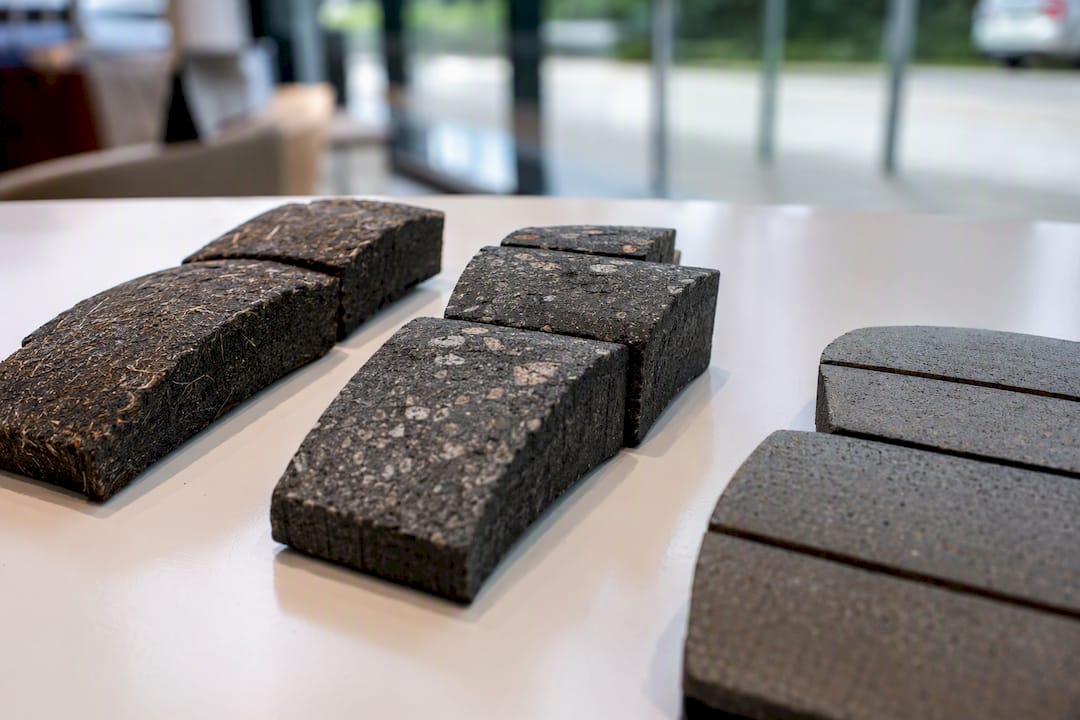
Ceramic linings offer stable performance across a wide temperature range and produce less visible brake dust, though they can be less aggressive at very high temperatures than semi-metallic compounds. Heavy-duty and truck brake lining formulations use denser compounds specifically built for higher axle loads and repeated heavy braking cycles. Marathon Brake's semi-metallic technical data notes that higher-density formulations improve heat dissipation and resist fade under sustained load, which is exactly why towing and commercial trucks lean toward these compounds over lighter organic pads.
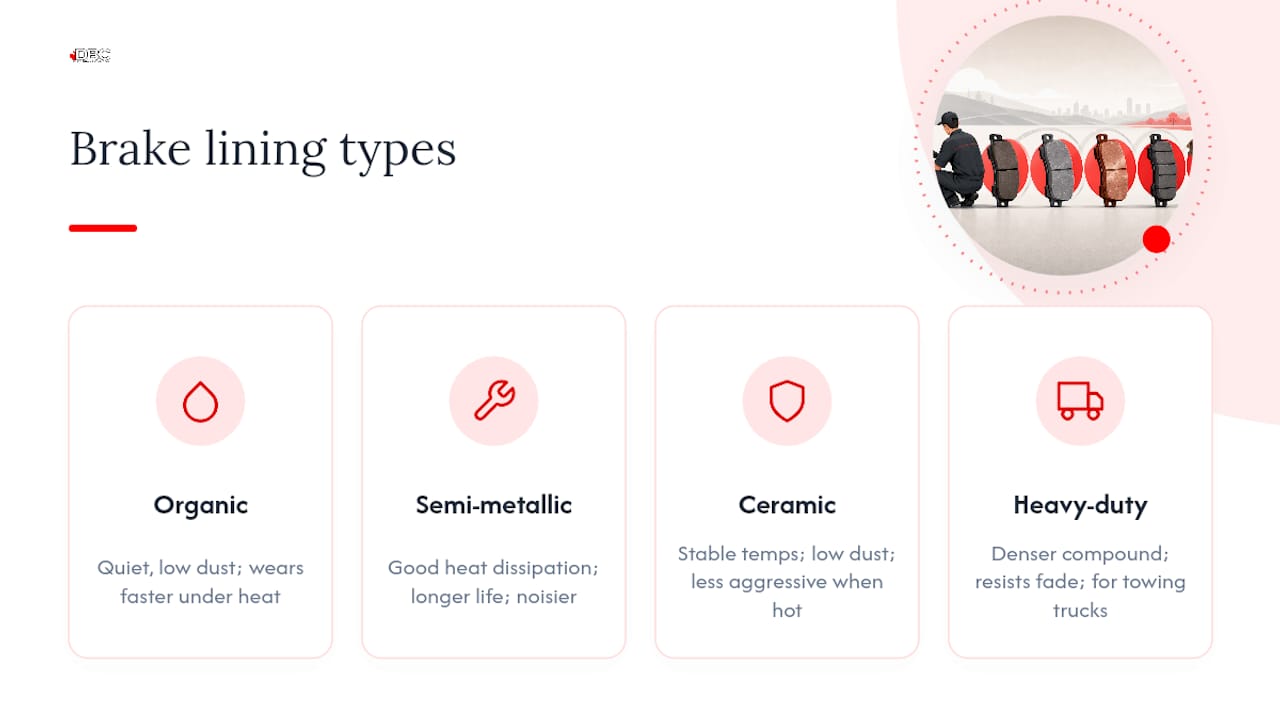
None of these choices is free. More aggressive compounds tend to wear rotors faster and generate more noise, while softer, quieter linings sacrifice some stopping margin under repeated heavy use. Commercial Carrier Journal's guidance on semi-truck lining selection makes the same point for trucks: a more aggressive lining isn't automatically the better choice, it has to match how the vehicle is actually driven.
How to inspect brake linings and spot the warning signs
A proper inspection takes minutes and tells you exactly where you stand.
- Look through the wheel spokes and check the visible edge of the pad or shoe against the rotor or drum.
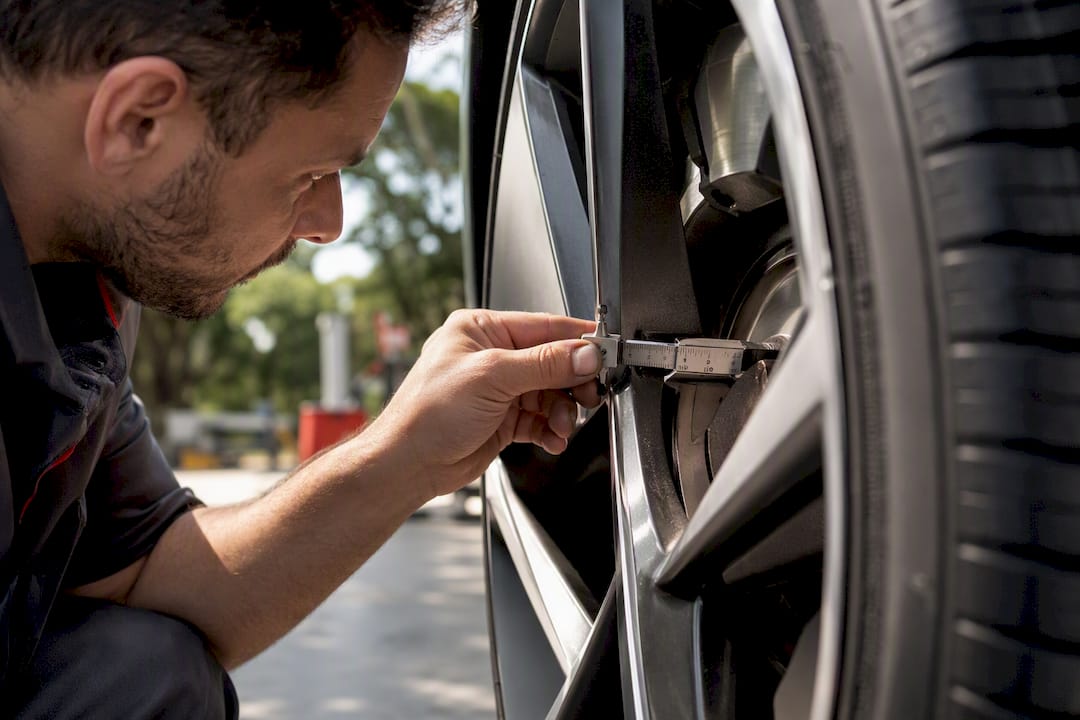
- Measure remaining thickness if you can access it, and compare both sides of the same axle.
- Note any uneven wear, tapering, or gouges across the friction surface.
- Listen for a light metallic squeal, that's usually the wear tang doing its job on purpose.
- Pay attention to grinding, a spongy or sinking pedal, or a dashboard brake warning light.
Wear tangs and electronic sensors are intentional design features that trigger a warning once friction material hits a set minimum. If you notice oily or wet contamination on the lining surface, from a leaking wheel bearing seal or brake fluid, stop driving hard and get it checked immediately.
Pro Tip: Keep a small tape measure or calipers in your glovebox. Measuring lining thickness at every tire rotation takes thirty seconds and catches wear trends before they become emergencies.
Replacing brake linings the right way
Replacement isn't just swapping parts. It's a short process with a few decisions that affect how the car brakes afterward.
- Replace linings on both sides of an axle together. Mismatched thickness between sides creates uneven friction and can pull the car to one side under braking.
- A competent shop checks fitment, inspects the rotor or drum surface for scoring or thickness loss, and beds in the new linings with a gradual break-in drive.
- Rotors or drums get resurfaced only when they're within spec and the damage is minor. Once thickness drops below the manufacturer's minimum, replacement is the only safe option.
Uneven braking and pulling almost always trace back to mismatched pads, a sticking caliper, or a warped rotor, so it's worth ruling out lining mismatch first.
What drives the cost of brake lining replacement
Lining cost isn't one number, it's several variables stacked together.
- Material grade: organic compounds generally cost less upfront than semi-metallic or ceramic options.
- Vehicle fitment: performance and larger vehicles often need specific calipers and larger pads, which raises parts cost.
- Labour: complexity varies with suspension design and whether electronic parking brakes need resetting.
- Rotor or drum condition: if they're worn past spec, that adds a separate line item.
- Warranty and packaging: full kits with matched rotors and pads often cost more upfront but reduce mismatch risk later.
So called "lifetime" pads can be a false economy. Their harder compounds sometimes wear rotors faster, shifting cost from the pad itself to more frequent rotor replacement. When you get a quote, separate parts from labour and ask specifically whether rotor resurfacing or replacement is included.
How to choose the right replacement lining for your driving habits
Start with duty cycle. A daily commuter in city traffic has different needs than a truck that tows regularly or a car driven hard on weekends.
- Commuting: organic or standard semi-metallic linings usually balance quiet operation with adequate stopping power.
- Towing or heavy loads: heavy-duty or high-density semi-metallic compounds handle sustained heat better.
- Performance driving: ceramic or performance-oriented compounds resist fade at higher temperatures, and performance brake compound guides go deeper on matching compound to track or spirited street use.
Ask your supplier or mechanic for the friction rating, any edge code or FMSI identifier stamped on the lining, and clear warranty terms. Manufacturers who test for fade and wear characteristics under real duty cycles, as Commercial Carrier Journal notes, can back up their claims with data instead of vague marketing language.
Pro Tip: Walk away from any seller who can't tell you the friction material or gives you a generic "premium pad" description with no compatibility or warranty details attached.
Watch for red flags: no compatibility listing for your specific vehicle, vague "high performance" claims with no friction rating, or any lingering reference to asbestos content, which has been phased out of modern linings in most jurisdictions.
Maintenance habits that extend brake lining life
A few consistent habits add real mileage to your linings.
- Check lining thickness at every tire rotation or oil change, roughly every 8,000 to 12,000 km depending on your schedule.
- Bed in new linings with gradual, moderate braking for the first 300 to 500 km, avoiding hard stops until the surface mates properly with the rotor or drum.
- Avoid riding the brakes on long descents. Use lower gears instead to reduce sustained heat buildup.
- If you spot fluid or grease contamination, clean or replace the affected lining promptly rather than driving on it.
Drivers of hybrids and EVs often see less mechanical brake wear because regenerative braking handles much of the slowing under normal conditions, which can extend lining intervals noticeably compared to a purely mechanical setup. Whatever the drivetrain, avoid inhaling brake dust during any inspection or cleaning, since research has linked prolonged mechanic exposure to brake dust with elevated health risks, a legacy of the asbestos formulations once common in older linings.
Where DBC Brakes fits into your lining decision
Once you know your duty cycle and material needs, the rotor and pad pairing matters just as much as the lining compound itself. DBC Brakes builds cross-drilled rotors engineered to resist warping, which keeps the rotor surface consistent so whichever lining material you choose performs the way it's rated to.
- Cross-drilled rotor designs help manage heat buildup, complementing semi-metallic or ceramic linings under repeated heavy braking.
- Pricing is listed with no hidden fees, and support comes from real people rather than automated replies.
- Orders over $100 within Canada ship free, which matters when you're buying a full axle set.
Matching a quality lining to a rotor that resists warping is the difference between a brake job that lasts and one you're redoing next year.
Pro Tip: If you're moving from organic to semi-metallic or ceramic linings, pair that upgrade with a rotor built for the added heat, not just the pad itself.
Commuters generally suit standard rotor and pad pairings, while towing or performance driving points toward the carbon performance brake pad line matched with cross-drilled rotors for better heat handling.
Practical closing advice
Stopping performance matters more than shaving a few dollars off a lining purchase, and matched-axle replacement isn't optional if you want predictable braking. Keep a simple record of pad thickness at every inspection. It costs nothing and tells you exactly when you're approaching the replacement window. If you're buying new linings, choose a matched kit or OEM-equivalent set rather than mixing brands or grades across an axle.
Get the right brake lining pairing for your car
Choosing a lining material is only half the job. Pairing it with a rotor engineered to resist warping is what makes that choice hold up over time. DBC Brakes builds cross-drilled rotors specifically to manage the heat cycles that wear down linings faster, and every kit ships with transparent pricing so there's no surprise line item once your lining choice is made.
If your inspection turned up thin linings, uneven wear, or a rotor that's seen better days, a matched performance brake kit pairs new linings with rotors built for the same duty cycle you just identified. Towing or heavy daily use points toward the premium brake kit line, while orders over $100 ship free within Canada. Check compatibility for your vehicle and get your replacement set moving before your next inspection date.
Frequently asked questions about car brake lining
How thick should a brake lining be before replacement? Most manufacturers set a minimum around 2 to 4 mm of remaining friction material, though your owner's manual gives the exact figure for your vehicle.
Can I replace brake lining on just one wheel? No. Replace linings in matching pairs on the same axle, since mismatched thickness or material creates uneven braking force and can pull the car to one side.
What's the difference between a brake pad and a brake lining? The lining is the friction material itself; the pad is the full assembly, backing plate plus lining, used in disc brake systems. Drum brakes use the same lining material on a shoe instead of a pad.
Do modern brake linings still contain asbestos? No. Asbestos was common in older linings, but modern formulations sold in most jurisdictions are asbestos-free, following research linking asbestos brake dust exposure to serious health risks.
How do I know which lining material suits my vehicle? Match the compound to how you drive: organic or standard semi-metallic for commuting, heavy-duty semi-metallic for towing, and ceramic or performance compounds for spirited or track driving.
Sources
- The Disc Brake Pad | HELLA
- How to select the right brake lining replacement for semi-trucks | Commercial Carrier Journal
- Brake lining
- PMC article (re: brake dust/asbestos exposure)