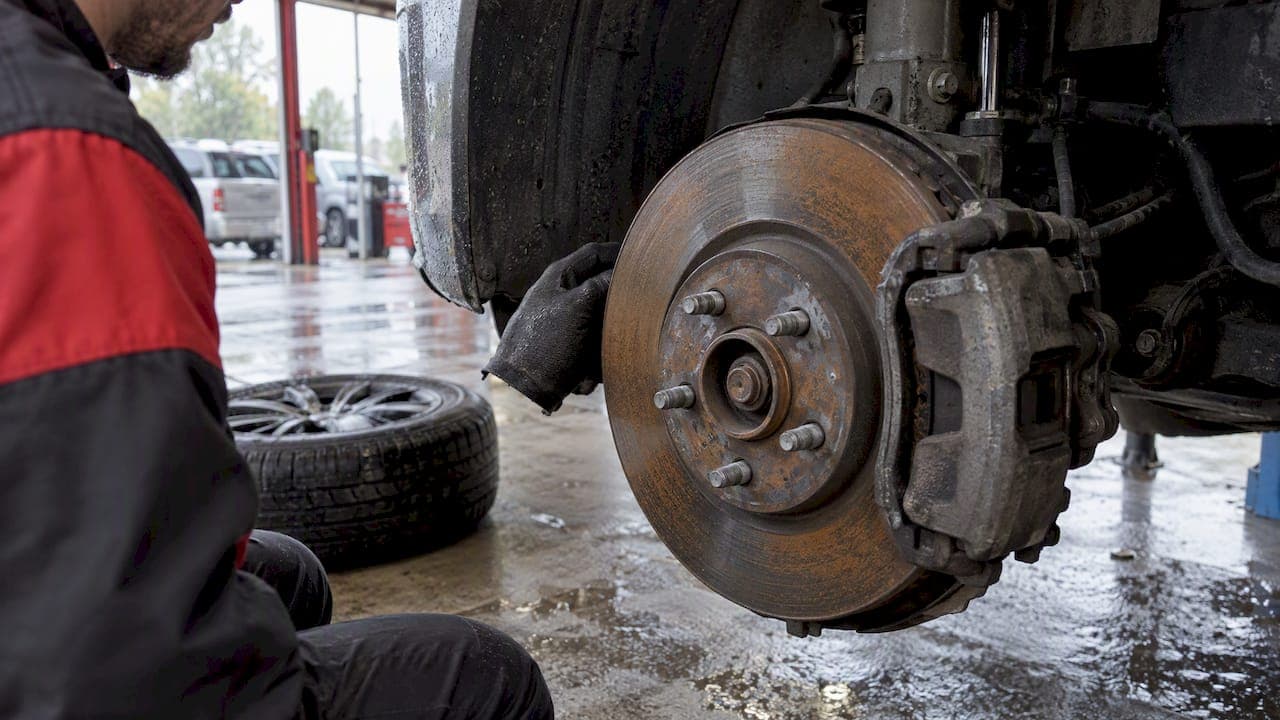
Most high-pitched squeal right after rain is temporary. It usually comes from surface rust or a washed pad transfer layer and clears within 1 to 5 controlled stops. Grinding, a soft pedal, pulling, vibration, or a warning light mean something else is happening: increase following distance and get the brakes inspected.
TL;DR:
- Moisture changes friction most noticeably during gentle braking at low speeds; heavy rain or deep puddles can also strip the pad transfer layer from rotors.
- Before merging onto a highway, test braking on a clear road with 3 to 5 firm, smooth stops, checking pedal feel and noise.
- Stop driving and arrange an inspection if grinding, a soft or sinking pedal, pulling, vibration, an unusually hot wheel, or a brake warning light appears.
- Correct pad, rotor, and hardware fitment matters more than drilled or slotted designs; ceramic compounds may handle wet to dry transitions more predictably.
Table of Contents
- Why brakes make noise when wet: flash rust, washed bedding, and moisture effects
- How to tell normal wet-weather squeal from a real brake problem
- Immediate safe steps and on-road checks to clear brakes and verify performance
- Quick garage or at-home checks technicians use to diagnose post-rain noise
- Maintenance and prevention tips to reduce rain-related brake noise
- Engineered fixes and upgrade considerations: rotors, pads, and system matching
- When rain-related noise is an immediate hazard: stop and inspect now
- How we help drivers with wet-weather brake noise
- FAQ
- Sources
Why brakes make noise when wet: flash rust, washed bedding, and moisture effects
Cast-iron rotors oxidize quickly when exposed to humidity or standing water. A very thin rust film forms on the rotor surface within minutes, and the first few pad contacts scrape through that film, producing a sharp, high-pitched squeal. Once the film clears, the noise usually stops.
A second cause is pad transfer layer wash-off. Brake pads build up a thin layer of friction material on the rotor surface over normal use, called the transfer layer. Heavy rain, a car wash, or driving through deep puddles can strip that layer. Until it rebuilds through several brake applications, friction behaviour is less consistent and noise is more likely.
SAE research on moisture adsorption found that water changes friction behaviour at low speeds differently than at moderate speeds, and can increase low-frequency noise. This explains why rain noise is most noticeable during gentle, low-speed stops and often absent during firm or emergency braking.
Other contributors include road debris caught between the pad and rotor, new pads that have not yet bedded in, and differences in pad compound. Some compounds absorb moisture more readily than others, which changes how quickly normal grip returns after a soaking.

How to tell normal wet-weather squeal from a real brake problem
A simple duration test works for most drivers. Surface rust squeal typically clears in 1 to 3 stops. If the pad transfer layer was washed off, it can take up to 5 stops before the noise settles, consistent with workshop guidance on brake squeal after rain.
Watch for these signs alongside the noise:
- Pedal feel stays firm and consistent, not soft or sinking.
- Stopping distance feels normal, with no noticeable delay.
- The car tracks straight, with no pulling to one side.
- No vibration comes through the steering wheel or pedal.
- No wheel feels unusually hot after a short drive.
A transient high-pitched squeak that fades after a handful of stops is typically harmless, according to RAC Drive. Grinding, a continuous low-frequency noise, or any squeal that persists long after the roads and brakes have dried is not something ordinary rain explains. Transport Canada points to pedal behaviour and warning indicators, not noise alone, as the more reliable signals. If any of those performance indicators show up, stop driving and arrange an inspection rather than waiting for the sound to go away on its own.
Immediate safe steps and on-road checks to clear brakes and verify performance
When noise appears in the rain, the first move is distance, not diagnosis. Increase following distance and find a safe, low-traffic stretch of road or an empty parking area before testing anything.
- Accelerate gently to a moderate speed in a clear, safe area.
- Apply the brakes firmly and smoothly to a controlled stop.
- Repeat 3 to 5 times, leaving space between attempts.
- Listen for the squeal fading and feel for a consistent, firm pedal.
- If noise and pedal feel are normal after that, resume driving with normal following distance.
CRC Industries recommends this kind of controlled braking routine to dry rotors and pads safely. Avoid spraying lubricants, degreasers, or household cleaners onto pads or rotors: any contamination of the friction surface reduces stopping performance.
Pro Tip: Do the controlled-stop test before merging onto a highway, not after, so you know your braking performance before you need it.
If the noise clears and performance feels normal, the cause was very likely moisture or rust. If it does not clear, or something else feels off, book an inspection. Our guide to safe braking in wet road conditions covers more driving habits for slick roads.
Quick garage or at-home checks technicians use to diagnose post-rain noise
A shop working through a wet-weather noise complaint runs a short, predictable sequence of checks rather than replacing parts on guesswork.
- Measure pad thickness against the wear indicator to see how close pads are to replacement.
- Inspect the rotor surface for pitting, scoring, or uneven wear patterns.
- Check caliper slide pins for binding or lack of lubrication, a common cause of recurring noise.
- Look for trapped debris between the pad and rotor face.
- Confirm pad and rotor combinations match the vehicle's application rather than mismatched or incorrect parts.
CRC Industries outlines this combined approach: controlled stop testing, visual inspection, a thermal check at the wheel, and slide-pin inspection together show whether simple hardware service solves the noise or whether pads and rotors need replacing. Our breakdown on what brake pad wear tells you explains wear indicators in more detail.
Matching pad compound to rotor type matters here too. Transport Canada standards emphasize that replacement components need to suit the vehicle's application, since mismatched hardware affects performance regardless of cosmetic claims.
Maintenance and prevention tips to reduce rain-related brake noise
A few habits cut down how often wet-weather squeal shows up.
- Park under cover or away from standing water where possible, since flash rust forms fastest on wet, exposed rotors.
- Avoid letting a vehicle sit for extended periods in damp conditions without being driven.
- After installing new pads, follow a proper bedding-in procedure with several gradual stops.
- Check caliper slide pins and hardware periodically, since dry or seized pins are a common cause of recurring noise.
- Wash road salt and grit off the undercarriage after winter driving to limit corrosion around the brake assembly.
Ceramic pads tend to handle moisture more predictably than some semi-metallic compounds, which affects how quickly normal grip returns after rain. Our page on matching pads and rotors covers compatibility and runout checks in more depth. For exterior care between services, Diamondbrite's guidance on safe brake dust removal covers cleaning wheels without damaging finishes. Catching worn pads or sticky slides early through regular inspection is almost always cheaper than letting a noisy symptom turn into rotor damage.
Engineered fixes and upgrade considerations: rotors, pads, and system matching
Cross-drilled or slotted rotors are designed to help clear water and gas from the pad-to-rotor interface. Drilling alone does not guarantee silence in wet conditions, since flash rust and moisture adsorption still affect any rotor surface regardless of design.
Pad compound choice changes moisture sensitivity. Ceramic pads generally handle wet-to-dry transitions more predictably than some semi-metallic blends, while bedding behaviour still depends on how the pad was installed and driven in after replacement.
Fitment matters more than any single feature. Transport Canada standards point to correct rotor, pad, and hardware pairing as the factor that most affects real-world brake performance, ahead of any individual marketing claim.
We engineer our Performance XDB, Premium Black Kote, and Performance SS rotor lines with guaranteed fitment for the vehicle they're built for, which addresses the matching concern directly rather than leaving it to guesswork.
When rain-related noise is an immediate hazard: stop and inspect now
Some symptoms call for an inspection before another drive, not after the next few stops.
Persistent grinding, a sinking or soft pedal, a strong pull to one side, vibration through the steering wheel, a hot wheel, or an illuminated brake warning light all point to a condition beyond ordinary wet-weather noise. Transport Canada standards treat these as performance indicators that outweigh noise alone. Do not apply household lubricants or cleaners to brake friction surfaces at any point: contamination reduces stopping power regardless of the symptom.

How we help drivers with wet-weather brake noise
We build our rotor and kit lines around engineered designs and guaranteed fitment, which matters most once a driver has confirmed the noise is a real brake issue rather than ordinary rain squeal.
If pad thickness is low, a rotor shows pitting, or a shop has flagged a mismatch between pads and rotors, an upgrade becomes relevant. Our brake kits and brake rotor collections are built with that fitment matching in mind, and our support team answers fitment questions directly, without automated replies. Orders over $100 ship free within Canada.
FAQ
What noise do brakes make when wet?
Wet brakes usually produce a brief, high-pitched squeal during the first few stops, caused by a thin rust film or moisture changing friction at the pad-to-rotor interface, according to RAC Drive. A grinding or scraping sound is different and points to a separate issue needing inspection.
Why do my brakes make noise after being wet?
Moisture leaves a thin oxidation film on cast-iron rotors and can wash away the pad's transfer layer, both of which change friction briefly. SAE research found moisture adsorption alters low-speed friction and can increase low-frequency noise, which fades once a few stops clear the surfaces.
Should I worry about squeaky brakes?
A brief squeak during the first few stops after rain is usually not a concern. Worry if the noise persists once brakes are dry, or if it comes with grinding, a soft pedal, pulling, vibration, or a warning light, per Transport Canada guidance on performance indicators.
Is it okay to do brakes in the rain?
Driving in the rain is fine; brake noise from moisture is a normal, temporary condition in most cases. Performing brake repairs or pad bedding in heavy rain is harder to manage, since proper bedding and visual inspection both work better in dry, controlled conditions.
Sources
- Effect of moisture adsorption on low-speed braking behaviour (SAE)
- Technical standards document No. 135, revision 5 — Light vehicle brake systems (Transport Canada)
- Squeaky brakes: causes and solutions | RAC Drive
- Why are my brakes squeaking? Causes & how to fix it | CRC Industries