
Regular brake inspections keep stopping performance reliable and lower your risk of a crash. Book a full inspection at least once a year, using CVSA checklist resources or a performance-based brake tester (PBBT) as your benchmark, and go sooner if you tow, drive mostly in the city, or notice a warning sign.
- Annual inspection: minimum for most drivers
- Every 6 months: if you tow, commute in heavy traffic, or drive in winter conditions
- Immediately: if you notice grinding, pulling, or a soft pedal
Quick fact: CVSA's Operation Airbrake program promotes performance-based brake testers because they catch stopping-power problems that a purely visual check can miss.
Key Takeaways
Regular brake inspections prevent costly rotor and caliper damage by catching pad wear early, which keeps stopping distances consistent and crash risk low.
| Point | Details |
|---|---|
| Book annually at minimum | Schedule a full inspection at least once a year, sooner for towing or heavy city driving. |
| Act on warning signs fast | Grinding, a soft pedal, or dashboard lights mean stop driving and get checked immediately. |
| Small fixes beat big bills | Pad replacement costs far less than the rotor damage that follows neglected wear. |
| Choose engineered parts | DBC Brakes' cross-drilled rotors and kits offer a fit-for-purpose replacement option with inclusive pricing. |
Table of Contents
- Why regular brake inspections matter for safety and your wallet
- How often should you get a brake inspection?
- What warning signs mean your brakes need attention now?
- What does a professional brake inspection include?
- How can you maintain brakes between inspections?
- What are the long-term benefits of regular brake inspections?
- Which brake checks are safe to do yourself?
- What replacement parts should you choose after an inspection?
- Frequently asked questions
- Sources
Why regular brake inspections matter for safety and your wallet
Regular brake inspections matter because they catch wear before it turns into a failure, and they cost far less than the repair bill that follows a missed warning sign. A worn pad is cheap. A scored rotor caused by that same worn pad, ignored for another six months, is not.
Here's what routine checks actually protect:
- Safety: Inspections confirm your stopping distance hasn't crept up without you noticing.
- Failure prevention: Catching a leaking line or a seized caliper early stops a small issue from becoming a roadside breakdown.
- Cost control: Replacing pads on schedule protects the rotor surface underneath them.
Cost snapshot: Pad replacement is a routine service item. Let pads wear to metal, though, and you're often looking at rotor resurfacing or full replacement, a repair that typically costs several times more than pads alone. A hybrid approach of monthly visual checks plus one full annual inspection keeps most owners ahead of that curve.
How often should you get a brake inspection?
Get a full brake inspection at least once a year. Many owner manuals link the check to tyre rotations instead, which puts it at roughly every six months or 7,500 miles for typical service schedules, and either baseline works as a starting point.
Certain driving patterns shrink that window:
- Heavy stop-and-go city commuting
- Regular towing or hauling heavy loads
- Frequent hilly or mountain driving
- Winter driving with road salt exposure
- High annual mileage or an EV where regenerative braking changes wear patterns
Automotive technicians generally recommend treating the annual mark as a ceiling, not a target, when any of these apply to you. Mileage is a rough guide. Condition is the real deciding factor, so check your owner's manual and adjust from there.
What warning signs mean your brakes need attention now?
Grinding noise, a sudden hard vibration through the pedal, a brake or ABS light on the dash, or a pedal that sinks toward the floor all mean stop driving and get inspected the same day. These point to metal-on-metal contact or a hydraulic problem, not routine wear.
Other signs still need prompt action, just not an emergency stop:
- Squeal or continuous noise: Book an inspection within a few days; it's often a wear indicator doing its job.
- Pulling to one side: Schedule within the week; could mean uneven pad wear or a sticking caliper.
- Burning smell after driving: Get checked promptly; overheated brakes lose effectiveness fast.
- Longer stopping distance than usual: Don't wait for the next scheduled service.
One overlooked detail: uneven pad wear usually means a seized caliper slide pin, not just bad luck. Replacing pads without fixing that hardware often wears the new pads unevenly too.
What does a professional brake inspection include?
A professional inspection identifies wear, leaks, incorrect adjustments, and system faults before they affect how your vehicle stops. Technicians typically follow a set sequence, similar to items on CVSA's own inspection cheatsheet:
- Pad thickness check – thin pads get flagged for replacement.
- Rotor inspection for scoring, grooves, or warping – light scoring can often be machined; heavy warping means replacement.
- Caliper operation and slide pins – a seized pin causes uneven pad wear and needs freeing or replacing.
- Brake fluid level and condition, checked for moisture contamination that lowers boiling point.
- Brake lines and hoses, inspected for cracks, bulges, or leaks.
- ABS warning lamp and sensors, confirmed functional.
- Parking brake operation, tested for proper hold and adjustment.
- Road test, to feel for pulling, noise, or pedal softness under real conditions.
Any failed item on that list should come with a plain explanation of what it means and what fixing it involves. A shop that skips that conversation isn't giving you a real inspection.
How can you maintain brakes between inspections?
Small habits between visits do a lot of the heavy lifting. Check your fluid reservoir every oil change, and pay attention to how the pedal feels day to day, since a gradual softening is easy to miss until it's significant.
- Check fluid level and colour at every oil change.
- Listen for new noises when braking at low speed.
- Feel for pedal changes: sponginess or a lower stopping point.
- Check tyre condition regularly, since worn or underinflated tyres extend stopping distance too.
Pro Tip: After winter driving, rinse road salt off your wheels and undercarriage. Salt accelerates corrosion on rotors and brake lines faster than most owners expect.
Pro Tip: Gentle, earlier braking and engine braking on long downgrades reduce heat buildup, which extends pad life more than aggressive last-second stops ever will.

What are the long-term benefits of regular brake inspections?
Catching a worn pad early costs a fraction of what a damaged rotor or seized caliper costs later, and that gap widens every month the problem goes unaddressed. Consistent inspections deliver benefits that compound over years, not just at your next service appointment.
- More consistent stopping distances over the life of the vehicle.
- Lower odds of a roadside brake failure.
- Stronger resale value: documented maintenance records signal a well-kept vehicle to buyers.
Garages that track service history put the annual inspection at the centre of avoiding rotor damage altogether, treating it as cheap insurance against the bigger bill.
Which brake checks are safe to do yourself?
Stick to non-invasive visual and reservoir checks. Anything involving hydraulic lines, calipers, or ABS components belongs with a professional.
- Look through the wheel spokes to check pad thickness.
- Check brake fluid level against the reservoir markings.
- Inspect visible lines and the area around wheels for fluid leaks.
- Listen for grinding or squealing during a slow-speed test in an empty lot.
- Test parking brake hold on a gentle incline.
Pro Tip: If you spot a fluid leak, seized hardware, or an ABS light that won't clear, stop there. Those repairs need a lift, the right tools, and someone who does this daily.
What replacement parts should you choose after an inspection?
If an inspection turns up worn pads or damaged rotors, choose fit-for-purpose parts built for your vehicle rather than the cheapest option on the shelf. Engineered cross-drilled rotors designed to resist warping are worth the difference if you tow, drive performance vehicles, or push your brakes hard on hills.
Before any installer starts work, ask:
- What warranty comes with the parts and the labour?
- What brand and specification are the pads and rotors?
- Are the rotors being resurfaced or replaced, and why?
- What's the torque spec and bedding-in procedure for new pads?
OEM-spec or engineered performance parts make the most sense for heavy towing, spirited driving, or any vehicle where rotors run hot.
A practical note on why this matters
Brake trouble rarely announces itself with a bang. It shows up as a slightly longer stopping distance you talk yourself out of noticing, which is exactly why a scheduled inspection beats waiting for a warning sign.
Where to find quality replacement parts after an inspection
If your inspection turns up worn rotors or pads, you don't need to gamble on generic parts. DBC Brakes builds kits around engineered cross-drilled rotors designed to resist warping, with inclusive pricing that skips the hidden-fee surprises some shops tack on at checkout.
Before you buy, confirm fitment for your exact make and model, and ask your installer about the correct bedding-in procedure once the new rotors or premium kit go on. Orders over $100 ship free, so replacing a full axle's worth of parts in one go often makes the most financial sense. Browse the current kit lineup and match it against what your inspection report actually found.
Frequently asked questions
Why do regular brake inspections matter if my car feels fine? Brake wear is gradual, and most drivers adjust to slowly increasing stopping distances without noticing. An inspection catches that change before it becomes a safety issue.
How often should you inspect brakes on a daily commuter vehicle? At least once a year, or every six months if your commute involves heavy stop-and-go traffic or hilly terrain.
What's the most common sign you need brake service? Squealing noise from wear indicators is the earliest and most common sign, followed by pulling to one side or a softer pedal feel.
Do electric vehicles need brake inspections as often? Yes, though regenerative braking can change wear patterns. Pads may last longer, but calipers and rotors still need periodic checks to prevent seizing from underuse.
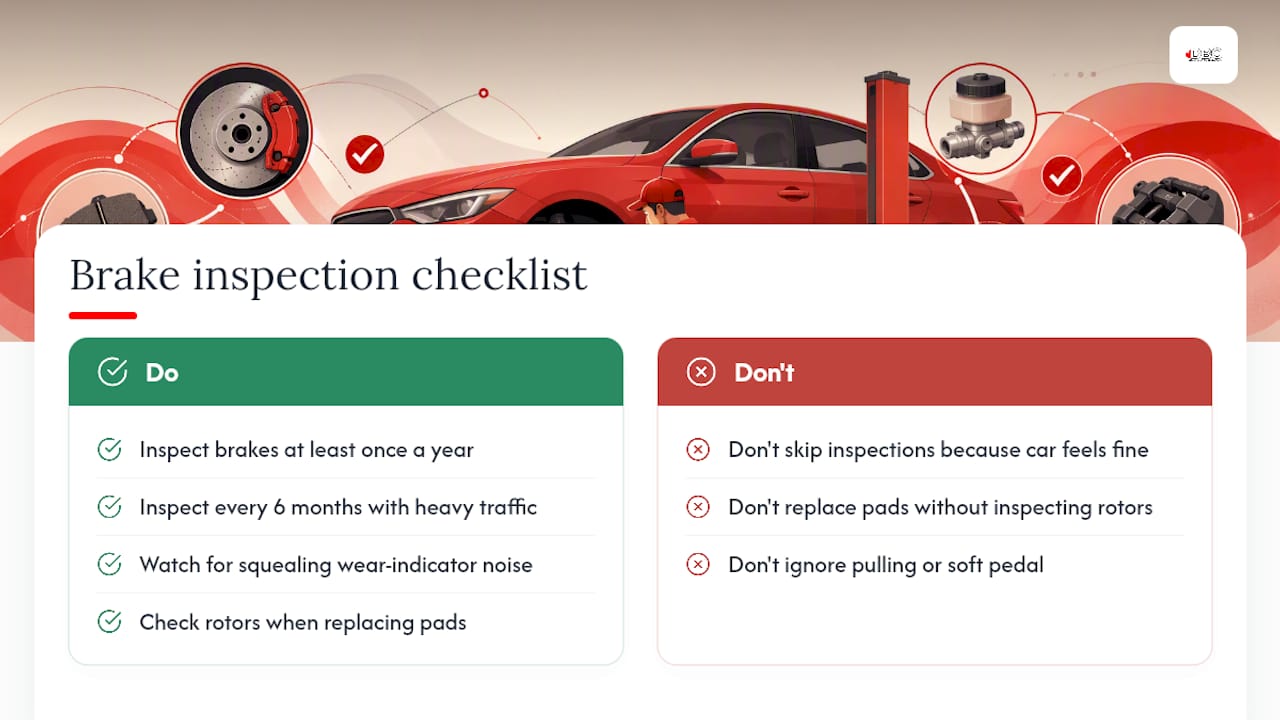
Can I replace brake pads without inspecting the rotors? It's not recommended. Grooved or warped rotors under new pads can cause uneven wear and repeat failure within months.
Sources
- CVSA — Operation Airbrake: resources for drivers & mechanics
- How often should you inspect your brakes? 5 costly mistakes to avoid — Knox News
- Brake maintenance tips: essential guide for safer stops — Motor Advises
- Brake inspection tips — Alldata DIY