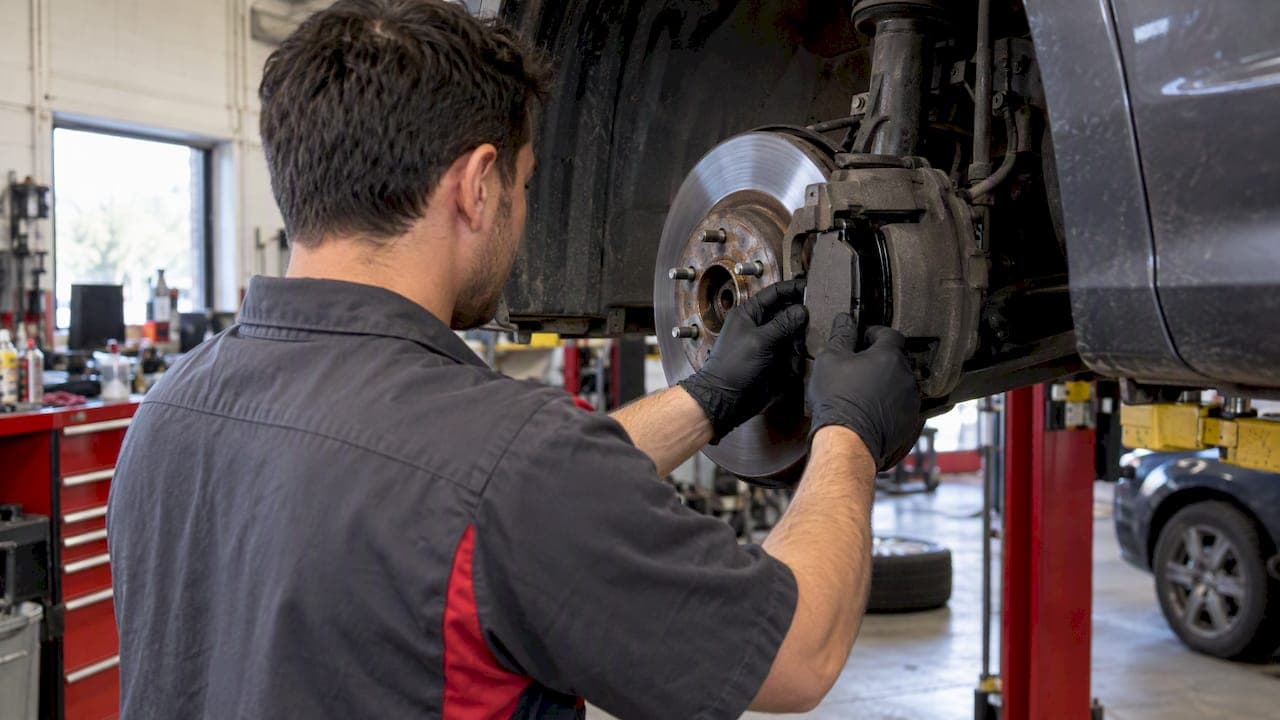
A standard brake pad job typically takes about one hour per axle in active labour. Add rotor replacement or a fluid bleed, and the car is usually at the shop for two to three hours. More involved work, like caliper service or seized hardware, can push the visit into half a day.
TL;DR:
- A one labor hour estimate covers technician work, not queueing, parts handling, inspections, or road tests, so ask for a separate turnaround estimate.
- Corrosion, electronic parking brake calibration, fluid bleeding, and unavailable parts add time; ask the shop to flag seized hardware and get approval before extra work.
- DIYers using hand tools and a floor jack should expect a straightforward one axle job to take two or three times longer than shop labor.
- DIY pad swaps require correct torque settings and line bleeding if the caliper or lines were opened; electronic calibration or corrosion favors shop service.
- Matched rotor, pad, and hardware kits reduce fitment checks, but new components still need bedding, and vehicle specific hardware may require replacement.
Table of Contents
- 1. Typical install times by job type
- 2. Factors that make an install take longer
- 3. Shop vs DIY: realistic timing and where time is spent
- 4. What to ask your mechanic and how to set expectations
- 5. If you buy a bolt-on brake kit: how kit choice and supplier support affect install time
- 6. Practical planning: an author's view on scheduling a brake service visit
- 7. Reducing fitment uncertainty with a matched DBC brake kit
- FAQ
- Sources
1. Typical install times by job type
Pad replacement is the simplest brake job. A shop can usually complete a pad swap on one axle in about an hour of active labour. That number covers removing the old pads, inspecting the caliper, and fitting the new ones. It does not always match the time the car spends in the bay, since the vehicle may sit waiting for a bay or a technician between check-in and the actual work.
Pads and rotors together take longer, so it helps to know how to remove brake dust safely after installation to protect your wheels. Rotors need to be measured for thickness and runout, then either resurfaced or replaced outright. Once the new parts are installed, the brakes need a bedding-in period before the car is handed back. This combination is why pad and rotor jobs commonly run two to three hours of shop time, including inspection and any line bleeding.
A full brake job covers more ground: calipers, hardware, sometimes wheel bearings. These jobs can stretch into multi-hour or multi-part-day territory, especially when parts need to be ordered or when corrosion complicates disassembly.
Two things matter when comparing a quote to your own expectations:
- Labour-hours are the technician's actual working time on your vehicle, the number used to calculate the bill.
- Shop turnaround is the total clock time your car is there, including queueing, parts handling, and inspection.
A quote of one labour-hour does not mean you will be out the door in sixty minutes. It means the technician's billed work is about an hour, while the car's total stay may run longer depending on shop volume and additional checks.
2. Factors that make an install take longer
Several things push a brake job past the baseline numbers. Vehicle-specific fit issues are common: large wheels sometimes require specific caliper clearances, some vehicles use inboard calipers that take longer to access, and electronic parking brakes need a calibration step after caliper replacement.
Corrosion is another frequent cause of delay. Seized bolts, stuck caliper slides, and rusted rotors can turn a routine pad change into a longer teardown. Extra services add time too, including fluid flushes, parking brake adjustments, or wheel bearing work found during inspection.

Shop practices themselves extend the visit. Many shops run a full inspection alongside the brake job, and a road test after the repair is standard practice at most locations. Parts sourcing can also add time if a specific rotor or pad isn't in stock.
Common reasons a brake job runs longer than expected:
- Seized or corroded bolts that need penetrating oil and extra force to remove.
- Electronic parking brakes that require a calibration procedure after caliper service.
- A full fluid bleed or flush added to the original pad and rotor work.
- Parts that need to be ordered rather than pulled from shelf stock.
Pro Tip: Ask the shop to flag any seized hardware before work begins, so a quick pad swap doesn't turn into a surprise half-day repair.
3. Shop vs DIY: realistic timing and where time is spent
Shop labour-hours and total DIY time rarely match, even for the same job. A technician working with a lift and a pneumatic impact wrench moves through the mechanical steps quickly. Someone working in a driveway with a floor jack and hand tools spends more time on setup and teardown alone.
A rough DIY sequence for one axle looks like this:
- Jack up the vehicle, secure it on stands, and remove the wheel.
- Remove the caliper, inspect or replace the rotor, and fit new pads.
- Torque the caliper bolts and wheel to spec.
- Bleed the brake lines if the caliper or lines were opened.
- Complete a cautious bedding-in drive to seat the new pads and rotors.
Each of these steps takes longer without a lift, an impact wrench, or a helper to bleed lines. A job that takes a shop one hour of active labour can easily take a DIYer two or three times as long, particularly on a first attempt.
A shop makes sense when time matters, when the vehicle has electronic parking brake calibration requirements, or when hardware looks corroded. DIY can be reasonable for straightforward pad swaps on vehicles without complex electronics, provided you have the right tools and are comfortable with torque specs and bleeding procedures. Our brake kit installation guide walks through the full sequence step by step for readers planning to do the work themselves, and a weekend overhaul guide covers larger jobs that span more than one axle.
4. What to ask your mechanic and how to set expectations
A vague quote leaves room for surprises. A few direct questions turn an estimate into something you can plan around.
- Ask for the labour-hours and the hourly labour rate separately, not just a total price.
- Confirm whether parts and a full inspection are included in that labour-hour estimate.
- Ask if bleeding the lines or a post-repair test drive is part of the standard job, or billed separately.
- Find out whether the shop calls for approval before adding parts or extra labour.
- Get an estimated turnaround time for the visit, not just the active labour estimate.
- Ask about warranty coverage, any follow-up check included, and whether a waiting area or shuttle service is available.
Our brake replacement safety checklist outlines what to verify once the work is done, which is worth reviewing before you book the appointment so you know what to check at pickup.
5. If you buy a bolt-on brake kit: how kit choice and supplier support affect install time
Matched brake kits, where the rotors, pads, and hardware are designed together, reduce the fitment guesswork that slows down an install. When a technician doesn't have to cross-check compatibility between mismatched parts from different brands, the job moves faster and with fewer surprises at the parts counter.
A few things still apply even with a purpose-built kit:
- New pads and rotors always need a bedding-in period, regardless of kit quality.
- Some vehicles need minor hardware replacement, like new caliper bolts or clips, alongside the kit.
- Having the correct torque specs and installation sequence on hand before the appointment avoids delays mid-job.
Our brake kit installation guide walks through the fitment and installation sequence in detail, which helps whether a technician is doing the work or you're tackling it yourself. Reviewing fitment details and the parts list before a shop visit, rather than after the car is up on the lift, tends to shorten the total time at the shop.
6. Practical planning: an author's view on scheduling a brake service visit
I plan around the two to three hour window for a standard pad and rotor job rather than the one hour quoted for labour alone. That gap between active labour and total shop time is where most scheduling frustration comes from, and it's avoidable once you know to expect it.
If the estimate points to a straightforward pad job, I'll often wait with a book or wrap up some work calls nearby. For anything involving rotor replacement, hardware service, or a diagnosis that's still open-ended, I leave the car and arrange a ride or a shuttle instead. Sitting in a waiting room for an open-ended repair rarely pays off.
The instinct to rush a shop along almost always backfires. A brake job that gets cut short to hit a pickup time risks an incomplete bleed or an unset parking brake calibration, and that's a worse outcome than booking an extra hour of patience. Brakes are the one system in a car where finishing the job properly matters more than finishing it quickly.
— Sam
7. Reducing fitment uncertainty with a matched DBC brake kit
Our kits have matched rotors, pads, and hardware from the start, which cuts down on fitment questions that can slow a shop visit or complicate a driveway install. Pricing is shown up front with no hidden add-ons, and free shipping applies to orders over $100 within Canada.
A few things worth checking before you book an appointment or start the job yourself:
- Browse our Performance XDB, Premium Black Kote, and Performance SS lines to find a kit matched to your vehicle and driving style.
- Check our brake kits collection for rotor and pad sets designed to install as a matched set.
Once the parts are sourced and the installation steps are clear, bringing a prepared kit to your shop appointment, or to your own garage, tends to shave real time off the visit. Start with our brake kits page to see what fits your vehicle.
FAQ
How long does a standard brake pad replacement take?
A standard pad replacement on one axle usually takes about an hour of active labour at a shop. Total time at the shop can run longer depending on inspection and queueing.
How long does a brake job take when rotors are replaced too?
When rotors are replaced alongside pads, expect the car to be at the shop for two to three hours, which includes inspection and any line bleeding. Rotor measurement and the bedding-in period account for the extra time compared to a pads-only job.
What's the difference between labour-hours and total shop time?
Labour-hours are the billed working time a technician spends on your vehicle, while total shop time includes queueing, parts handling, and inspection on top of that. A one-hour labour quote doesn't guarantee a one-hour visit.
Is a DIY brake job faster or slower than a shop visit?
DIY brake jobs are usually slower than shop visits for the same scope of work, since a shop has a lift and powered tools that speed up teardown and reassembly. A DIYer working with hand tools and a floor jack should expect the job to take noticeably longer, especially on a first attempt.
Why would a brake job take longer than the typical quoted time?
Seized bolts, corroded hardware, electronic parking brake calibration, and added services like a fluid flush all push a job past the baseline estimate. Asking your mechanic what's included in the quote before work begins helps avoid that kind of surprise.