
Premium brake kit components mean rotors, pads, calipers, and hardware sold as a matched set, not the electronic anti-lock system built into your vehicle. This guide covers the parts you can buy and install: cross-drilled rotors, pad compounds, calipers, and mounting hardware. For street and performance driving with wet-weather demands, the recommendation is a matched premium kit built around engineered cross-drilled rotors.
- Matched kits outperform mixing individual parts from different sources.
- DBC Brakes sells complete kits with inclusive pricing and no hidden fees.
- Orders over $100 ship free, and support comes from people, not automated replies.
Key Takeaways
A matched premium brake kit with purpose-engineered cross-drilled rotors delivers wet-weather bite and pad refreshing that individually sourced parts rarely match.
| Point | Details |
|---|---|
| Match the whole system | Buy rotors, pads, and calipers designed together rather than mixing individual upgrades. |
| Check hole geometry | Choose cast or cored drilled rotors over cheaply post-drilled blanks to limit cracking risk. |
| Prep the hub first | Clean hubs to bare metal and check runout before fitting new rotors. |
| Bed in properly | Use staged stops and recheck the kit within 100 to 200 kilometres of driving. |
| Buy from DBC Brakes | DBC sells matched cross-drilled kits with inclusive pricing, free shipping over $100, and direct support. |
Table of Contents
- What goes into a premium brake kit and why each part matters
- Do cross-drilled rotors actually improve braking, or is it just looks?
- How do you pick the right kit for your vehicle and driving style?
- How do you install and break in a new brake kit without ruining it?
- Does a brake kit upgrade affect your ABS system?
- Why matched systems beat piecemeal upgrades every time
- Where to buy a matched premium brake kit built to last
- Frequently asked questions
- Sources
What goes into a premium brake kit and why each part matters
A brake kit is only as strong as its weakest component. Rotors, pads, calipers, and hardware all have to work together, and skipping quality on any one piece drags down the whole system.
- Rotor type. Vented rotors use internal fins for airflow and suit most daily and performance driving. Solid rotors show up on lighter rear applications. Cross-drilled rotors add holes through the rotor face to evacuate water and gas at the pad interface. Slotted rotors cut grooves instead of holes, and drilled+slotted combines both for track-focused setups.
- Pad compound. Street compounds prioritize quiet operation and low dust but fade sooner under hard use. Street/track compounds split the difference, handling occasional aggressive driving without punishing daily comfort. Track compounds bite hardest at high temperature but can feel grabby and dusty when cold.
- Caliper design. Floating calipers are common, affordable, and reliable for daily driving. Fixed calipers with multiple pistons, often four or six, spread clamping force more evenly across the pad and improve pedal consistency. Forged aluminum calipers resist flex better than cast iron, which matters most under repeated hard braking.
- Hardware and lines. Mounting brackets, bolts, and hub prep determine whether your rotor sits true. Stainless braided lines remove the spongy pedal feel that plain rubber lines develop under heat. A premium rotor bolted to worn hardware will still shudder and wear unevenly.
Do cross-drilled rotors actually improve braking, or is it just looks?
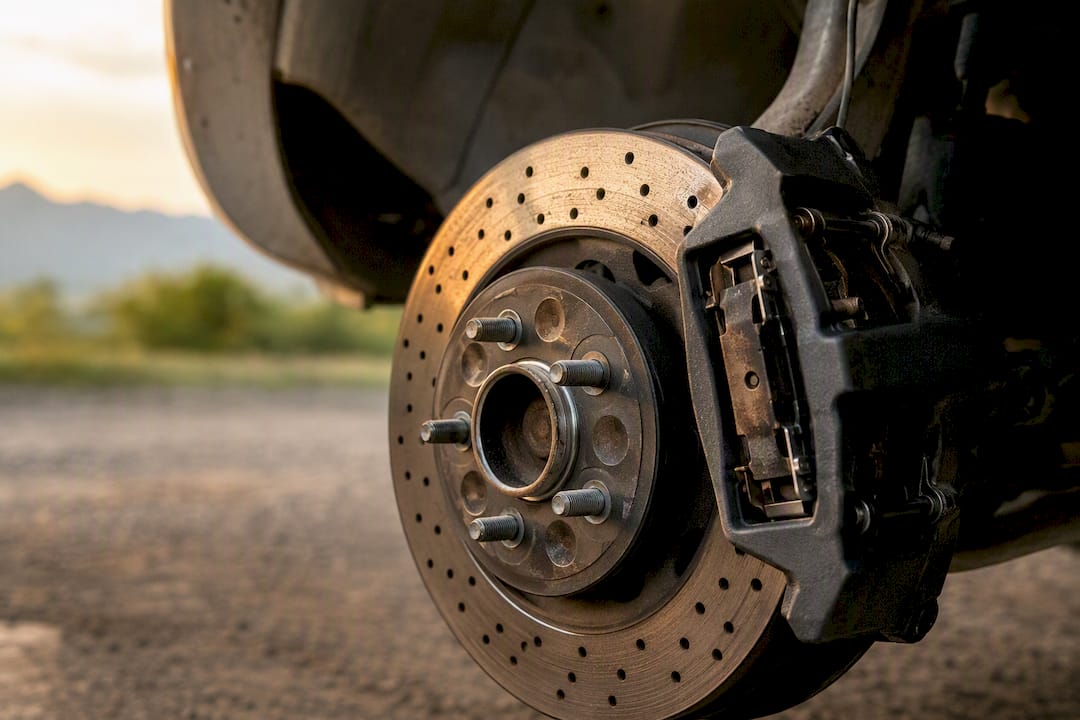
Cross-drilled rotors deliver a measurable engineering benefit: they reduce surface temperatures, evacuate water and gas, and refresh the pad surface as you drive, according to Road & Track's analysis of drilled and slotted rotor design. That last point matters more than most drivers realize. The holes act like tiny wipers passing under the pad on every rotation, scraping off the glazed layer that builds up and dulls friction over time.
The trade-offs are real, though, and worth stating plainly.
- Drilling removes material, which lowers thermal mass and can raise fatigue sensitivity compared to a solid or slotted rotor.
- Cheaply post-drilled blanks, where holes are punched into an existing rotor design rather than engineered from the start, carry a higher cracking risk under repeated heat cycling.
- Aggressive track use with certain aggressive pad compounds can accelerate wear on drilled surfaces faster than on slotted ones.
Pro Tip: Check whether a rotor's holes are cast or cored into the design versus drilled into a standard blank after the fact. Purpose-engineered hole placement and spacing is the single biggest factor separating a rotor that lasts from one that cracks.
Quality cross-drilled rotors show deliberate hole geometry and density, positioned to avoid weak points in the rotor's structure. RaceTechnologies' engineering primer on drilled and slotted discs notes that hole shape and spacing directly affect how well a rotor resists cracking under thermal stress, echoing points Brembo has made about manufacturing consistency. Slotted rotors alone tend to suit very aggressive track sessions or towing, where fatigue resistance outweighs the wet-weather bite that drilled designs offer, per AME Motorsport's comparison of drilled and slotted engineering.
How do you pick the right kit for your vehicle and driving style?
Fitment comes first, always. A kit that looks right on a parts page can still bind against your wheel or miss your hub bolt pattern.
- Confirm rotor diameter and centre bore match your factory hub, or that included adapter hardware corrects the difference.
- Check wheel clearance, especially with larger rotor and caliper packages, since aftermarket wheels sometimes interfere.
- Verify bolt pattern and caliper bracket compatibility before ordering.
- Match pad compound to how you actually drive, not how you wish you drove. A street/track compound is the sensible middle ground for most enthusiasts who mix commuting with the occasional spirited drive.
Caliper choice follows fitment. More pistons generally means more even clamping force, but a matched system where rotor, pad, and caliper were engineered together outperforms a random mix of upgraded parts, a point TEI Brakes makes clearly in its guide to big brake kit fitment. Buying rotor and pad from different design philosophies often means neither part performs the way its spec sheet promises.
Pro Tip: If you're torn between street and street/track pad compounds, read up on how track-focused braking demands differ from street use before you decide. The gap is bigger than most drivers expect.
Premium matched kits typically run from a few hundred dollars for a basic rotor and pad set up to well over a thousand for a full big brake kit with calipers and lines. Shipping on a matched kit usually takes a few business days within Canada, and installation at a shop generally runs two to four hours for a full axle.
How do you install and break in a new brake kit without ruining it?
Rushing the first few hundred kilometres on a new kit is the fastest way to undo everything you just paid for.
- Clean the hub to bare metal before mounting new rotors, and check for runout. A dirty or corroded hub is the leading cause of vibration complaints after a rotor swap.
- Wipe the factory preservative coating off new rotors with brake cleaner before the pads ever make contact. Skipping this step causes uneven early glazing, according to AME Motorsport's installation guidance.
- Torque wheels evenly, in the correct star pattern, to the manufacturer's spec. Uneven torque is a quiet cause of rotor warp that gets blamed on the rotor instead of the install.
- Bed the pads in with staged stops, gradually increasing speed and brake force, per AME Motorsport's bedding recommendations. Watch for consistent pedal feel rather than a soft or grabby response.
- Recheck pad thickness, hardware torque, and fluid condition within the first 100 to 200 kilometres, or 24 to 72 hours of driving.
Pro Tip: Bad hub prep and good rotors together still produce a bad result. Poor hardware condition undoes even the best-engineered rotor design, so treat hub cleaning as non-negotiable, not optional.
Does a brake kit upgrade affect your ABS system?
Upgrading rotors, pads, and calipers does not require reprogramming or replacing your vehicle's anti-lock braking system. The ABS system reads wheel speed and modulates hydraulic pressure regardless of what rotor or pad material sits at each corner, so a properly fitted premium kit remains fully compatible with factory ABS operation.
What does change is how the system behaves at the margins. A pad compound with a higher coefficient of friction, or a rotor that manages heat more consistently, changes the exact point where a wheel starts to lock and ABS intervenes. In practice, most drivers notice ABS engaging slightly later under hard braking, because the added stopping consistency delays the point of wheel slip. That is a benefit, not a compatibility issue.
The one real risk is mismatched components: a rotor diameter that changes caliper piston travel, or a caliper bracket that alters pedal geometry enough to affect brake bias front to rear. This is why fitment checks matter as much as component quality. A properly matched kit, sized and installed to factory geometry, keeps ABS calibration exactly as the manufacturer intended, while still delivering the wet-weather bite and consistent pad performance that cross-drilled rotors provide.
Why matched systems beat piecemeal upgrades every time
The conventional advice on this topic tends to obsess over rotor type, as if choosing cross-drilled over slotted settles the question. It doesn't. The bigger issue is that most upgrade mistakes come from mismatched systems, not wrong rotor choice.
A driver who buys a great rotor and pairs it with an unrelated pad compound, or bolts it to worn hardware, will still end up disappointed and blame the rotor. The engineering evidence backs a different priority order: fitment and system matching first, rotor style second. Cross-drilled rotors earn their reputation for wet-weather bite and pad refreshing, but only inside a kit engineered to work as one unit.
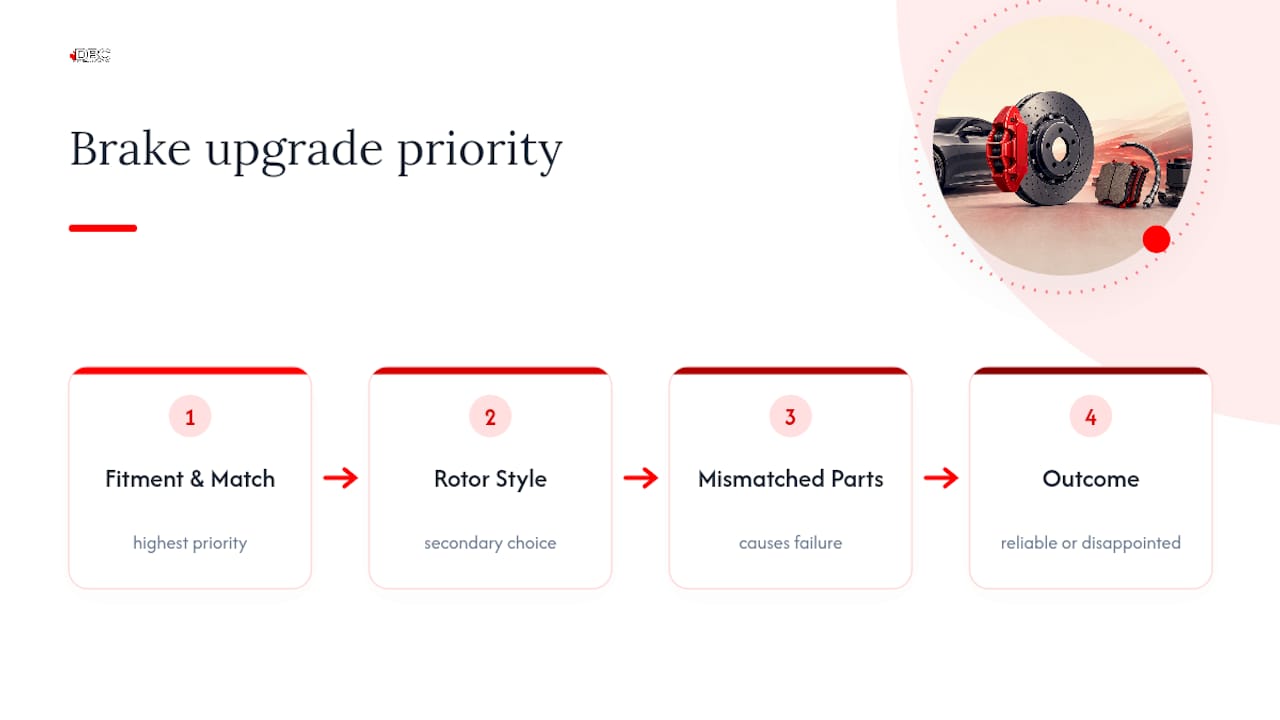
If there's one thing worth doing differently, it's this: stop shopping for the "best rotor" and start shopping for the best matched kit for your actual driving pattern. That single shift in approach prevents more disappointment than any spec sheet comparison ever will.
Where to buy a matched premium brake kit built to last
Everything covered here, matched systems, purpose-engineered rotor geometry, hardware that holds alignment over time, is what DBC Brakes builds into its kits from the start. Every kit pairs rotors, pads, and calipers designed to work together, with cross-drilled construction engineered to resist warping rather than post-drilled into a standard blank.
Pricing is inclusive with no hidden fees added at checkout, and orders over $100 ship free within Canada. Support comes from people who know the parts, not scripted replies. Before you order, confirm your vehicle's fitment details and check what hardware is included in the kit, since brackets and lines vary between packages. Browse the premium brake kit lineup or check the full brake kit collection to compare package levels, and if you're focused on rotors specifically, the cross-drilled rotor selection lets you check specs by vehicle. For drivers upgrading drivetrain components alongside brakes, Underground Dynamics carries performance clutch parts worth a look. Reach out to support with your vehicle details before ordering if you're unsure which kit fits.
Frequently asked questions
What does "abs brake components" mean in a brake kit context? In this guide, it refers to premium brake kit parts you buy and install yourself: rotors, pads, calipers, and mounting hardware. It does not refer to the vehicle's electronic anti-lock braking sensors or module.
Do cross-drilled rotors wear out pads faster? Poorly designed drilled blanks can accelerate wear under aggressive use, but purpose-engineered cross-drilled rotors are built to minimize that trade-off while still refreshing the pad surface.
Can I install a premium brake kit myself? Yes, with correct hub prep, torque specs, and a proper bedding-in process. Most DIYers with basic tools can complete a full axle in a few hours.
Will a brake kit upgrade trigger ABS warning lights? A properly fitted, correctly sized kit should not affect ABS wiring or sensors. Mismatched rotor diameter or caliper geometry is the more common cause of any dashboard warning.
How much does a premium matched brake kit cost? Pricing varies by vehicle and kit level, from a few hundred dollars for a rotor and pad set to well over a thousand for a full kit with calipers and lines.
Sources
- Cross-drilled brake rotors aren't just form over function — Road & Track
- The advantages of cross-drilled and slotted discs – RaceTechnologies (Brembo primer excerpt)
- Drilled vs slotted rotors: the ultimate engineering guide | AME Motorsport
- Big brake kit: components, fitment & performance | TEI BRAKES