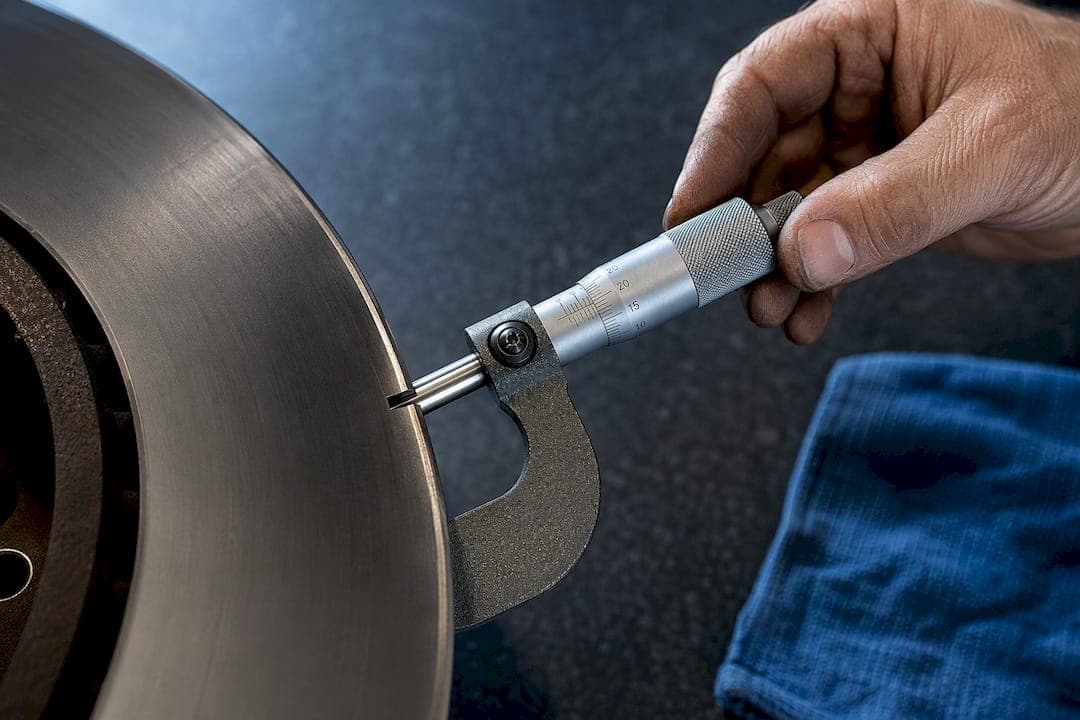
True metallurgical rotor warping almost never happens. What drivers feel through the pedal or steering wheel is nearly always disc thickness variation (DTV) from uneven pad deposits, or a mounting problem like lateral runout, hub corrosion, incorrect lug torque, or worn wheel bearings. Check DTV, runout, hub condition, and lug torque before replacing a single part. A shop with a dial indicator can confirm the real cause in minutes.
TL;DR:
- Pedal pulsation usually results from front rotor disc thickness variation caused by uneven pad deposits, not actual warping.
- Proper diagnosis involves measuring both lateral runout and disc thickness variation in thousandths of an inch before replacing rotors.
- Mounting issues, such as hub corrosion or uneven lug torque, often cause runout and DTV, which can be prevented through correct cleaning and torque procedures.
- Real heat damage to rotors, including cracking and discoloration, requires sustained extreme temperatures, unlike typical street driving conditions.
- Most symptoms attributed to warped rotors are due to deposits and mounting problems; measurement and proper maintenance are key to fixing persistent vibrations.
Table of Contents
- Rotor warping myth vs. what's really happening
- The real technical cause: disc thickness variation and pad transfer
- Mounting problems: runout, hub condition, and lug torque
- How technicians diagnose runout and DTV
- Prevention: bedding, hub prep, and torque discipline
- When metallurgical warp or cracking can actually happen
- Why the "warped rotor" label refuses to die
- Choosing rotors and kits once the diagnosis is done
- Sources
- FAQ
Rotor warping myth vs. what's really happening
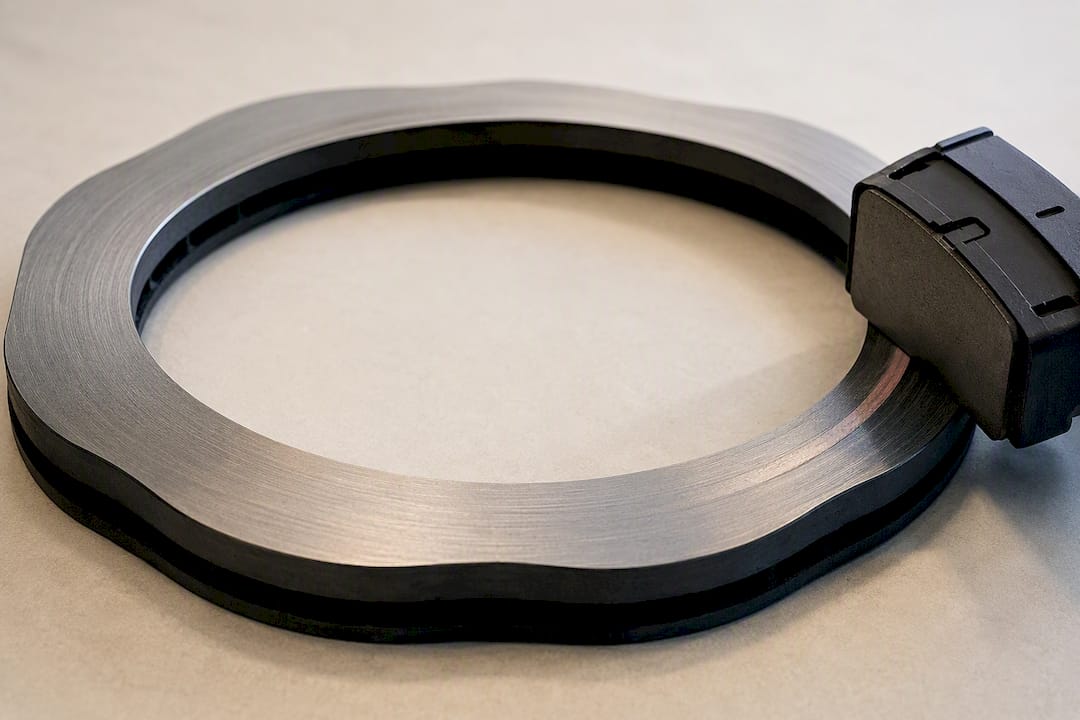
The rotor warping myth assumes heat bends the disc into a wavy shape. It does not. What happens instead is uneven pad material building up on the rotor face in high spots, which changes thickness around the disc. That thickness variation, not warping, is what pulses through your pedal or steering wheel.
The symptom pattern tells you a lot before a tool ever touches the wheel.
- Pedal pulsation almost always points to front rotor DTV, since it travels straight up the hydraulic line to your foot.
- Steering wheel shake during braking usually means the front rotors are affected, because that vibration transmits through the steering knuckle.
- A rhythmic thump or growl without pedal feedback often means rear rotor issues or a bearing problem, not a front-axle disc.
Vibration severity typically increases with speed and braking force, since higher rotational speed cycles the high spots faster. If the shake appears only while braking and disappears immediately once you release the pedal, that's consistent with DTV rather than a suspension or tire issue, which tends to persist regardless of brake application. Symptoms drivers report to technicians include pedal vibration, steering shake, and sticking calipers, and matching the symptom to the axle is the first real diagnostic step.
The real technical cause: disc thickness variation and pad transfer
Every rotor wears with some thickness variation across its face. Problems start when that variation crosses a threshold your nervous system can detect through the pedal.
Pro Tip: Ask your shop to state DTV and lateral runout in thousandths of an inch, not "it's fine" or "it's warped." Numbers let you judge whether a fix actually worked.
DTV as small as 0.0004 inches is technically perceptible to a sensitive driver, and complaints typically start once variation passes roughly 0.00059 inches (about 15 microns). That's a fraction of the width of a human hair, spread unevenly around a rotor face that spins hundreds of times per minute under load.
Uneven pad transfer happens for a few predictable reasons:
- Inconsistent bedding leaves some pad material bonded thicker in spots than others.
- Pad chemistry matters. Some organic and semi-metallic compounds transfer material more unevenly under heat cycling than ceramic formulations.
- Repeated hard stops followed by sitting with the brakes applied (like idling at a light with your foot on the pedal after a hard stop) bakes an uneven deposit into one contact patch.
- Prior glazing or contamination on the pad surface transfers unevenly onto the rotor the next time you brake hard.
This is the mechanism behind most complaints that get labelled "warped rotors." The rotor itself is almost always still flat. The surface just isn't uniform anymore.
Mounting problems: runout, hub condition, and lug torque
Lateral runout is a separate issue from DTV, though the two often show up together. Runout means the rotor doesn't spin perfectly true relative to the hub, wobbling slightly side to side as it turns. Hub corrosion, debris between the rotor and hub face, uneven lug torque, and worn wheel bearings all produce runout or accelerate DTV by forcing the pad to contact the rotor unevenly on every rotation.
Three mounting issues cause most of these mechanical complaints:
- Hub rust and debris. A rusted or dirty hub face prevents the rotor from seating flat, creating runout the moment it's torqued down, even on a brand-new rotor.
- Uneven lug nut torque. Finishing lug nuts with an impact gun instead of a calibrated torque wrench distorts the rotor's mounting, since impact guns rarely apply even clamping force across all studs.
- Worn wheel bearings. Play in a bearing lets the rotor shift slightly under load, and vibration from this source usually worsens progressively over weeks rather than appearing suddenly.
Pro Tip: Torque lug nuts in a star pattern with a calibrated wrench, never a final tightening pass with an impact gun. Uneven clamping force is one of the most common, and most preventable, causes of new-rotor vibration.
How technicians diagnose runout and DTV
A proper diagnosis follows a set order, and any competent shop should be willing to walk you through it rather than jump straight to "you need new rotors."
- Visual inspection for scoring, blueing, cracking, or obvious pad deposit rings.
- Lateral runout measurement with a dial indicator mounted to the hub, spinning the rotor through a full rotation.
- DTV measurement at multiple points around the rotor face using a micrometer.
- Pad inspection for glazing or uneven deposit patterns that point back to bedding or driving habits.
Reported thresholds vary by source, but some technicians note drivers can feel vibration from as little as 0.002 inches of lateral runout, while DTV complaints tend to start closer to the 0.0006 inch range described above. These are two different measurements, and a shop should report both. Resurfacing can correct mild DTV and runout if the rotor still has enough thickness left above its discard specification stamped on the hat. Once a rotor's near that minimum, replacement is the safer call, since machining removes material permanently and there's no coming back from it. A full diagnostic and repair guide for brake vibration covers the process in more depth if you want to follow along at home.
Prevention: bedding, hub prep, and torque discipline
Most recurring vibration complaints trace back to skipping one of three basic steps, and fixing all three is cheaper than any parts swap.
- Bed new pads and rotors properly. A controlled sequence of moderate to hard stops without ever coming to a complete halt, followed by a cool-down period, redistributes pad deposits evenly across the rotor face instead of letting them concentrate in one spot.
- Clean the hub face before mounting any rotor. An abrasive disc removes rust flakes and debris that would otherwise force the new rotor to sit slightly off true from the first rotation.
- Torque lug nuts with a calibrated wrench in a star pattern, never finished with an impact gun.
- Choose pad compounds suited to your use. Heavy towing or repeated mountain descents call for pads rated for sustained heat, not a budget street compound that glazes under load.
- Replace, don't resurface, bearings or rotors near discard thickness. Machining a marginal rotor thinner only shortens its remaining service life.
Pro Tip: If vibration returns within a few thousand kilometres of a rotor replacement, the root cause almost certainly wasn't the rotor. Check hub cleanliness and lug torque before blaming the new part.
Cost and effectiveness rank in that order too: hub cleaning and correct torque are nearly free and fix a surprising share of complaints, bedding takes an afternoon, and parts replacement should be the last step, not the first.
When metallurgical warp or cracking can actually happen
Cast iron rotors need to reach very high temperatures before the metal itself starts to soften, which normal street driving does not approach. Typical street braking runs far below that threshold, and pad material degrades and fails long before the rotor's structure is at risk.
Real heat damage looks different from ordinary DTV:
- Thermal cracking, visible as fine lines radiating from the rotor's cooling vanes or edge, after sustained extreme heat.
- Blueing or discoloration on the rotor face, a visual sign of a severe overheat event, not routine wear.
- Heavy track use or repeated towing on grades warrants rotors rated for sustained thermal load, and a post-event inspection for cracking rather than assuming any new vibration is DTV.
Why the "warped rotor" label refuses to die
Calling it a "warped rotor" is easy shorthand, and it's been repeated so often it feels like established fact. It isn't. Most of what I've walked through here traces back to deposits and mounting, not bent metal, and swapping rotors without measuring anything first is a coin flip on whether the vibration actually goes away.
Ask for the runout and DTV numbers before you approve any repair. If a shop replaces rotors without cleaning the hub or checking lug torque, expect the same vibration to come back within a few thousand kilometres. Measurement first, parts second.
— Sam
Choosing rotors and kits once the diagnosis is done
Once you've confirmed the vibration is DTV or a mounting fault and corrected the root cause, some drivers still decide it's the right time to upgrade. DBC Brakes' cross-drilled rotors are engineered for even heat dissipation and durable pad seating, which helps reduce the deposit buildup that causes DTV in the first place. For towing or repeated heavy braking, the cross-drilled and slotted rotor line adds extra surface area for heat to escape.
If your wheel bearings turned out to be the actual culprit, replacement units are available alongside rotor lines, so you can address the mounting issue and the disc in one order. Drivers who want a coordinated setup rather than piecing parts together can shop a complete premium brake kit, which pairs matched rotors and pads with inclusive pricing and no hidden fees. Orders over $100 ship free within Canada. Follow a calibrated torque wrench and proper bedding routine on installation, whether you fit the kit yourself using the site's installation guide or hand it to a professional. Browse the current brake kit collection to compare options for your vehicle.
Sources
- Nuts & Bolts: Warped Rotor Myth
- Warped brake rotors: There's no such thing
- Signs of a warped brake rotor - AutoZone
FAQ
What happens if rotors are warped?
In the rare case of actual metallurgical damage, braking becomes uneven and unpredictable, but almost all "warped rotor" symptoms are really DTV or runout, causing pedal pulsation or steering shake under braking rather than a change in stopping distance.
How long should rotors last before warping?
Rotors rarely warp at all in the metallurgical sense; instead, DTV-related vibration typically develops when uneven pad deposits or hub mounting issues accumulate over tens of thousands of kilometres, not on a fixed mileage schedule.
Will warped rotors fix themselves?
Mild DTV can sometimes improve with a proper bedding cycle that redistributes pad deposits evenly, but runout caused by hub corrosion or incorrect lug torque will not resolve on its own and needs to be corrected mechanically.
How do I stop my rotors from warping?
Clean the hub face before mounting rotors, torque lug nuts with a calibrated wrench in a star pattern instead of an impact gun, and follow a proper bedding routine after installing new pads or rotors.