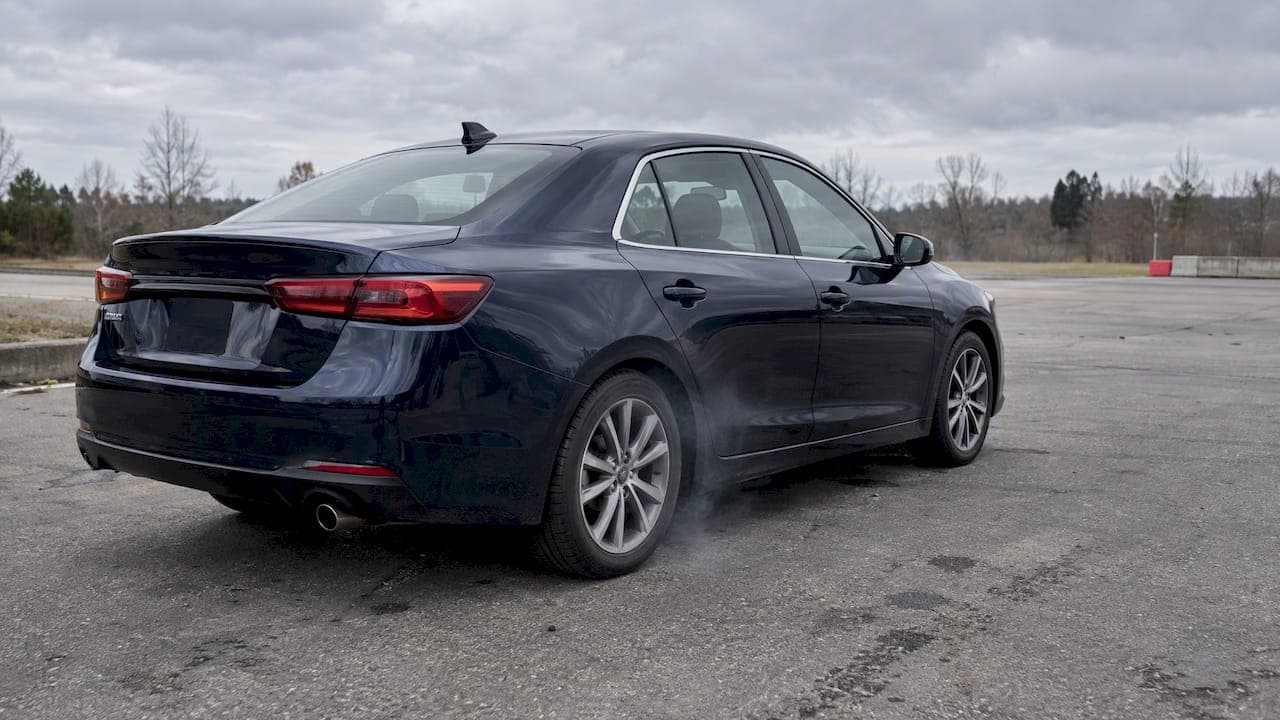
A burning smell after new brakes is usually normal. It happens when resin in new pads cures or when protective coatings on rotors burn off during break-in. This typically clears within a few days or during the initial period of normal driving. Stop and have the car inspected if you notice heavy smoke, smoke from one wheel only, a soft pedal, pulling, or a brake warning light.
TL;DR:
- Bedding often takes 50 to 100 kilometres; metallic pads may smoke more than ceramic pads, while hard braking or towing can prolong the smell.
- One smoking wheel, persistent heavy smoke, pulling, a soft pedal, a warning light, or fluid near a wheel signals trouble; stop and arrange a tow.
- When the smell is faint, no smoke appears, and braking feels normal, a slow, short drive to a nearby shop is generally acceptable.
- Never touch a wheel, rotor, or caliper until they cool; brake components can reach 300°C to 600°C and cause severe burns.
Table of Contents
- Common causes of a burning smell after brake work
- Is this normal during break-in and how long should it last?
- How to recognize a dangerous smell or smoke
- What to do right now if your new brakes smell
- Technician checklist and what a shop will inspect
- Balancing normal bed-in smells with safety-first judgement
- How DBC Brakes products and support can help after a brake replacement
- FAQ
- Sources
Common causes of a burning smell after brake work
New pads contain resin that bonds the friction material together. During the first stops, that resin heats up and cures, releasing a sharp smell and sometimes a thin haze of smoke. This is expected and fades once the surface finishes bonding.
Rotors often carry a protective oil or anti-corrosion coating from manufacturing or shipping. The first several brake applications burn this layer off, producing an odour similar to hot metal or light smoke. Overheating from aggressive driving, towing, or a parking brake left partially engaged can also cause a burning smell, even on correctly installed brakes.
A smell that does not fade points to a mechanical fault. A stuck caliper piston, seized slide pins, a pinched brake hose, or a seized wheel cylinder on drum brakes can keep a pad pressed against a rotor or drum, generating constant friction and heat.
- Resin curing and coating burn-off smell sharp or chemical and ease off within days.
- Smoke from a single wheel, or a smell paired with reduced stopping power, suggests a mechanical drag rather than normal bedding.
Matching the smell to where the smoke appears, and to how you've been driving, narrows down the likely cause before you call a shop.
Is this normal during break-in and how long should it last?
Bedding in new brakes usually takes the first 50 to 100 kilometres of regular driving, though this varies by pad and rotor material. Semi-metallic pads often smoke slightly more during this stage, while ceramic pads tend to produce a milder odour over a similar distance. Organic pads sit somewhere between the two.

A light smell or brief haze during the first few stops is expected and should fade with normal city and highway driving. Repeated heavy braking, mountain descents, or towing during this window can extend the smell or bring it back temporarily, since the surfaces are still transferring material unevenly. A proper bedding procedure speeds up that even transfer and shortens the smoky period. If the smell is still strong after a week of regular driving, treat it as worth checking rather than normal.
How to recognize a dangerous smell or smoke
Some signs point to a problem that needs attention right away rather than more break-in time.
- Smoke coming from one wheel only, while the others stay cool, usually means a dragging caliper or seized component on that corner.
- Heavy, persistent smoke that does not taper off after a short stop suggests ongoing overheating rather than normal curing.
- The vehicle pulls to one side under braking, which can mean uneven pad contact or a stuck caliper.
- The pedal feels soft or sinks further than usual, which can indicate a fluid leak or air in the lines.
- A brake warning light stays on. Transport Canada's technical standard sets out when these warning indicators are required to activate, and a lit warning lamp alongside a burning smell should be treated as a safety issue.
- Visible fluid leaks near a wheel well point to a hose or cylinder failure rather than bedding residue.
A sharp, oily, or chemical smell differs from the drier resin smell of normal bedding, and that difference is a useful extra clue when deciding whether to keep driving.
What to do right now if your new brakes smell
If you notice a strong smell or any smoke while driving, pull over somewhere safe as soon as you reasonably can. Let the car sit before touching any wheel, rotor, or caliper. These components can reach extreme temperatures, in some cases exceeding 300°C to 600°C, and contact can cause burns.
- Confirm the parking brake is fully released before assuming a mechanical fault.
- Note which wheel or wheels show smoke, and whether the smell is the same on both sides.
- Press the brake pedal gently while stopped to check for sponginess or excess travel.
- Look around each wheel well for fluid leaks or residue.
If the smell is faint, there's no smoke, and the car brakes normally, driving slowly to a nearby shop is usually fine. If you see heavy smoke, feel a soft pedal, notice pulling, or see a warning light, arrange a tow instead of continuing to drive.
Pro Tip: Write down when the smell started, whether it's one wheel or all four, how the pedal felt, and the smoke's colour and duration. That detail helps a technician diagnose the cause faster.
For smells that seem to follow a particular corner rather than the whole car, our post on uneven braking walks through what to check next.
Technician checklist and what a shop will inspect
A technician working through a hot or smoking brake complaint typically follows a set sequence rather than guessing at the cause.
- Remove the wheel if needed to get a clear view of the rotor and pad surfaces.
- Check the rotor and pad visually for glazing, uneven wear, or leftover coating residue.
- Test the caliper piston and slide pins for free movement, since stiff pins are a common source of drag.
- Inspect the brake hose for internal restriction, which can trap pressure and keep a caliper partially applied.
- Check brake fluid level and look for leaks at the caliper, hose fittings, and master cylinder.
- Measure pad thickness and rotor runout to confirm both are within usable limits.
Depending on what turns up, a shop may free a sticking caliper, resurface or replace a rotor, or replace a hose or wheel cylinder that's restricting fluid flow. Our technician checklist for new brake noise covers a related set of post-installation symptoms in more detail.
Balancing normal bed-in smells with safety-first judgement

A light smell after new brakes is common, and most of it clears on its own within days. That said, we don't treat changes in stopping power as something to wait out. If the pedal feels different, the car pulls, or a smell lingers well past the first week, get it looked at rather than assuming it will resolve.
Document what you're noticing, avoid long drives if you suspect a dragging pad, and prioritize a shop visit the moment brake feel changes.
— Sam
How DBC Brakes products and support can help after a brake replacement
We build brake kits, rotors, and pads designed for consistent bedding and long-term durability, including our Performance XDB, Premium Black Kote, and Performance SS product lines. Cross-drilled rotors can resist warping, which may reduce the uneven wear that sometimes extends a break-in smell.
- Pricing on our brake kits and components includes no hidden fees.
- Our support team answers fitment and troubleshooting questions directly, without automated replies.
- Orders over $100 ship free.
If you're replacing a rotor or pad set after diagnosing a drag or overheating issue, check our brake pads collection or contact our support team to confirm the right fit for your vehicle.
FAQ
What could be causing my brakes to smell like burning rubber?
A burning rubber or chemical smell right after installation is usually resin from the new pads curing, or protective coatings on the rotors burning off. This is a common and temporary part of bedding in new brakes and normally fades within a few days of regular driving.
My front brake caliper is sticking and smoking. What could be causing this and how can I fix it?
A sticking caliper is often caused by a seized slide pin or a stuck piston that keeps the pad pressed against the rotor. A technician typically frees or replaces the stuck component after confirming the drag with a caliper movement test, as outlined in a standard brake inspection checklist.
Can I drive my car if it smells like burning?
If the smell is faint, there's no visible smoke, and the brakes feel normal, driving a short distance to a shop is generally fine. If you see heavy or persistent smoke, feel a soft pedal, notice pulling, or see a brake warning light, stop driving and arrange a tow instead.
What does a bad caliper smell like?
A failing caliper often produces a sharper, more persistent burning smell than normal bedding, sometimes with visible smoke from a single wheel. If the smell is paired with a brake warning light or reduced stopping power, Transport Canada's brake warning standards treat that combination as a safety issue requiring inspection.
How do I get rid of a lingering burning smell in my car after brake work?
If the smell comes from the brakes themselves, driving normally for the recommended bedding distance usually resolves it on its own. If the odour seems to be coming from elsewhere in the cabin rather than the wheels, diagnosing the actual source before assuming it's brake-related can save a wasted trip to the shop.
Sources
Claims in this article draw on Transport Canada's brake-system warning standards and technician-facing explainers on bedding and post-installation troubleshooting, alongside our own troubleshooting guides.