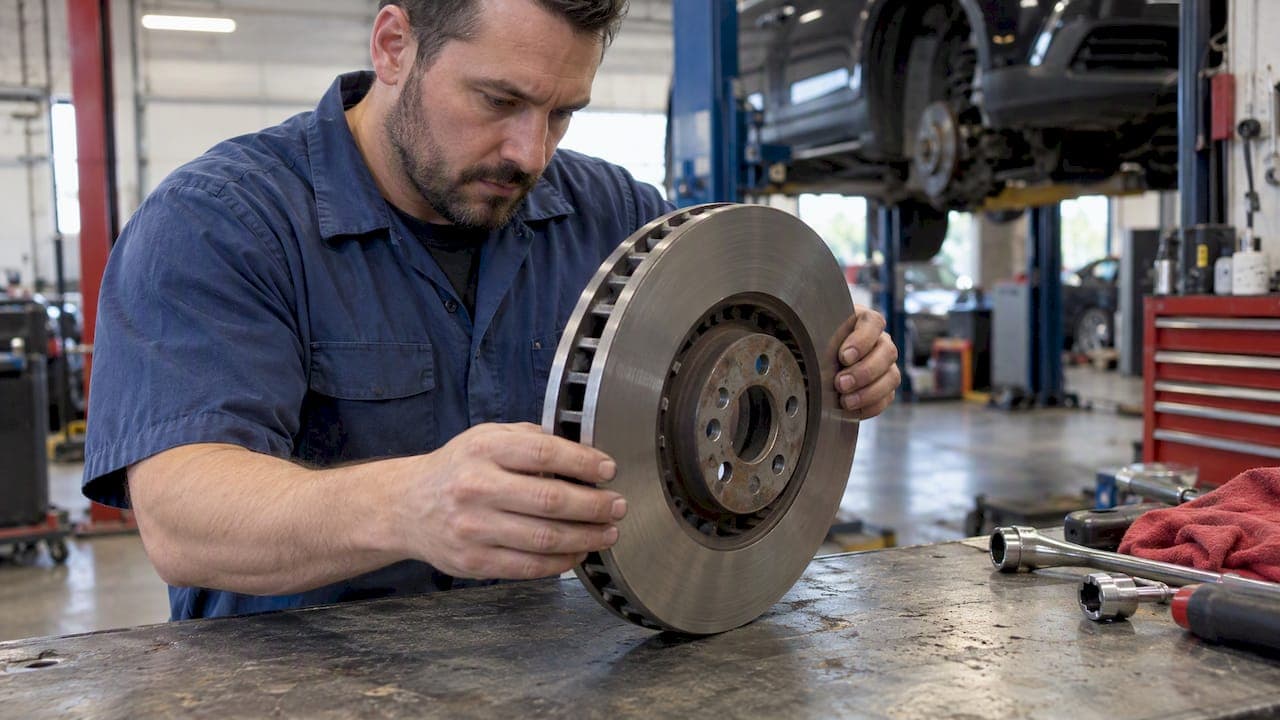
Vane geometry and orientation change how much air a ventilated rotor pumps, and that changes cooling. In a CFD study, raising the vane outlet angle from 45° to 135° improved cooling by up to 16%. Engineered vane profiles and forced-air ventilation cut disc temperatures by up to 20%. Below we cover how, when and what to check.
TL;DR:
- Curved and tangential rotors are side specific; match vane sweep to wheel rotation, because reversing them reduces pumping and forfeits much of their cooling benefit.
- For commuting, radial rotors avoid side specific fitment errors; track use benefits more from directional vanes paired with open wheels, clear ducts, and unobstructed shields.
- Compare vane count, outlet angle, and direction before price; added vane area can increase airflow, but it adds weight and cost as gains level off.
- Shields, calipers, closed wheels, and debris can restrict airflow; inspect clearances and passages, especially after dirt accumulates or before repeated hard stops.
- If pads fade early or brake fluid is old, address those problems first; a better rotor cannot correct either cause.
Table of Contents
- What types of brake rotor cooling vanes exist, and which ones are directional?
- How does vane geometry change airflow and heat transfer?
- Which vane parameters matter most for cooling?
- How do you identify and install directional rotors correctly?
- How do brake shields, calipers and wheels change vane performance?
- How do you know a rotor is cooling as intended?
- What does this mean for your driving?
- Why we choose engineered vanes
- How our rotors apply vane-driven cooling
- FAQ
- Sources
What types of brake rotor cooling vanes exist, and which ones are directional?
A ventilated rotor has friction surfaces joined by vanes. The vane shape decides how air moves between the plates. Technical analyses of vane shape separate the common designs by how they flow and dissipate heat.
- Radial vanes: straight ribs running from the inner edge to the outer edge. They are generally non-directional, so the same rotor fits left and right.
- Tangential vanes: straight ribs angled away from the radius. They are directional and only pump well when the rotor turns the intended way.
- Curved vanes: ribs that sweep in an arc. They are directional and add pumping action and surface area.
- Pillar or diamond vanes: short posts in staggered rows instead of long ribs. They break up the flow and add surface area for heat transfer, and many pillar layouts are non-directional.
The trade-offs are simple. Radial rotors are simpler, lighter and fit either side of the car. Curved and tangential rotors move more air and expose more surface, but they weigh more and are side-specific, so a left and a right part must be kept apart at the bench. A backwards install gives up much of the design's benefit, which is why direction matters as much as shape.
How does vane geometry change airflow and heat transfer?

A spinning rotor works like a centrifugal pump. The disc throws air outward through the vane channels, and that air pulls heat from the inner surfaces of both friction plates. More mass flow means more heat can be carried away, so geometry that raises flow or exposes more surface can improve cooling.
The research gives the scale of the effect:
- In the Applied Thermal Engineering CFD work, larger outlet angles improved overall cooling by up to 16% across 200–1000 rpm, and heat transfer improved on all surfaces of the disc.
- Industry-sponsored modelling found that airfoil-style vane profiles raised the heat-transfer coefficient by about 17–29% over traditional designs.
- Brake dynamometer testing at Chalmers showed that mass flow through the vanes depends heavily on disc temperature and rotational speed.
Up to 20% lower disc temperature is reported in modelling of forced-air ventilation and engineered vane profiles, so airflow design is not a minor detail.
The same rotor moves different amounts of air as its temperature changes. Speed changes the pumping rate too. The same dynamometer work found that identical discs can differ in maximum mass flow by more than 10% because of manufacturing tolerances. Two rotors with the same drawing are therefore not guaranteed to cool the same, and consistent casting quality is part of the design.
Which vane parameters matter most for cooling?
Use this list to judge any ventilated rotor. Chalmers research notes that performance depends on rotational velocity and design parameters, and that an optimal point exists for a given disc type.
- Vane outlet angle. A larger outlet angle can raise the pressure difference across the vanes and increase mass flow in some designs.
- Curvature and directionality. Curvature adds pumping effect, and it makes the mounting side critical.
- Vane count and width. More vane area usually moves more air, but it adds weight and cost, and the gains level off.
- Casting quality and internal tolerances. Rough or inconsistent passages cause the spread in mass flow between identical discs.
- Drilled or slotted surfaces. Holes and grooves can increase mass flow, but they also raise stress concentrations and wear.
Pro Tip: Compare vane count, outlet angle and whether the rotor is directional before you compare price. Those three details tell you more about cooling than the outer look of the disc.
How do you identify and install directional rotors correctly?
Look at the vanes through the gap between the friction plates, or at the edge of the disc. Curved or angled ribs mean a directional rotor. Some makers cast an arrow or an L/R mark on the hat or edge. Straight ribs pointing at the centre usually mean a radial, non-directional part.
Direction matters because vane angle and flow direction set the pumping behaviour in any rotating machine, a principle visible in how engineers read blade profiles to infer rotation. Reverse a curved rotor and the vanes work against the flow they were shaped for, so it pumps less air.
- Match each rotor to its side before it touches the hub.
- Check that the vane sweep follows the wheel's forward rotation, as in our vane-first installation checklist.
- Check runout with a dial indicator, and torque the wheel to the vehicle's specification.
- Keep the left and right rotors labelled if you stage parts ahead of time.
If you service many different vehicles or want simpler stock handling, radial rotors remove the left/right risk. They suit daily drivers where fitment errors cost more than the extra airflow would return.
How do brake shields, calipers and wheels change vane performance?
Bench studies often test a rotor in clean, controlled airflow. A car is messier, and every nearby part can restrict the air entering or leaving the vanes.
- Brake shield: a shield that sits too close to the inboard face can block the inlet at the hub.
- Caliper: a bulky caliper covers part of the outlet edge and disturbs flow leaving the rotor.
- Wheel design: closed or shallow spoke designs limit the air that reaches the rotor.
- Debris and mud: packed material in the passages cuts the pumping effect directly.
Engineered ducts and wheel vents can add mass flow, which is why studies of controlled airflow report temperature reductions of about 20% in CFD simulations. Check that shields are straight and clear, that nothing is stuffed into the wheel well, and that passages are clean. Washing off brake dust helps too, and safe brake dust removal keeps wheels and openings clear.
How do you know a rotor is cooling as intended?
Laboratories measure cooling with brake dynamometers, funnel fixtures that collect air leaving the vanes, embedded thermocouples and infrared imaging. The Chalmers experiments used thermocouples and funnels to quantify mass flow and cool-down behaviour.
Hot spots above roughly 350–400°C have been observed in laboratory testing, which is the range where poor airflow starts to show up as damage.
You can read the same signals on the road:
- Look for hot-spot marks and uneven colouring on the friction surface, and compare with our guide to rotor hot spots.
- Notice slow cool-down: rotors that stay hot long after a stop are moving too little air.
- Watch for pad glazing and early fade on repeated stops.
- Inspect vane passages and clear any debris.
Our own reference on rotor heat dissipation explains the target operating temperature in more depth.
What does this mean for your driving?
Match the vane design to how you drive, then keep it working.
- Commuting: a standard radial or well-made directional rotor is enough. Fitment and clean passages matter more than peak airflow.
- Spirited street use: curved or tangential vanes give a useful margin on long descents and repeated hard stops.
- Track days: airflow dominates. Pair directional vanes with open wheels, clear ducts and a shield that does not block the inlet.
- Maintenance: keep ducts and shields clear, and follow habits that prevent rotor warping.
An engineered vane rotor is a sensible upgrade when heat is your actual problem. If pads fade early or the fluid is old, fix those first, since a better rotor will not cure them.
Why we choose engineered vanes
I have worked through the research behind rotor cooling and the installation checks above, and the evidence points one way: geometry and direction decide results more than looks do. Our install checklist and heat-dissipation post go deeper for anyone who wants to check the details. Our product choices follow these same vane considerations.
— Sam
How our rotors apply vane-driven cooling
We make engineered cross-drilled rotors in Canada, with inclusive pricing and no hidden fees. We pay attention to vane layout, balance and fitment, so the rotor you fit works as designed. See our brake rotors and brake kits, and browse the installation resources before you order.

FAQ
How do I know if my rotors are vented?
Look at the edge of the disc. A vented rotor shows a gap with ribs or posts between two friction plates, while a solid rotor is a single plate. The rotor is also thicker than a solid one.
Can you use brake fluid as coolant?
No. Brake fluid is a hydraulic fluid that transfers pedal force, and it does not cool rotors. Cooling comes from air moving through the vanes, which is why vane design and clear airflow paths matter.
What is the 30/30/30 rule for brakes?
It is a common bedding-in routine, but definitions vary and no single standard exists. Follow the pad maker's bedding instructions, and avoid stopping fully with hot brakes right after hard use.
What condition can sudden cooling of the brake system components cause?
Sudden, uneven cooling can stress the rotor and contribute to hot-spot marks and distortion. Let the brakes cool gradually after heavy use, and keep the vanes clear so they cool evenly.
Sources
- Sae
- Doi
- Experimental thermal analysis of brake cooling relative to mass flow of air through a ventilated brake disc
- Study and thermal analysis of vanes shape design for brake disc in automotive industry - IOPscience