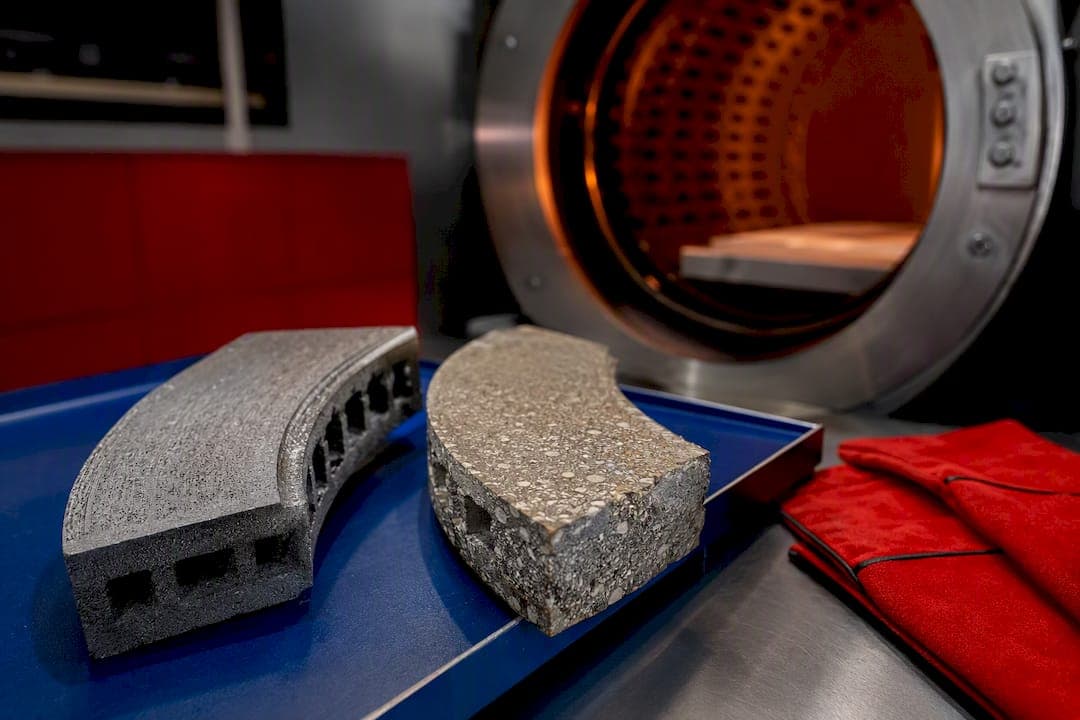
Daily commuting calls for cast iron. Towing or heavy hauling needs a heavy‑duty cast iron alloy built for sustained heat. Track and performance driving favour carbon‑ceramic or high‑spec bi‑metal rotors. Weight‑conscious performance builds lean toward Al‑MMC or engineered aluminium. Each choice trades cost against heat capacity, weight, and longevity, and the details below explain why.
TL;DR:
- Cast iron remains the top choice for daily drivers and towing due to its heat retention, low cost, and predictable wear, especially in salt-exposed climates with coatings.
- Carbon-ceramic rotors excel in extreme heat conditions for track and high-performance vehicles but come with high costs and limited pad compatibility.
- Aluminium-based rotors offer significant weight savings suitable for performance builds, though they fade at a higher rate under sustained high temperatures.
- Hybrid bi-metal and composite rotors balance weight and cost effectively, making them ideal for sport sedans and tuned vehicles seeking a middle ground.
- Proper rotor bedding is essential for all materials to prevent judder; in harsh conditions, coatings and pad matching extend rotor life and maintain performance.
Table of Contents
- Rotor material comparison basics: what's actually out there
- Material‑by‑material breakdown: pros, cons and real‑world behaviour
- Head‑to‑head performance summary and practical implications
- How to pick a rotor material: checklist and questions to ask
- Evidence snapshot: key lab and dynamometer findings explained
- Author's note: how a brake‑kit maker reads these trade‑offs
- Where to start: DBC cross‑drilled kits and compatible rotor choices
- Sources
Rotor material comparison basics: what's actually out there
Rotor material comparison starts with knowing what's actually on the shelf. Cast iron remains the industry default because it holds heat well and costs the least to produce. High‑carbon steel variants add alloying elements to cast iron for better heat dissipation and less noise, common on mid‑range performance trims. Aluminium and Al‑MMC (aluminium metal‑matrix composite) rotors cut unsprung mass substantially but need careful engineering to survive heat. Carbon‑ceramic rotors use a ceramic matrix reinforced with carbon fibre, built for extreme thermal loads and long life at a steep price. Bi‑metal and composite designs mix an aluminium hat with a cast iron friction ring, splitting the difference on weight and cost.
Coatings matter almost as much as base material. A zinc or e‑coating resists rust on the hat and vanes while the swept surface wears bare during break‑in. Vehicle class tracks the material: economy and mid‑size cars run coated cast iron, tow rigs run thicker cast iron alloys, and supercars run carbon‑ceramic almost exclusively.
- Cast iron: sedans, trucks, SUVs, daily drivers
- Aluminium/Al‑MMC: lightweight performance builds, some hybrids
- Carbon‑ceramic: supercars, track cars, high‑end performance trims
- Bi‑metal/composite: sport sedans, tuned performance vehicles
Material‑by‑material breakdown: pros, cons and real‑world behaviour
Here's how each material actually behaves once heat, mileage, and weather get involved.
-
Cast iron. Best for daily driving and towing. Cast iron holds a stable coefficient of friction across a wide temperature range, which is why AK Master dynamometer testing found gray cast iron retaining roughly 84% of its initial friction coefficient at 500°C. It's heavy, adding unsprung mass compared with aluminium alternatives, but wear rates are predictable and pad choice is unrestricted. Corrosion is the main weakness; protecting alloy wheels and adjacent components with ceramic coatings helps preserve rotor condition and prevent rust. Without a coating, cast iron rusts quickly in road salt, though surface rust on the non‑swept areas rarely affects braking. Cost sits at the low end of the bracket, which is why most replacement rotors on the road are cast iron.
-
High‑carbon and alloyed steel variants. Best for buyers who want cast iron's reliability with less noise and marginally better heat spread. These blends resist thermal cracking a bit better than plain gray iron and often ship with quieter pad pairings. Weight is close to standard cast iron. Longevity is strong, and corrosion resistance depends entirely on the coating applied, not the alloy itself.
-
Aluminium and Al‑MMC. Best for lightweight performance builds where every kilogram of unsprung mass matters. AK Master testing shows Al‑MMC formulations can match cast iron's initial friction coefficient, sometimes ranging between 0.35 and 0.47, but that number swings more with pressure and speed. At elevated temperatures, some Al‑MMC formulations experienced a significant loss of their coefficient of friction (https://www.mdpi.com/2075-4442/13/9/380), while gray cast iron stayed far more stable. Hybrid A206‑TiB2 composites tested in a Department of Energy technical report posted a wear rate substantially lower than the cast iron benchmark measured in that study. Aluminium resists corrosion inherently but softens under sustained heat, so it fits street and light‑track duty better than repeated hard braking from highway speed.
-
Carbon‑ceramic. Best for track‑focused and high‑performance vehicles that generate extreme, repeated heat. These rotors resist fade far longer than cast iron and last considerably longer under hard use, but they demand a much higher purchase price and narrower pad compatibility. Weight savings are significant. Corrosion isn't a concern since the material doesn't rust, but replacement cost when the rotor does wear out is steep.
-
Bi‑metal and composite designs. Best for sport sedans and tuned vehicles seeking a middle ground. An aluminium hat with a cast iron friction ring cuts unsprung mass at the hub while keeping a proven friction surface. Heat behaviour tracks close to cast iron since that's the contact surface. Cost lands between standard cast iron and carbon‑ceramic.
Pro Tip: Bed in any rotor, regardless of material, with a series of moderate stops from highway speed followed by a cool‑down period. Skipping this step is the single biggest reason new rotors judder within the first few hundred kilometres.
Head‑to‑head performance summary and practical implications
Six factors decide which material wins for a given job: heat resistance, weight, wear rate, cost, corrosion resistance, and pad compatibility. No single material leads on all six.
- Heat resistance: carbon‑ceramic first, cast iron second, Al‑MMC and aluminium trailing under sustained load.
- Weight: Al‑MMC and carbon‑ceramic cut unsprung mass the most; cast iron is heaviest.
- Wear rate: hybrid Al‑MMC composites showed the lowest wear in lab testing, though real‑world pad pairing changes this.
- Cost: cast iron cheapest, carbon‑ceramic most expensive, aluminium and bi‑metal in between.
- Corrosion resistance: aluminium and carbon‑ceramic resist rust naturally; cast iron needs a coating.
- Pad compatibility: cast iron accepts the widest range of pad compounds; carbon‑ceramic restricts choices sharply.
Commuting rewards cost and corrosion resistance over weight, so cast iron wins outright. Towing rewards heat resistance and durability under sustained load, which again favours cast iron, just a heavier‑duty alloy. Spirited street driving starts to reward weight savings, making Al‑MMC or bi‑metal attractive. Track duty rewards heat resistance above everything else, and that's where carbon‑ceramic earns its price tag.
The clearest illustration of the trade‑off: AK Master dynamometer data shows gray cast iron retaining about 84% of its coefficient of friction at 500°C, while comparable Al‑MMC formulations lost as much as 40 to 60% under the same conditions. Weight savings mean little if the rotor fades halfway through a hard lap.
How to pick a rotor material: checklist and questions to ask
Work through these questions before you buy.
- What's the primary use? Daily commuting and highway driving point to cast iron. Towing points to a heavier cast iron alloy rated for sustained load. Track days point to carbon‑ceramic or a high‑spec bi‑metal setup.
- What's the climate? Winters with road salt call for a coated rotor regardless of base material, since coatings meaningfully extend usable life in salt‑exposed regions.
- What pads pair with it? Ask the supplier directly. Carbon‑ceramic restricts pad options; cast iron and bi‑metal accept a wide compound range.
- What's the warranty and test data? A vague warranty or no dynamometer data behind the claims is a red flag. Ask what standard the rotor was tested to, such as SAE J2522.
- What's the replacement interval? Budget for bedding procedure and pad matching every time rotors go on, not just at initial installation.
Evidence snapshot: key lab and dynamometer findings explained
Comparative studies using the AK Master dynamometer protocol (SAE J2522) remain the standard for testing rotor friction and fade under controlled bedding and heating cycles. A separate Department of Energy report on hybrid A206‑TiB2 composites found wear rates roughly three times lower than a cast iron benchmark. Lab results don't always translate directly to the road, where load, moisture, and driving style vary.
Al‑MMC rotors matched gray cast iron's initial coefficient of friction in dynamometer testing, but showed up to 40 to 60% greater fade at 500°C, while gray cast iron retained roughly 84% of its starting value.
Author's note: how a brake‑kit maker reads these trade‑offs
Balancing performance, durability, and cost isn't about picking the "best" material. It's about matching a material's known weaknesses to a driver's actual habits. Cross‑drilled geometry helps here regardless of base material, since it improves heat dissipation and gas evacuation during hard braking, which reduces the warping that shortens rotor life on any material choice.
— Sam
Where to start: DBC cross‑drilled kits and compatible rotor choices
DBC Brakes is the practical answer to the trade‑offs covered above: cross‑drilled rotors engineered to pull heat away from the friction surface faster, which cuts the warping that shortens rotor life under hard or repeated braking.
That heat management matters whether you're commuting through winter road salt or hauling a trailer through mountain grades, and DBC builds kits for daily drivers, trucks, and performance vehicles alike. Pricing is inclusive with no hidden fees, and orders over $100 ship free within Canada. If corrosion resistance is a priority in your climate, pair your rotor choice with proper pad compound matching to get full service life out of either material.
Browse the cross‑drilled rotor collection to find a kit matched to your vehicle, or check the full performance brake kit lineup to compare options by application.
Sources
- Comparative evaluation of the tribological performance of Al‑MMC and GCI brake rotors through AK Master dynamometer testing — MDPI
- Hybrid A206‑TiB2 composite brake rotor study — OSTI
- Bestparts