
Replace pads once the friction material hits about 3 mm, or the instant you hear grinding, feel a spongy pedal, or see a brake warning light. Outside those triggers, lifespan runs a wide range: roughly 40,000 to 100,000 km (25,000 to 62,000 miles) for most drivers, with some vehicles pushing past 150,000 km and others needing replacement well under 30,000 km.
- Grinding or metal-on-metal sound: stop driving and inspect immediately.
- Pad thickness at or below 3 mm: schedule replacement now, not next month.
- Brake warning light or pulsing pedal: book a service inspection right away.
Quick fact: industry guides consistently point to 3 to 4 mm as the line between "still fine" and "unsafe."
Key Takeaways
Brake pad lifespan depends far more on driving style, pad material, and rotor condition than on a single fixed mileage number.
| Point | Details |
|---|---|
| Expect a wide range | Most drivers see 40,000 to 100,000 km, but city driving and towing push wear toward the low end. |
| Watch the 3 mm mark | Replace pads once friction material nears 3 mm or the moment you hear grinding. |
| Match material to use | Ceramic suits highway driving and longevity; semi-metallic handles heavy city or towing loads better. |
| Service rotors with pads | Scored or warped rotors shorten new pad life, so inspect both together. |
| Choose kits built for longevity | DBC Brakes pairs pads with cross-drilled rotors engineered to resist warping, sold with transparent pricing. |
Table of Contents
- What is a normal brake pad lifespan in kilometres?
- What factors affect brake pad longevity?
- How do you know when brake pads need replacing?
- How can you extend the life of your brake pads?
- When should you replace pads, and what does it cost?
- How do rotors affect brake pad life?
- What we've learned about brake longevity at DBC Brakes
- Ready to replace or upgrade your brakes?
- Sources
What is a normal brake pad lifespan in kilometres?
Pad wear splits into three rough bands. Low end sits around 25,000 to 40,000 km, typical for stop-and-go city driving or aggressive braking habits. Mid range runs 40,000 to 80,000 km, the zone most mixed-use drivers land in. High end reaches 80,000 to 150,000 km, usually reserved for highway-heavy commutes or EVs using regenerative braking.
- City commuter, heavy traffic: expect the low end, often needing new pads every 1 to 2 years.
- Mixed-use driver, suburban roads: typical wear, replacement every 2 to 4 years.
- Highway-dominant driver or EV owner: pads can stretch 4 to 7 years or longer.
Front pads wear faster than rear pads on most vehicles because front brakes absorb the majority of stopping force during weight transfer. A 2024 comparison of driving conditions found city braking wears pads up to 40 to 60% faster than steady highway driving, which explains why two owners of the same model can report wildly different replacement intervals.
What factors affect brake pad longevity?
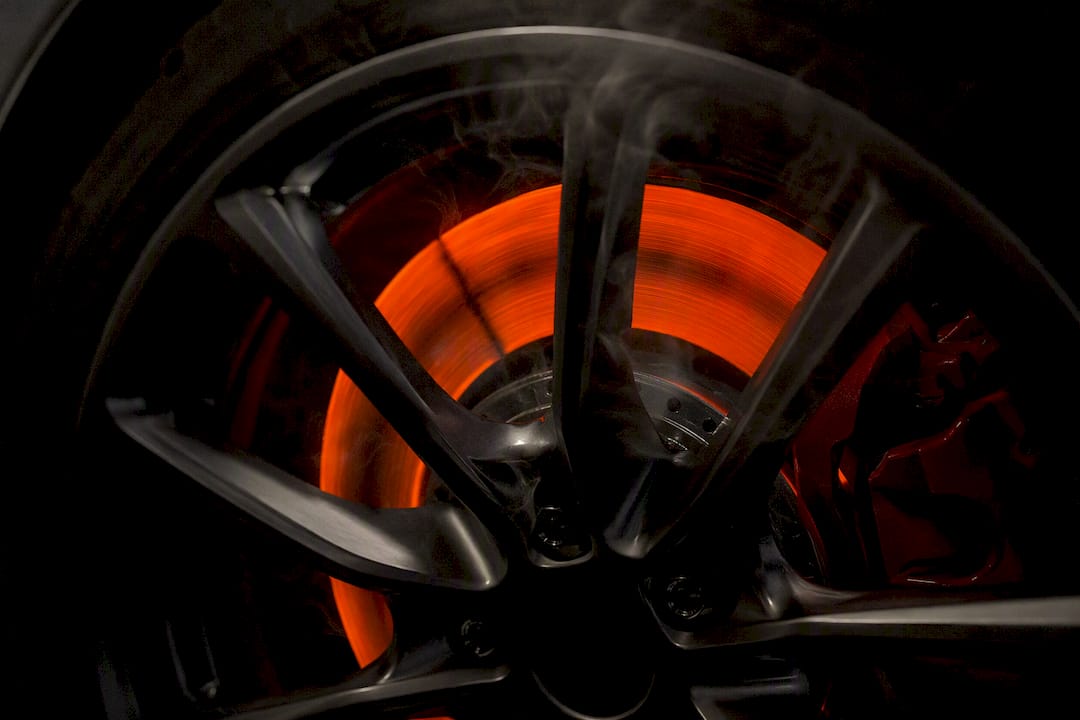
Driving style drives more of the variance than any other single factor. Hard, late braking generates far more heat and friction than anticipating traffic and coasting to a stop, and that difference compounds over thousands of stops per year.
Vehicle weight matters too. Heavier vehicles, loaded trucks, and anything doing regular towing put more mechanical load on the pads with every stop. Electric vehicles complicate the picture in the opposite direction: regenerative braking handles much of the everyday slowing, so EV pads often last well beyond what a comparable gas vehicle sees.
Environment plays a quieter but real role. Hilly terrain forces more braking events per kilometre than flat roads. Winter road salt and grit accelerate corrosion on calipers and rotors, which in turn wears pads unevenly.
- Organic pads: softest, quietest, shortest life, typically 20,000 to 40,000 miles.
- Semi-metallic pads: mid-range durability and stopping power, typically 30,000 to 50,000 miles.
- Ceramic pads: longest-lasting and lowest dust, typically 40,000 to 70,000 miles.
How do you know when brake pads need replacing?
Your ears, your foot, and your eyes each tell a different part of the story.
- Listen for a high-pitched squeal. That's the built-in wear indicator doing its job, not a rotor problem yet.
- Listen for grinding. That means the pad material is gone and metal is contacting metal, which damages rotors fast.
- Feel the pedal. A spongy feel, pulling to one side, or longer stopping distances all signal the brake system needs attention.
- Check for vibration. Pulsing through the pedal or steering wheel often points to uneven pad wear or a warped rotor.
- Measure the pad. Look through the wheel spokes at the caliper; the pad should show a visible margin of material against the rotor. A ruler or caliper tool gives an exact reading.
- Watch the dash. A brake warning light or wear sensor alert means stop guessing and get it inspected.
Pro Tip: Keep a small flashlight in your glovebox. A quick look between the wheel spokes every few fuel stops catches thinning pads long before you hear a sound.
Once pad material drops to 3 to 4 mm, treat replacement as due, not optional.
How can you extend the life of your brake pads?
Small habit changes add up over thousands of kilometres. Coast early instead of braking late, and avoid resting your left foot on the pedal while driving, a habit that quietly cooks pads through constant light contact.
- Ease off the accelerator earlier and let momentum do some of the slowing.
- Avoid two-foot driving (one foot on gas, one on brake).
- Get brakes inspected twice a year, more often if you tow, drive hills daily, or put in heavy city kilometres.
- Have calipers cleaned and lubricated so pads wear evenly instead of dragging on one side.
- Replace hardware (clips, shims) at the same time as pads to avoid rattling and uneven contact.
Material choice matters at the point of replacement. Ceramic pads cost more upfront but suit highway-oriented drivers well, since longer life and less dust offset the price difference over time. Heavy city or towing use may still favour semi-metallic for its bite under load. For a deeper look at what trips people up during upgrades, see this guide to brake upgrade mistakes and which parts are worth the extra cost.
When should you replace pads, and what does it cost?
Replace pads the moment thickness drops near 3 mm, grinding starts, or a dashboard warning appears. Waiting past those points risks rotor damage and longer stopping distances, both of which cost more to fix later.
- Pads alone: typically $150 to $300 CAD per axle, depending on vehicle and pad material.
- Pads plus rotors: typically $300 to $600 CAD per axle once labour and parts both increase.
- Rule of thumb: if rotors are within spec, thickness and surface, pads alone are fine. If they're scored, warped, or thinner than the manufacturer's minimum, replace both together.
Budgeting for the higher range when rotors are due saves you a second shop visit a few months later.
How do rotors affect brake pad life?
Rotors typically last through two full sets of pads before needing attention, though scoring or warping can shorten that. Machining a rotor (resurfacing the worn surface) works if enough material remains, but it has limits and isn't always cheaper than replacement once labour is factored in.
- New pads bedded onto a scored or warped rotor wear unevenly and fail sooner.
- Machining is acceptable within the rotor's minimum thickness spec; below that, replace it.
- Pairing fresh pads with a rotor in poor condition undercuts the pads' expected lifespan from day one.
What we've learned about brake longevity at DBC Brakes
Pad life depends as much on the hardware around it as the pad itself. DBC Brakes builds cross-drilled rotors specifically to resist warping, which protects new pads from the uneven wear a damaged rotor causes. Look for kits with clear material specs, transparent pricing, and support that can answer fitment questions directly.
— Sam
Ready to replace or upgrade your brakes?
If your pads are near that 3 mm mark or a rotor is showing scoring, buying pads alone without checking rotor condition often means paying for labour twice. DBC Brakes sells complete kits, pads matched to engineered cross-drilled rotors, so you replace both worn components correctly the first time, with no hidden fees added at checkout.
Every kit lists compatible makes and models directly on the product page, so fitment is confirmed before you buy, and orders over $100 ship free within Canada. Support comes from people who know the parts, not a script. Browse the premium brake kit lineup to compare rotor and pad combinations built for longer service life, or check the full brake kit collection to find the right fit for your vehicle and start your order today.
Sources
- How Long Do Brake Pads Last?
- How long should your car's brake pads last?
- How Long Do Brake Pads Last? (By Driving Style and Vehicle Type) | Direct Brakes Advice