
The brake warning light means one of three things: your parking brake is engaged, your brake fluid is low, or there's a fault somewhere in the hydraulic or electronic brake system. Red means urgent.
Check the parking brake first. Release it fully and watch the light. If it goes out, you're likely fine to continue. If it stays on, pay attention to pedal feel. A firm pedal with the light still on is a caution. A soft, sinking, or spongy pedal is a stop-now situation.
If the red brake warning light remains on after the parking brake is fully released, stop driving and seek professional assistance rather than continuing to your destination.
Pro Tip: Pump the brake pedal gently once at a safe stop. If it feels like it's sinking toward the floor, don't drive further. Call a tow.
Key Takeaways
The brake warning light demands an immediate parking brake check, a pedal-feel test, and a stop-driving decision the moment the pedal feels soft.
| Point | Details |
|---|---|
| Red means urgent | Treat any red brake warning as a signal to check the parking brake and pedal feel immediately. |
| Pedal feel decides safety | Firm pedal may allow a short drive to a shop; soft or sinking pedal means stop and call for a tow. |
| Amber ABS differs from red | ABS lights allow cautious driving since standard braking often still works, but avoid hard stops. |
| Don't mask leaks with fluid | Topping up fluid without finding the cause is a temporary fix that hides a returning leak. |
| Both lights together is critical | Red and amber ABS lights on simultaneously mean do not drive until inspected. |
Where to learn more
- AA1Car's brake warning light diagnosis guide covers technician-level diagnostic sequencing.
- YourMechanic's brake system explainer details fluid-sensor behaviour.
- Cambridge Dictionary offers the plain-language reference definition.
Table of Contents
- What do the different brake warning light colours mean?
- Which quick checks should you do before calling for help?
- What usually causes the brake warning light to come on?
- Is it safe to keep driving or should you stop?
- What will a technician check to diagnose the problem?
- What does a brake warning light repair actually cost?
- How can you prevent the brake warning light from coming on?
- What should you do if you have to stop and can't keep driving?
- Should you upgrade your brakes after a warning light scare?
- What conventional brake warning advice gets wrong
- Frequently asked questions about the brake warning light
- Sources
What do the different brake warning light colours mean?
Dashboard brake symbols aren't all the same alert, and mixing them up leads drivers to either panic unnecessarily or ignore something serious.
- Red brake warning symbol. This is usually the primary hydraulic brake alert. It flags low fluid, a pressure imbalance between circuits, or a parking brake issue. Treat red as the most urgent colour on the dash.
- Amber or yellow ABS light. This means a fault in the anti-lock braking system, not the base brakes. Standard braking often continues to work, but you lose ABS assistance during hard stops, so avoid sudden braking or highway speeds until it's checked.
- A "P" or PARK symbol. This usually just confirms the parking brake is applied, though a switch fault can make it stick on falsely.
- A separate bulb-out icon. This is unrelated to the internal warning system. It tells you an external brake lamp has failed, which is a road-visibility issue, not a mechanical one, per the Highway Code's guidance on external signalling lights.
Which quick checks should you do before calling for help?
Three checks, done at a safe stop, tell you most of what you need to know.
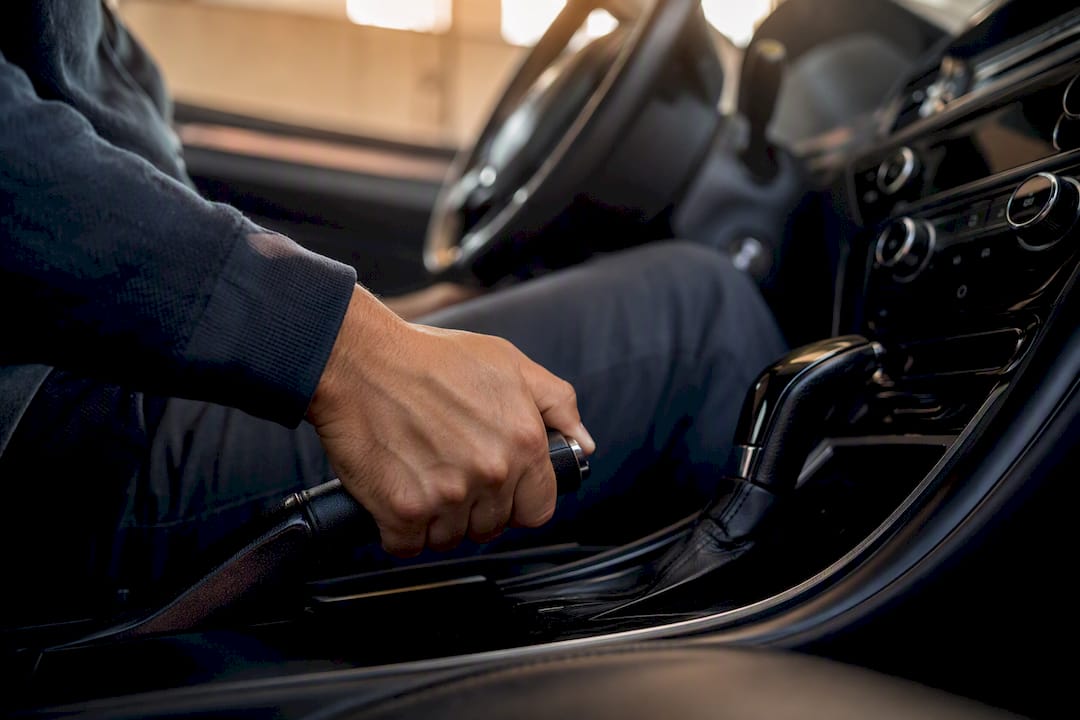
Check the parking brake. Release it fully, ideally while parked, and confirm the light clears. A partial release or a stuck lever can leave the light on even though nothing is actually wrong.
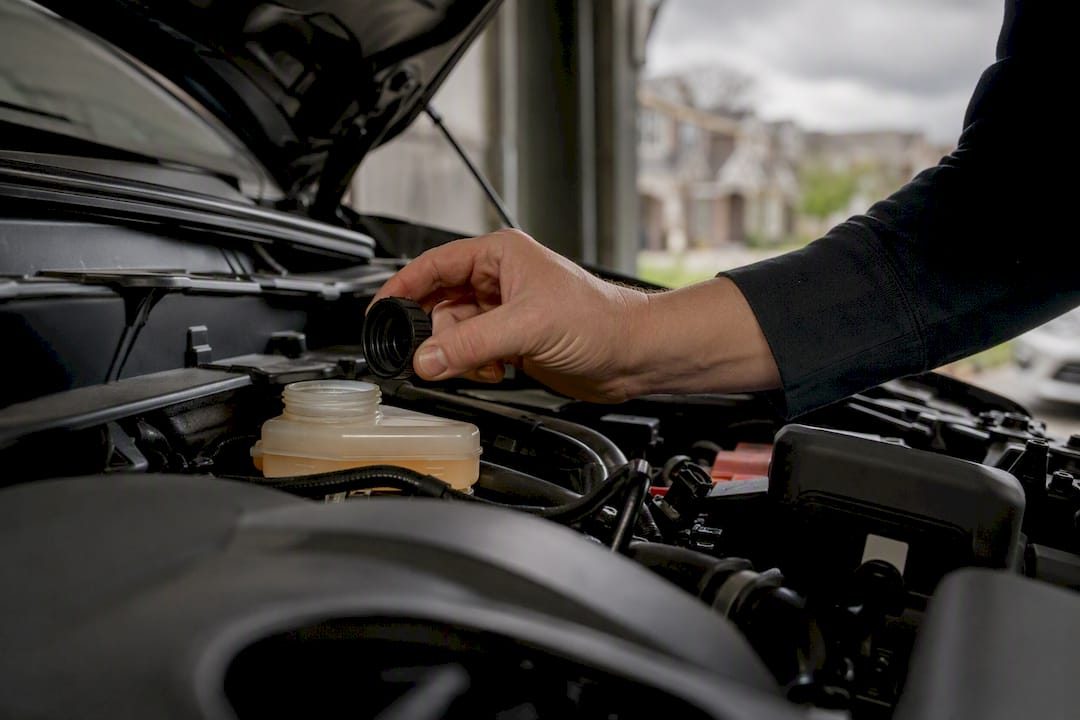
Look at the fluid reservoir. Pop the hood (engine off, cool) and glance at the reservoir markings from outside the cap. Don't open the cap on the roadside. Debris entering the system or fluid contact with skin is not worth the risk. A level near or below "MIN" points toward low fluid.
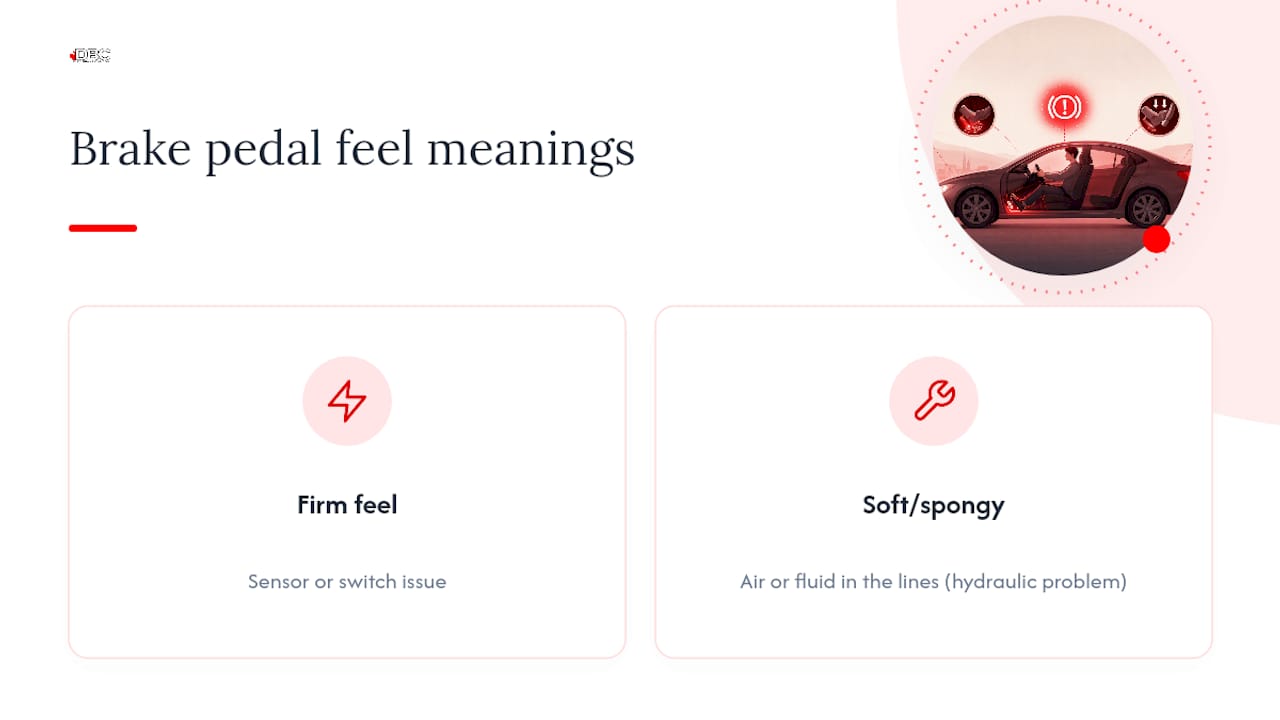
Test pedal feel. Press the pedal at a stop. Firm and consistent resistance usually points to a sensor or switch issue. Soft, spongy, or sinking pedal feel points toward air or fluid in the lines, which is a hydraulic problem. Our guide to pedal feel breaks down what each sensation actually indicates mechanically.
Pro Tip: Do all three checks in under a minute, in that order. The parking brake check alone resolves the light in a surprising number of cases.
What usually causes the brake warning light to come on?
A brake warning light causes list almost always narrows down to five culprits, and each one leaves its own fingerprint.
- Parking brake engaged or misadjusted switch. The simplest cause and the easiest fix. If releasing the brake doesn't clear the light, the switch itself may be faulty.
- Low fluid from pad wear. As pads wear down, the caliper pistons extend further and fluid level drops naturally in the reservoir. A fluid-level sensor trips when this drop crosses a threshold, and it's normal wear rather than a fault.
- Low fluid from a leak. A rapid drop in fluid level, especially with a puddle or wet spot under the vehicle, signals a leak rather than gradual wear.
- Worn brake pads and wear sensors. Squealing or grinding noise combined with the light often means pads have hit their wear indicator.
- Hydraulic circuit problems. A pressure-differential switch monitors balance between front and rear circuits. If one circuit loses pressure, from a leak or master cylinder failure, the switch trips the light and this is urgent.
- ABS sensor or electronic faults. These trigger the amber light alone in most cases and allow limited driving, unlike the red hydraulic warning.
Is it safe to keep driving or should you stop?
The colour and the pedal feel together decide this, not the colour alone.
Red light plus a firm pedal, where only the parking brake was engaged, is usually fine for a short drive to a shop, but check fluid and pad wear before you go. Red light plus a soft, spongy, or sinking pedal is a stop-now scenario. Pull over safely and call for a tow or roadside brake service.
Amber ABS light on its own is generally safe for careful driving to a garage. Avoid highways, hard braking, and anything that might demand an emergency stop, since ABS function may be impaired even though basic braking still works.
If both the red brake light and the amber ABS light are on together, treat it as critical and do not drive. That combination often points to a serious fault affecting the whole system.
What will a technician check to diagnose the problem?
A shop visit follows a fairly predictable sequence, and knowing it helps you understand what you're paying for.
- Visual and reservoir inspection. Fluid level, colour, visible leaks around lines and calipers, and pad thickness through the wheel spokes.
- Pressure-differential switch and master cylinder tests. Technicians isolate each hydraulic circuit to see which side lost pressure, since a failing master cylinder often mimics a simple low-fluid symptom.
- OBD scan and wheel-speed sensor checks. For ABS lights, a scan tool pulls fault codes tied to specific sensors or the ABS module itself, which narrows the repair instead of guessing.
- Pedal pressure and line-pressure tests. A pressure gauge or dye test finds slow leaks that aren't visible during a quick walk-around.
The strict sequence most shops follow is visual check, pad measurement, fluid and master cylinder inspection, pressure-differential test, then ABS scan. That order avoids replacing expensive parts before confirming the actual fault, and it shapes the repair estimate you get afterward.
What does a brake warning light repair actually cost?
Fixes range from a five-minute adjustment to a full hydraulic overhaul, and the price gap between them is significant.
Simple fixes include releasing a stuck parking brake, adjusting a switch, or topping up fluid. Topping up fluid without finding why it dropped is only a temporary band-aid, since the underlying wear or leak is still there.
Medium repairs cover pad replacement, wear-sensor replacement, and rotor resurfacing or replacement, which is where worn or warped rotors often get addressed at the same time as pads.
Serious repairs involve fixing an active leak, replacing a failed master cylinder, or repairing an ABS module. These jobs cost more because they require more diagnostic time and often more labour to access the affected component. Roughly 25,000 to 60,000 miles is the typical pad lifespan range, and pads near that upper limit are a common reason the light first appears.
Never keep topping up fluid as a workaround. If the level drops again within days or weeks, that's a leak, and continuing to drive on it risks total hydraulic failure.
How can you prevent the brake warning light from coming on?
A short maintenance routine catches most causes before they become a dashboard alert.
- Get pads inspected at every scheduled service, not just when you hear noise.
- Track mileage against the typical pad lifespan and replace before pads hit minimum thickness.
- Check fluid level at recommended intervals and follow the manufacturer's fluid replacement schedule to avoid moisture contamination, which lowers the fluid's boiling point over time.
- Keep the parking brake mechanism and switch free of corrosion, and replace wear sensors whenever you replace pads.
Pro Tip: Ask your shop to check pad thickness every time you get an oil change. It costs nothing extra and catches wear months before the light does.
What should you do if you have to stop and can't keep driving?
Get the vehicle fully off the road, onto a shoulder or lot, not just slowed down in a lane. Turn on hazard lights immediately and set the parking brake once stopped. If you're carrying warning triangles or flares and it's safe to place them, do so behind the vehicle.
Before the tow arrives, note what you observed: which lights were on, whether the pedal felt soft, and whether you saw fluid on the ground. That saves diagnostic time at the shop.
Call your manufacturer's roadside assistance line, a local towing service, or a mobile brake mechanic if one operates in your area.
Pro Tip: Take a quick phone photo of the dashboard lights and anything on the ground under the car. It gives the technician a head start before you even arrive.
Should you upgrade your brakes after a warning light scare?
A brake warning light that traces back to worn pads or a warped rotor is a natural point to consider what you're replacing them with, not just replacing them like-for-like. DBC Brakes builds premium brake kits around cross-drilled rotors engineered to resist warping and hold up better under repeated heat cycles than standard replacement rotors.
Pricing is listed with no hidden add-ons, and orders over $100 ship free within Canada. If your technician has already flagged the pads or rotors during diagnosis, browsing the full brake kit collection is a reasonable next step before you book the install.
What conventional brake warning advice gets wrong
Most explainers treat the brake warning light as a single problem with a single fix. It isn't. The same red light can mean a $0 parking brake release or a master cylinder replacement running several hundred dollars, and conventional advice rarely gives drivers a way to tell which one they're facing before they reach a shop.
The pedal feel test gets buried too far down in most guides, when it's arguably the single most useful piece of information a driver can gather in thirty seconds. A firm pedal versus a sinking one is the difference between driving to an appointment and calling a tow truck. That distinction deserves to lead, not follow.
The other gap is honesty about fluid top-ups. Plenty of advice treats adding fluid as a fix. It's a stopgap that buys you time to find the actual cause, nothing more. Drivers who understand that distinction make better decisions at the roadside than drivers chasing a generic checklist.
Frequently asked questions about the brake warning light
What does it mean if my brake warning light comes on while driving? It usually means the parking brake is partially engaged, fluid has dropped below the sensor threshold, or there's a pressure imbalance in the hydraulic system. Check pedal feel immediately.
Can I still drive with the brake warning light on? Only if the pedal feels firm and you've confirmed the parking brake is fully released. A soft or sinking pedal means you should stop driving and arrange a tow.
Is the ABS light the same as the brake warning light? No. The ABS light is usually amber and points to a fault in the anti-lock system alone. The red brake warning points to the core hydraulic braking system, which is a more urgent issue.
Why does my brake warning light flicker on turns? Flickering during turns or braking often means fluid is low enough to slosh below the sensor intermittently, which points toward pad wear or a slow leak rather than a sudden failure.
How much does it cost to fix a brake warning light issue? It ranges from free, for a parking brake release, to several hundred dollars for a master cylinder or ABS module repair, depending on what the diagnostic finds.
Sources
- Brake Warning Light Diagnosis & Repair
- Brake warning light on? Causes, fixes, and costs
- Brake Warning Light: What It Means, Causes & When To Stop Driving
- What Does the Brake System (Hand Brake, Parking Brake) Warning Light Mean? | YourMechanic Advice
- What Do Dashboard Brake Lights Mean? - Les Schwab