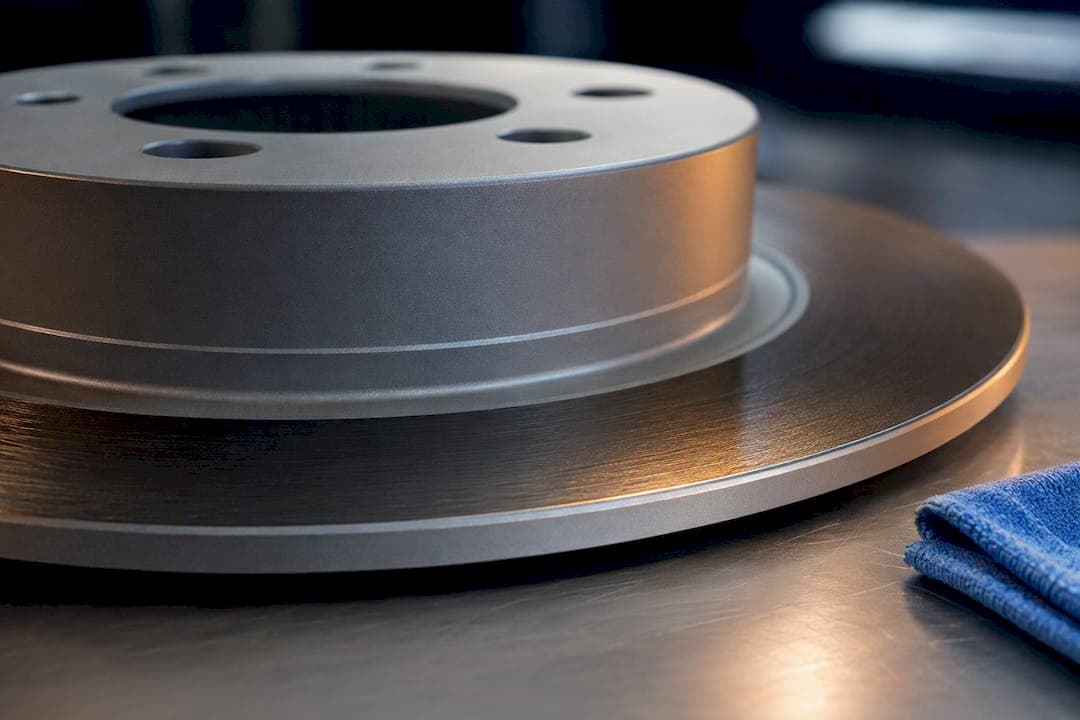
Coated rotors are worth buying for most daily drivers because they resist rust on the hat, vanes, and outer edge, and they keep wheels looking clean between services. They will not shorten your stopping distance or add thermal capacity, since braking performance comes from the cast iron core and the pads, not the coating. The best fit is a commuter facing road salt, wet climates, or open-spoke wheels that show every speck of rust.
TL;DR:
- Coated rotors primarily protect internal vanes, hats, and edges from rust, which helps maintain cooling and prevents rotor seizing during brake service.
- The coating does not influence braking performance, pad wear, or noise, as it does not alter the cast iron's heat capacity or metallurgy.
- Coatings typically last longer on the hat and vanes than on the friction surface, with durability depending on climate, handling, and coating quality.
- Baked or multi-stage coating processes offer better resistance to chipping and salt exposure than basic spray finishes, extending rotor lifespan.
- Most coated rotors arrive ready to install, with less risk of contamination from shipping oil, making them preferred for quick, clean upgrades in most weather conditions.
Table of Contents
- What coated rotors actually protect: vanes, hats, and hub fit
- Does coating change braking performance, pad wear, or noise?
- How long does the coating actually last?
- Zinc coatings vs Geomet vs baked polymer: which finish holds up?
- What should you know before installing coated rotors?
- Is the extra cost worth it for daily driving?
- What evidence backs coated rotor durability claims?
- Are there environmental or health concerns with rotor coatings?
- Who should actually buy coated rotors?
- Ready to upgrade? Here's where DBC Brakes fits in
- Sources
- FAQ
What coated rotors actually protect: vanes, hats, and hub fit
A coated rotor doesn't get coated everywhere. The friction surface, the part the pad grips, is either left bare or has a coating designed to wear off in the first few stops. Coating goes where corrosion actually causes problems: the hat, the outer edge, and the internal cooling vanes on vented rotors.
That distinction matters more than most buyers realize. Rust inside vented rotor vanes builds up slowly and reduces airflow, which affects cooling efficiency over the vehicle's life. Coating those internal surfaces keeps the vanes clear longer, so the rotor keeps shedding heat the way it was designed to.
The hat and hub area benefit too, and this is where a lot of owners feel real value at the shop. A rusted hub surface can fuse a rotor to the hub, turning a routine brake job into a fight with a hammer. Coating that surface reduces the odds of that seizure, which matters most in regions with heavy winter road salt.
- Hat and outer edge coating resists corrosion where the rotor meets the hub
- Vane coating helps preserve airflow and cooling efficiency inside vented rotors
- Less hub corrosion means fewer seized rotors at your next brake service
- The friction surface stays bare or clears itself through normal pad contact
Does coating change braking performance, pad wear, or noise?
No. Coating doesn't touch the cast iron's heat capacity, and it doesn't change the metallurgy that actually stops your car. Stopping distance comes down to pad compound, rotor mass, and caliper clamping force, none of which a surface coating alters.
Where coating can have a real, if minor, effect is at the friction interface during the first few stops and, occasionally, with lower-quality coatings.
- Initial pad contact may feel slightly different until the coating clears off the swept area
- A cheap, thin coating can flake and contaminate pads if it doesn't clear cleanly
- Wet-weather braking consistency depends more on pad compound than on any rotor coating
- Reputable coated plain rotors paired with a quality pad behave essentially like an uncoated rotor once broken in
Buyer guides generally point daily drivers toward coated plain rotors rather than exotic surface treatments, since the coating adds protection without introducing noise or pedal-feel changes. The rule of thumb: match a coated rotor with a pad from a brand you trust, and skip bargain-bin coated units that feel rough or uneven straight out of the box.
How long does the coating actually last?
Coating life depends on three things: how much road salt and moisture the vehicle sees, how the rotor was handled before installation, and the quality of the coating process itself. A rotor driven through Canadian winters will show coating wear differently than one that lives in a dry garage most of the year.
- The swept area loses its coating within the first several stops, and that's expected, not a defect.
- The hat, vanes, and outer edge typically hold their coating far longer, since pads never touch them.
- Chipping from careless handling during shipping or installation is the most common early failure point.
- Thin, spray-on coatings tend to delaminate sooner than baked or multi-layer processes.
Even after the friction face wears clear, the parts that actually rust, the hat and vanes, usually stay protected for years. That's the practical payoff: a rotor that looks and functions better long after an uncoated equivalent has started staining your wheels with rust streaks.
Zinc coatings vs Geomet vs baked polymer: which finish holds up?
Not all coatings are built the same, and the process matters more than the colour or shine on the shelf. Three finishes dominate the market for rust resistant rotors:
- Zinc/electroplate finishes offer solid baseline corrosion resistance and are common on entry-level coated rotors.
- Geomet (zinc-aluminium) coatings resist salt exposure and chipping better than basic zinc, and they're widely used in OEM-grade applications.
- Baked-on polymer or paint finishes applied in multiple stages tend to resist flaking better than a single thin spray coat.
The buyer's rule is simple: favour rotors from manufacturers that describe a baked or multi-stage coating process over anything that reads like a quick spray finish. A thicker, properly cured coating survives curb scrapes, brake dust, and winter grit far longer than a thin cosmetic layer.
What should you know before installing coated rotors?
Mechanics often prefer coated rotors for a practical reason that has nothing to do with rust: they usually arrive ready to bolt on, without the heavy shipping oil that uncoated rotors carry. That oil has to be scrubbed off thoroughly with brake cleaner before installation, or it can contaminate new pads and cause uneven bedding.
Pro Tip: If you're installing coated rotors yourself, resist the urge to wipe down the hat and vanes with solvent. Clean the friction face only, following the pad manufacturer's break-in instructions, so you don't strip coating you want to keep.
- Follow the pad maker's break-in procedure. A light haze of surface rust on the swept face during the first cold start is normal and clears within a few stops.
- Check hub and mounting surfaces for fit and torque accuracy, since coating thickness can be a factor on tight-tolerance hubs.
- Inspect periodically for chipping near the edges and keep wheel wells free of grit that can accelerate wear on any exposed coating.
Is the extra cost worth it for daily driving?
The premium for coated plain rotors over bare cast iron is modest, and it buys real, visible value over the ownership period. You're paying for less rust bleeding through open-spoke wheels, easier rotor removal at your next brake job, and a cleaner look behind the wheel when you sell or trade the vehicle.
- Choose coated plain rotors if you drive daily through road salt, rain, or humid winters
- Choose coated plain rotors if your wheels are open-spoke and show rust easily
- Choose performance rotors (drilled or slotted) if your priority is heavy towing or track use, where thermal management matters more than cosmetic corrosion
- Expect fewer nuisance seized-rotor repairs and better resale presentation with a coated set
For most commuters, that math favours coating almost every time. Road salt exposure alone justifies the small price gap for anyone driving through a winter climate.
What evidence backs coated rotor durability claims?
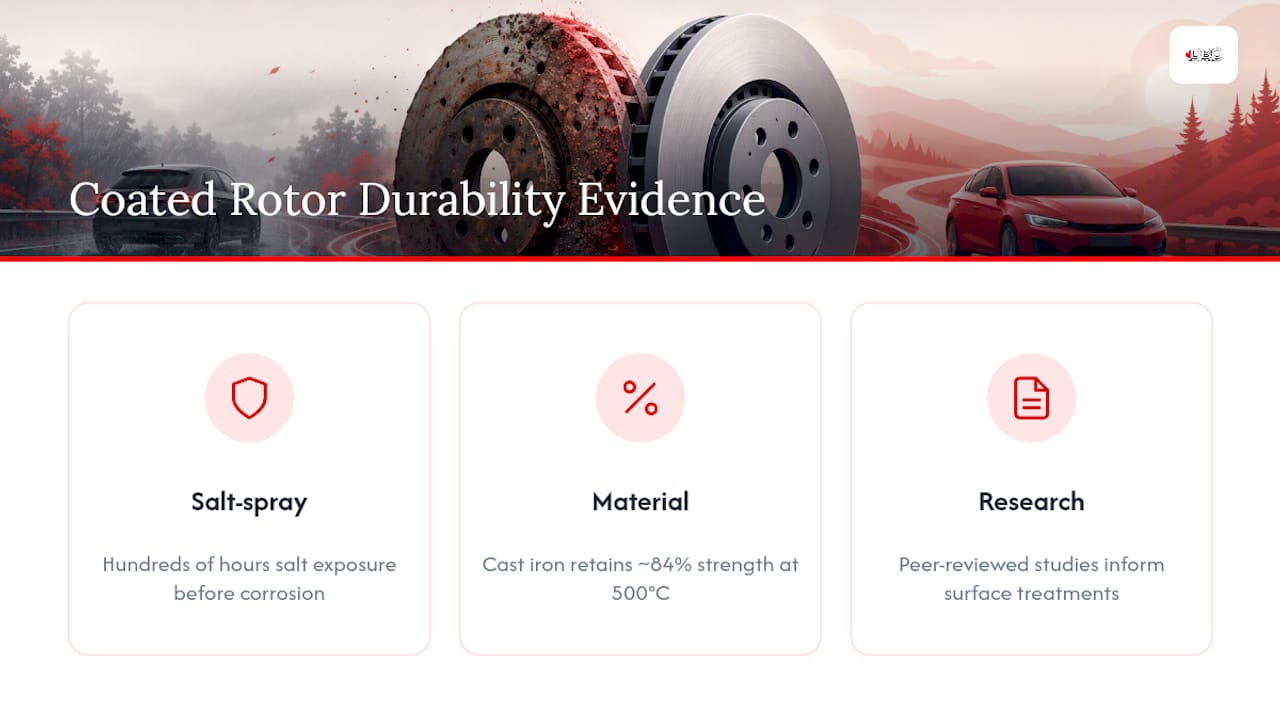
Independent testing and material data give buyers more than marketing language to go on. Industry salt-spray testing referenced by NAPA Know How shows coated rotors can withstand hundreds of hours of salt exposure on non-contact surfaces before corrosion sets in, a meaningful benchmark for anyone shopping by spec sheet rather than guesswork.
Material choice underpins all of this. Cast iron retains roughly 84% of its structural integrity at 500°C, which is why coating manufacturers apply protection to the metal rather than trying to replace it. Peer-reviewed engineering research, including SAE International's work on treated rotor surfaces, studies how surface treatments behave under early corrosion and wear cycles, informing how manufacturers like DBC Brakes engineer rotors for durability.
Coated rotors don't reinvent brake performance. They protect the cast iron underneath from the one thing that actually shortens a rotor's useful life in a Canadian winter: rust.
Some manufacturers build their cross-drilled rotors around that same principle, pairing engineered rotor design meant to resist warping with finishes that hold up through daily driving, backed by free shipping over a minimum order amount and direct customer support.
Are there environmental or health concerns with rotor coatings?
Zinc and Geomet coatings used on automotive rotors are applied through electroplating or thermal spray processes, and once cured, they're stable and inert during normal driving. The concern isn't wearing brake dust off a coated rotor while driving. It's handling and disposal during manufacturing and servicing.
Zinc electroplating processes generate wastewater that needs proper treatment, which is why reputable manufacturers follow established industrial discharge standards rather than cutting corners on plating chemistry. At the shop level, sanding or grinding a coated rotor, something that happens occasionally during fitment adjustments, can release fine metallic dust, and standard shop ventilation and eye protection apply the same way they would for any metal grinding work.
For the average owner, there's no meaningful exposure risk from a properly coated rotor sitting on your car. The coating stays bonded to the metal under normal driving temperatures and doesn't off-gas or degrade into airborne particles during regular braking. If you're doing your own installation, wearing gloves when handling rotors and washing up afterward is reasonable practice, less because of the coating specifically and more because brake components in general carry dust and residue worth washing off your hands.
Who should actually buy coated rotors?
Coated plain rotors are the right call for most commuters, especially anyone driving through winter salt or running open-spoke wheels. Look for a baked or multi-stage finish over thin spray coatings, confirm correct fitment for your vehicle, and match your choice to how and where you actually drive.
— Sam
Ready to upgrade? Here's where DBC Brakes fits in
If you've weighed coated plain rotors against performance-oriented options and landed on wanting both rust protection and engineered durability, that's exactly where DBC Brakes builds its rotors. Cross-drilled rotors can be designed specifically to resist warping while holding up to daily driving conditions, including exposure to road salt, rather than treating corrosion resistance as an afterthought.

Checking fitment is straightforward: browse the coated rotor collection or the full brake kit lineup by vehicle make and model before you order. Orders over a certain amount may ship free, and support may be offered by knowledgeable staff who answer vehicle-specific questions. If you're ready to move from research to replacement, start with the premium brake kit page and confirm your fitment before checkout.
Sources
- SAE International | Advancing mobility knowledge and solutions
- What are coated brake rotors? — NAPA Know How
- Brake rotor buying guide: How to choose the right rotors for your car — VehicleBar
- Parts
FAQ
Do coated rotors make a real difference?
Yes, for corrosion resistance and appearance. Coated rotors resist rust on the hat, vanes, and outer edge, but they don't improve stopping distance or add thermal capacity since braking performance comes from the cast iron core and the pads.
How do you break in coated rotors?
Follow the pad manufacturer's break-in procedure and expect light surface rust on the swept area during the first few cold starts. That rust clears within several stops as the pads sweep the friction face clean.
Who makes the best coated rotors?
Look for manufacturers using baked or multi-stage coating processes rather than thin spray finishes, since these resist chipping and salt exposure far longer. Some manufacturers build cross-drilled coated rotors with durable finishes paired with engineering meant to resist warping.
Do coated rotors need to be cleaned before installation?
Uncoated rotors typically need thorough cleaning with brake cleaner to remove shipping oil, but coated rotors usually arrive ready to install without that heavy oil, which is a big reason mechanics often prefer them for faster, cleaner installs.