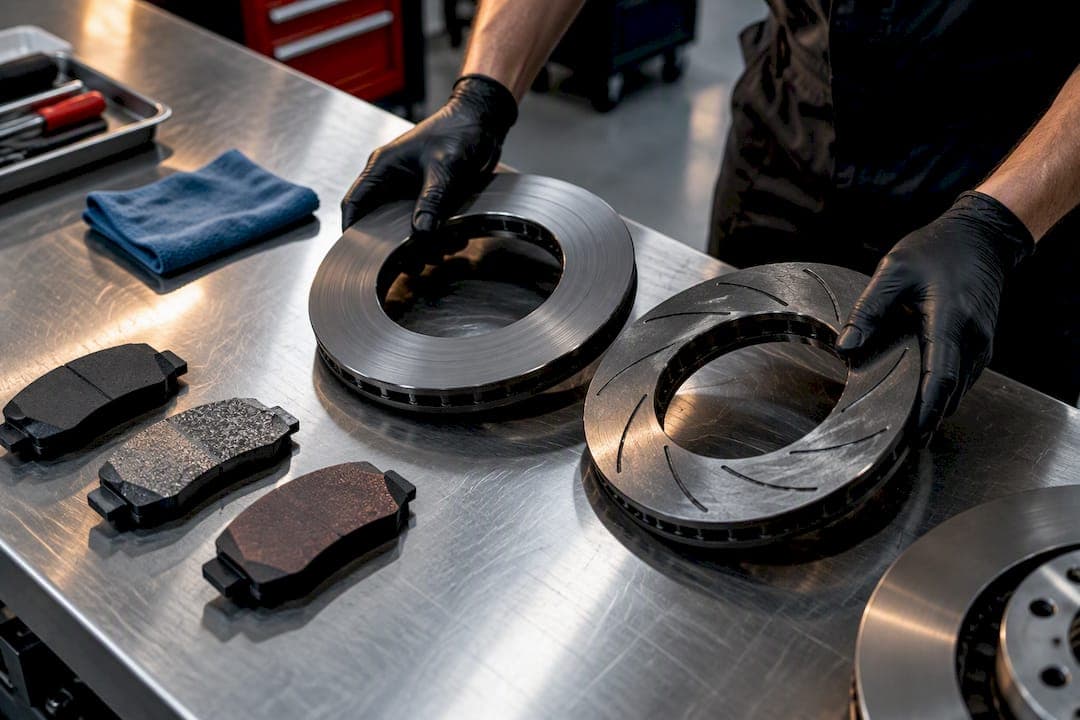
For most drivers, a blank or vented rotor covers daily driving and towing needs, while drilled or slotted patterns suit spirited or track use with added maintenance. Before buying, check two things: the vehicle's OEM fitment specs and the rotor's minimum thickness. National Safety Code Standard 11 sets the discard limits that determine when a rotor is unsafe to keep on the road.
TL;DR:
- For most daily drivers, a quality vented blank rotor provides the best combination of durability and maintenance, especially when OEM fitment and minimum thickness are confirmed beforehand.
- Towing or heavy loads benefit from vented or lightly slotted rotors that help dissipate heat during repeated braking under weight; performance driving may require drilled or hybrid patterns for short bursts.
- Rotor cracks or excessive wear are critical safety indicators, with cracks reaching the edges or thickness below OEM limits requiring immediate replacement or resurfacing.
- Cast iron remains the standard rotor material offering predictable heat handling, while two-piece designs reduce warping risk, and ceramic options are generally unnecessary for standard street use.
- Confirm fitment by matching diameter, thickness, bolt pattern, and rotor type to avoid returns and ensure proper clearance and contact during installation.
Table of Contents
- Rotor types and what each one does
- Materials and construction behind rotor durability
- Fitment, size, and compatibility checks before you buy
- Matching rotors to how you actually drive
- Warning signs and safety limits you shouldn't ignore
- Maintenance and heat management that protect rotor life
- How DBC's rotor lineup fits these selection criteria
- A practical recommendation for most owners
- Where DBC fits into your rotor decision
- Sources
- FAQ
Rotor types and what each one does
Rotor pattern affect heat control, pad wear, and cracking risk. Each type suits a different kind of driving.
- Solid or vented blanks: vented designs use internal channels to move air and manage heat, making them the standard choice for most vehicles.
- Drilled rotors: holes help evacuate water and brake gas, which improves wet-weather bite, but repeated heavy heat cycles raise the risk of cracks starting at the holes.
- Slotted rotors: shallow grooves clean the pad surface and improve initial bite, though they wear pads slightly faster than a blank.
- Drilled and slotted hybrids: combine both benefits and both risks. Numerical studies on cut patterns found that hybrid ventilated designs dissipate heat best but also generate higher thermal stress at pattern corners, which raises cracking risk compared with a solid disc.
A commuter car rarely needs anything beyond a quality vented blank. A truck used for occasional towing benefits from the added airflow of a vented design. A driver doing autocross or track days on weekends is the profile where a hybrid pattern, paired with the right pads, starts to make sense.
Materials and construction behind rotor durability
Cast iron remains the standard rotor material because it handles heat cycling predictably and costs less to manufacture than alternatives. Its main weakness is surface rust, which coatings and plating address directly, extending cosmetic and functional life in wet or salted conditions.
Two-piece rotors pair a cast iron friction ring with an aluminum hat. This construction reduces unsprung weight and allows the ring to expand independently under heat, which lowers the chance of warping compared with a one-piece design.
Carbon ceramic rotors resist fade at extreme temperatures and weigh less, but the cost puts them well beyond what most street-driven vehicles need. They make sense on dedicated performance cars, not daily drivers.

Fitment, size, and compatibility checks before you buy
Getting the pattern or material right means nothing if the rotor doesn't fit. Confirm these details before ordering:
- Match the stamped diameter and thickness on the old rotor or in the owner's manual to the replacement part.
- Confirm bolt pattern and hub mounting style, since some vehicles use different hub configurations across trim levels.
- Check whether the vehicle uses solid or vented rotors at each axle, because the two are rarely interchangeable even when the outer diameter looks similar.
- Pull OEM specs from the manufacturer or a parts catalogue, then measure and record the old rotor's thickness as a baseline for comparison.
Skipping this step is the most common reason replacement rotors get returned. A rotor that bolts on but sits outside spec can affect pad contact and caliper clearance.
Matching rotors to how you actually drive
The right rotor depends on what the vehicle does most, not what looks aggressive in a parts catalogue.
- Commuting and mixed use: a vented blank rotor offers the best balance of durability and pad-friendly wear, and it's the choice industry buyer's guides consistently recommend for most drivers.
- Towing and heavy loads: vented or lightly slotted rotors help manage the sustained heat that comes from stopping extra weight repeatedly, a point driving guides raise specifically for towing and heavy-load use.
- Performance or spirited driving: drilled or hybrid patterns can help in short bursts, but they call for more frequent inspection and pads rated for higher temperatures.
- Wet or cold climates: drilled features help clear water, but corrosion-resistant coated blanks often hold up better over a full winter without the added stress risers.
Pro Tip: If you tow occasionally rather than constantly, a well-matched pad compound often does more for stopping power than switching rotor patterns.
Warning signs and safety limits you shouldn't ignore
Some rotor problems are cosmetic. Others mean the part needs to come off the car now.
- Cracks reaching the cooling vents or an outer edge are a discard condition, not a candidate for resurfacing.
- Deep grooves or visible hot spots point to uneven pad contact or repeated overheating.
- Thickness below the OEM minimum is a hard stop regardless of how the surface looks.
National Safety Code Standard 11 requires rotors to be removed once thickness drops below the OEM allowable minimum, and it recommends measuring and recording thickness at every major inspection to catch wear before it becomes a safety issue. Vibration under braking, pulsation through the pedal, or noticeable fade after repeated stops are all reasons to get the rotors checked by a professional promptly.
Maintenance and heat management that protect rotor life
Pair rotors with pads rated for how the vehicle is actually driven, following recommended techniques to remove brake dust safely and protect wheel surfaces. Aggressive performance pads wear softer rotors faster, while mild street pads underperform on rotors built for heat.
New rotors and pads need a bedding-in period to transfer material evenly across the friction surface. Some drivers reference a bedding routine that varies by pad compound and vehicle weight; some drivers reference a 30/30/30 approach as informal guidance, but treat any bedding routine as a general starting point rather than a fixed rule, since it varies by pad compound and vehicle weight.
Avoid stacking repeated hard stops without a cooling interval, since that's what pushes rotors toward the thermal stress that leads to cracking. Resurfacing is acceptable for minor surface issues, provided the result stays above the minimum thickness limit.

How DBC's rotor lineup fits these selection criteria
One product line uses cross-drilled rotors designed to limit warping, suited to drivers doing spirited or occasional track driving. The Premium Black Kote line targets daily drivers who want corrosion resistance over drilled features. Listings include fitment details, so confirm your vehicle's specs before ordering.
A practical recommendation for most owners
For the average daily driver, a quality vented blank rotor is the safer, lower-maintenance choice over drilled or slotted patterns. Measure rotor thickness and confirm OEM fitment before you buy anything, no exceptions.
— Sam
Where DBC fits into your rotor decision
Once you know which pattern and material suit your driving, the next step is confirming fitment on a specific product. DBC's Performance XDB, Premium Black Kote, and Performance SS lines cover the range from daily commuting to spirited driving, with pricing that includes no hidden fees and free shipping on orders over $100.
- One line suits drivers doing occasional track days or aggressive street driving who want cross-drilled cooling.
- Another line suits daily drivers prioritizing corrosion resistance over drilled features.
- Support and fitment checks are available directly through the company before ordering, providing personal responses rather than automated replies.
Browse the full rotor collection or check shipping details before placing an order.
Sources
This guide draws on National Safety Code Standard 11 for discard limits and inspection practice, SAE numerical research on cut-pattern thermal behaviour, and buyer-focused writeups from DrivingLine and Hemmings explaining everyday trade-offs.
- CCMTA NSC Standard 11 - January 2020
- Numerical investigations on thermo-structural behavior of various cut patterns for ventilation on automobile brake discs (2020)
- Which rotors are best for high-performance driving? | DrivingLine
- How to choose the right disc brake rotors | Hemmings
FAQ
How do I know which brake rotors to buy?
Match the rotor pattern to your main driving use: a vented blank for commuting, a vented or slotted design for towing, and a drilled or hybrid pattern only if you regularly drive at higher performance levels. Always confirm OEM fitment specs and minimum thickness before ordering.
What brand of brake rotors are best?
There's no single best brand for every vehicle, since fitment, driving use, and climate all affect the right choice. Focus on matching rotor type and material to your needs first, then confirm guaranteed fitment with the manufacturer or supplier.
What is the 30/30/30 rule for brakes?
The 30/30/30 approach is an informal bedding-in guideline some drivers use for new pads and rotors, though the exact intervals vary by source and pad compound. Treat it as a general starting point rather than a fixed standard, and follow your pad manufacturer's specific bedding instructions when available.
What's better, drilled or slotted rotors?
Drilled rotors help clear water and gas for better wet-weather bite, but they carry a higher cracking risk under repeated heavy heat cycles. Slotted rotors improve pad bite and surface cleaning with less cracking risk, though they wear pads slightly faster, making the right choice dependent on your driving conditions.