
Most ceramic and carbon‑ceramic brake myths are oversimplifications, not outright lies. Some are rooted in real physics. Others are marketing leftovers from the 1990s that never got corrected.
Here's the fast breakdown:
- Mostly false: ceramic brakes fail in cold weather, carbon‑ceramic rotors are fragile, ceramics are only for supercars, ceramics need constant expensive upkeep.
- Partially true: stopping power differs by pad type and use case, not superiority.
- True in narrow conditions: cold bite lag in specific formulations, corrosion risk on hardware in salted regions, glazing under sustained extreme heat.
Ceramic pads rely on a friction bond called the transfer layer, and quality pads can push past 100,000 kilometres in favourable conditions, according to AAA. Bridgestone frames the real choice as matching pad type to how you actually drive, not chasing a "best" material.
Key Takeaways
Ceramic and carbon‑ceramic brake myths mostly fail under scrutiny because the real answer depends on driving conditions, not the material alone.
| Point | Details |
|---|---|
| Cold performance | Modern ceramic formulations handle cold adequately; proper bedding matters more than temperature. |
| Rotor fragility | Carbon‑ceramic rotors fail from impact or poor installation, not normal driving stress. |
| Lifespan variance | Quality ceramic pads can exceed 100,000 kilometres, but driving habits change the result significantly. |
| Winter and salt | Salt threatens hardware and mounting surfaces more than the ceramic friction material itself. |
| Choosing a kit | DBC Brakes pairs cross‑drilled rotors with compatible ceramic pads to reduce warping and mismatched wear. |
Table of Contents
- What this ceramic brake myths guide covers
- Myth 1: Ceramic brakes don't work well when cold
- Myth 2: Carbon‑ceramic rotors are fragile and break easily
- Myth 3: They're only for supercars and track cars
- Myth 4: They require constant expensive maintenance
- Myth 5: You can't use ceramic or carbon‑ceramic brakes in winter or salty conditions
- Myth 6: Ceramic pads have less stopping power than metallic pads
- Myth 7: Ceramic brakes last forever
- How ceramic and carbon‑ceramic brakes actually work
- What lifespan data and shop experience actually show
- What we see when customers upgrade their brakes
- Upgrading your brakes without the guesswork
- Sources
What this ceramic brake myths guide covers
This article works through seven of the most persistent ceramic brake misconceptions, one at a time, using material science, published lifespan data, and DBC Brakes' own installation observations.
You'll find debunks for these specific claims:
- Ceramic brakes don't work well when cold
- Carbon‑ceramic rotors are fragile and break easily
- They're only for supercars and track cars
- They require constant, expensive maintenance
- You can't use them in winter or salty conditions
- Ceramic pads have less stopping power than metallic pads
- Ceramic brakes last forever
Before you buy anything, check your vehicle's OEM brake specifications and confirm rotor and pad compatibility. DBC Brakes lists fitment details for each brake kit so you're not guessing at what your car actually needs.
Myth 1: Ceramic brakes don't work well when cold
Partially true, but only for specific formulations, not ceramic pads as a category.
Some early ceramic compounds needed a moment to reach optimal bite in freezing temperatures, because the friction material's transfer layer hadn't warmed enough to grip consistently. Modern ceramic formulations have largely closed that gap through better resin and filler combinations. The bigger factor is usually the driver, not the pad: cold rotors and cold fluid affect every brake type, ceramic or semi‑metallic.
Pro Tip: Bed in new pads properly and give your brakes a few gentle stops after a cold start before you lean on them hard. This lets the transfer layer build evenly across the rotor face.
A few practical notes for cold‑climate driving:
- Follow your vehicle's OEM bedding procedure after any pad or rotor swap.
- Warm up brakes with light, deliberate stops rather than one hard hit from cold.
- If you tow heavy loads in consistently sub‑zero conditions, a semi‑metallic pad may suit your use case better than ceramic.
For most daily drivers in typical winter conditions, the cold‑performance myth doesn't hold up. It only becomes relevant in edge cases: extreme cold combined with heavy loads or aggressive first‑stop demands.
Myth 2: Carbon‑ceramic rotors are fragile and break easily
Largely false. Carbon‑ceramic rotors are engineered for demanding use, but they do have specific failure modes that differ from cast iron.
They're not fragile in the sense of cracking under normal braking. What actually damages them is usually external: a curb strike, a chunk of road debris hitting the disc edge, or improper bedding that never lets the surface cure correctly. Thermal shock can also be an issue in narrow contexts, like aggressive track use paired with poor cooling.
Common real‑world failure modes include:
- Edge chips from road debris or aggressive curbing
- Surface damage from skipping the manufacturer's bedding procedure
- Mounting hardware issues when torque specs aren't followed
- Cooling restrictions from aftermarket wheels or debris buildup
Installation discipline matters more than most owners realize. Follow the correct torque sequence, use the hardware specified for your kit, and avoid aggressive curb contact during parking. DBC Brakes' guide on brake upgrade mistakes covers several installation errors that shorten rotor life regardless of material.
Carbon‑ceramic still isn't the right call everywhere. Off‑road rigs and heavy‑load work trucks are better served by conventional cast iron rotors paired with a semi‑metallic pad built for sustained abuse.
Myth 3: They're only for supercars and track cars
False. Adoption has broadened well beyond exotic vehicles, though suitability still depends on how you drive.
Daily commuters who want quieter stops and less brake dust on their wheels make up a large share of ceramic pad buyers now. High‑performance cars still use them, and some light trucks with specific braking profiles benefit too, particularly when low NVH matters more than extreme heat tolerance.
Use this quick checklist to decide if ceramic suits your vehicle:
- Vehicle mass and typical load (lighter passenger vehicles suit ceramic best)
- Towing frequency (frequent heavy towing favours semi‑metallic)
- Driving style (city and highway commuting favours ceramic comfort)
- OEM brake recommendations for your specific make and model
Aftermarket availability has grown fast, and premium ceramic pad options are priced within reach of most daily drivers, not just performance builds.
Myth 4: They require constant expensive maintenance
Mostly false, and the total ownership math tells the real story.
Ceramic pads often cost more upfront than basic semi‑metallic options. But that number alone misses the picture. Lower rotor wear and longer pad intervals shift the total cost of ownership in ceramic's favour over the life of the vehicle for typical daily driving.
Here's the cost picture broken down:
- Upfront price: ceramic pads typically cost more per set than economy semi‑metallic pads.
- Rotor wear: ceramic's gentler wear pattern means rotors often last longer between replacements.
- Service frequency: fewer dust‑related cleanings and less frequent rotor turning add up over years of ownership.
Before you buy, ask your installer what rotor condition you're starting with and whether your current hardware is compatible. DBC Brakes pairs its cross‑drilled rotors with inclusive pricing, so the number you see at checkout is the number you pay, with no surprise fees added for hardware or shipping under the order threshold.
Myth 5: You can't use ceramic or carbon‑ceramic brakes in winter or salty conditions
False as a blanket statement, though corrosion is a legitimate concern worth managing.
Road salt attacks metal, not ceramic friction material. The pad compound itself isn't vulnerable to salt the way steel components are. Carbon‑ceramic composite rotors resist corrosion better than cast iron for the same reason, but that doesn't mean the whole system is immune.
Where corrosion actually shows up:
- Rotor hats and mounting surfaces on some designs
- Hardware like bolts, pins, and anti‑rattle clips
- Caliper brackets and slide pins exposed to salt spray
Pro Tip: Rinse the undercarriage after driving on heavily salted roads, especially around the wheel wells, and inspect hardware each season. A five‑minute rinse now prevents a seized caliper slide later.
Practical winter precautions worth building into your routine:
- Rinse brakes and wheel wells after salt exposure
- Inspect hardware and slide pins each season, not just at pad replacement
- Use compatible corrosion‑resistant coatings where your manufacturer permits them
- Follow OEM guidance for your specific climate and driving pattern
The rotor surface itself rarely corrodes enough to matter under normal use. It's the small hardware pieces that need the attention.
Myth 6: Ceramic pads have less stopping power than metallic pads
Context dependent, and this is where most of the confusion starts.
Ceramic pads deliver stable, predictable stopping power for typical street driving. Semi‑metallic pads offer higher peak friction and better heat conductivity under sustained, heavy‑load conditions. Neither is universally "stronger." They're built for different jobs.
Compare them on the factors that actually matter:
- Friction coefficient: semi‑metallic tends to win at extreme temperatures.
- Modulation: ceramic often feels smoother and more predictable at the pedal.
- Cold bite: both types perform adequately once warmed through proper bedding.
- Fade resistance: semi‑metallic generally holds up longer under repeated hard stops.
City commuting and daily highway driving favour ceramic's smooth modulation. Towing, mountain descents, and track days favour semi‑metallic's heat tolerance. Whichever you choose, match the pad to your rotor design and confirm your brake fluid meets the spec for the added heat load.
Myth 7: Ceramic brakes last forever
False, though the "lasts longer" part of the myth has real backing.
Ceramic pads reliably outlast many semi‑metallic pads under similar conditions. That's not the same as immortal. Every friction material wears, and how fast depends heavily on your vehicle and how you drive it.
High‑quality ceramic pads can exceed 100,000 kilometres in favourable passenger‑vehicle conditions, roughly 50% longer than standard semi‑metallic pads.
That figure is a realistic upper case, not a guarantee. Factors that swing the result significantly:
- Driving habits, especially frequency of hard braking
- Vehicle mass and any added towing load
- Rotor condition and how well the pad was bedded initially
- Climate extremes and stop‑and‑go traffic exposure
Treat the 100,000‑kilometre figure as a ceiling for gentle, mostly highway driving, not a floor for every ownership situation. A heavier vehicle used for frequent city stop‑and‑go will see meaningfully shorter intervals, ceramic or otherwise.
How ceramic and carbon‑ceramic brakes actually work
The short answer: ceramic pads rely on an adherent transfer layer, while carbon‑ceramic rotors manage heat through a fundamentally different material structure than cast iron.
Ceramic pads use a non‑ferrous matrix built from ceramic fibres, fillers, and resin binders, rather than the metal shavings found in semi‑metallic compounds. That non‑ferrous composition is what makes them quieter and cleaner. Carbon‑ceramic rotors take this further, replacing cast iron with a carbon fibre reinforced ceramic composite that handles extreme heat without the same expansion behaviour as metal.
The adherent friction layer that forms between a ceramic pad and its rotor is the mechanism behind low noise and reduced rotor wear. It's also why bedding procedure and rotor compatibility matter more with ceramic than owners often assume.
Heat management differs meaningfully between the two systems:
- Semi‑metallic pads and cast iron rotors conduct heat quickly and dissipate it fast, which suits sustained hard use.
- Ceramic pads generate less friction heat overall but transfer it differently, which is part of why glazing can occur under repeated extreme temperature cycles.
- Carbon‑ceramic rotors resist thermal expansion and warping far better than cast iron, which explains their popularity for demanding, high‑heat applications.
A simple labelled diagram showing pad, rotor, and transfer layer interaction under heat would make this section easier to visualize in production. Caption suggestion: "How the transfer layer forms between a ceramic pad and rotor surface."
What lifespan data and shop experience actually show
Published lifespan figures give a useful baseline, but they're averages, not promises for your specific vehicle.
AAA's guidance puts high‑quality ceramic pad life at over 100,000 kilometres in favourable conditions, roughly 50% beyond typical semi‑metallic pad life. That range assumes moderate driving, proper bedding, and rotors in good condition to start.
Ceramic pads exceeding 100,000 kilometres represents a best‑case outcome for passenger vehicles driven gently, not a typical result across all conditions.
Driving pattern skews these numbers more than any other single factor. Stop‑and‑go city traffic, frequent hard braking, and heavier vehicle loads all shorten the interval significantly compared to steady highway use. That variance is exactly why shop technicians recommend inspecting pad thickness and rotor surface at every oil change interval rather than relying on a mileage number alone.
Practical maintenance that actually extends service life: inspect pads and rotors on a regular schedule, rebed after any pad replacement, and address squeal or vibration early rather than waiting for the next scheduled service.
What we see when customers upgrade their brakes
Most of the installation problems DBC Brakes corrects come down to two things: mismatched compatibility and skipped bedding procedures.
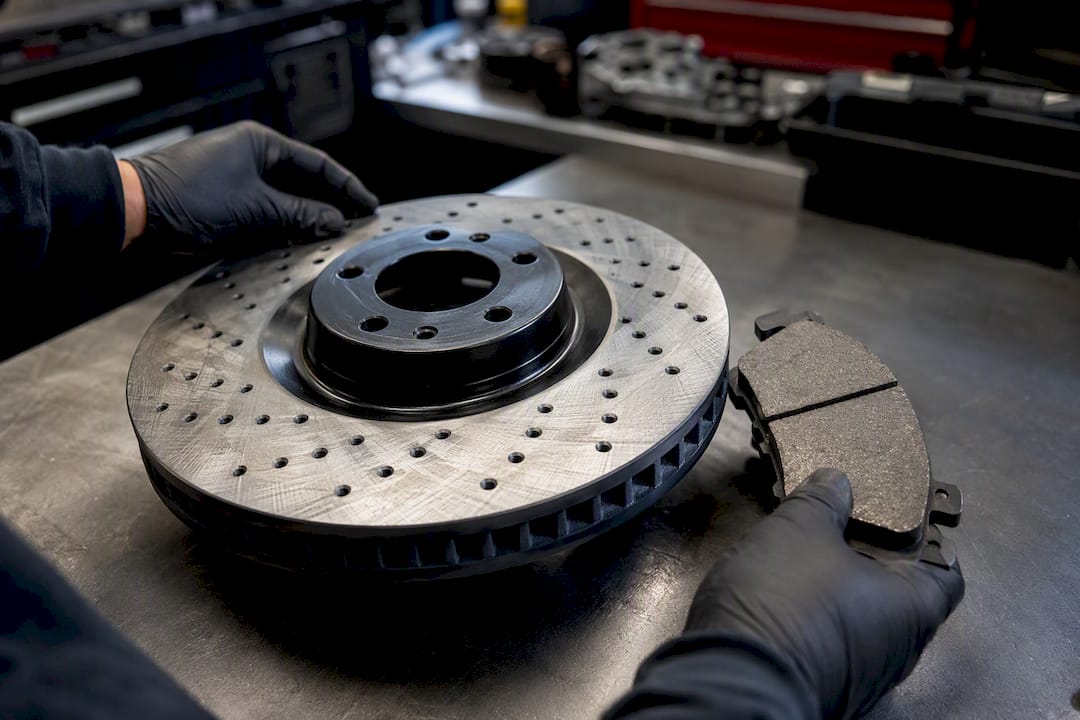
Customers frequently arrive with rotors that were never properly matched to their new pad compound, which causes premature noise or uneven wear within a few thousand kilometres. Once the correct kit and bedding sequence go in, most report noticeably smoother pedal feel and quieter stops within the first week.
A typical successful upgrade looks like this: a daily driver swaps worn semi‑metallic pads and warped rotors for a matched ceramic pad and cross‑drilled rotor set, follows the bedding procedure, and reports quieter, more predictable stops from the first drive.
Upgrading your brakes without the guesswork
Most of the myths above trace back to one real problem: mismatched parts installed without proper bedding. DBC Brakes builds kits specifically to remove that variable, pairing cross‑drilled rotors engineered to resist warping with pad compounds matched to the rotor design from the start.
That pairing addresses several of the myths directly. Cross‑drilled rotors improve heat evacuation, which reduces the glazing risk that gives ceramic pads a bad reputation under repeated hard stops. Matched pad and rotor combinations also reduce the uneven wear that causes noise complaints after a DIY install gone wrong.
Every kit lists compatibility details upfront, pricing is inclusive with no hidden installation surprises, and orders over $100 ship free within Canada. Check fitment for your vehicle on the performance brake kit page and see which rotor and pad combination matches your driving needs before you order.
Sources
- Ceramic vs. semi‑metallic brake pads: pros and cons
- Ceramic vs. metallic brake pads, what's the difference?
- Ceramic brake pads explained: the science of adherent friction, NVH control & longevity
- Ceramic vs semi‑metallic brake pads: the honest truth