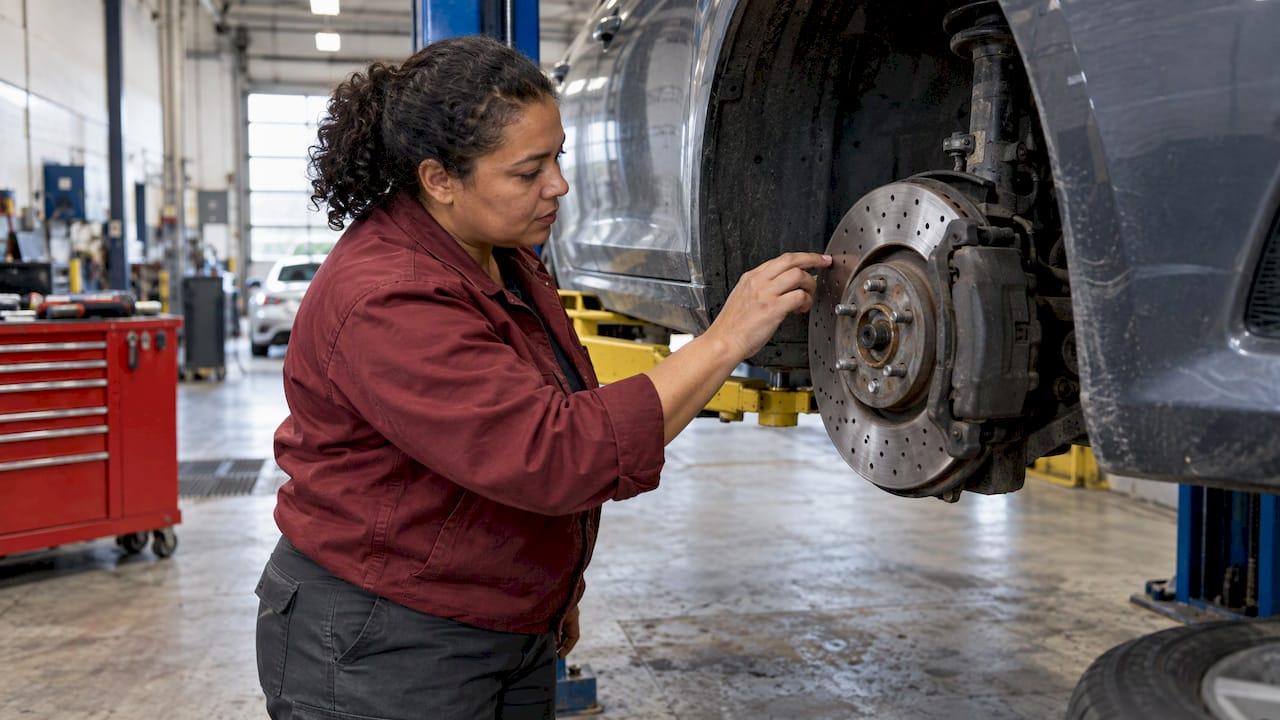
Yes. Drilled rotors are legal for road use in Canada. The federal vehicle regulations reviewed for this article do not list drilled rotors as a prohibited design. The retrieved text of British Columbia's inspection manual contains no rule that rejects a rotor only because it is cross-drilled. What matters is condition, fitment and whether braking performance is kept. A correctly fitted rotor that is in good condition is treated like any other rotor.
This guide covers what the rules say, what inspectors check, where Quebec is stricter, and how to pick a kit that stays within the rules.
TL;DR
- No federal or provincial rule reviewed bans drilled or cross-drilled rotors as a design.
- Inspections look at condition: cracks, pitting, thickness and pad contact, not hole patterns.
- Quebec requires that brake changes do not reduce braking effectiveness. Parts should be made for the vehicle and supplied by a recognized manufacturer.
- Correct fitment and professional installation are the practical way to stay compliant.
- DBC supplies Canadian-made cross-drilled brake kits with guaranteed fitment and inclusive pricing.
Table of Contents
- What the federal rules say
- Who sets the rules for your car: provinces and territories
- What passes and what fails: a quick table
- Insurance after a change
- How to choose rotors that stay within the rules
- Drilled, slotted or plain: what the choice means on the road
- When a brake feels wrong after an upgrade
- Our view
- Order a kit made for your vehicle
- FAQ
- Sources
What the federal rules say
Two federal layers apply to brakes. The first is the Motor Vehicle Safety Act. It regulates the manufacture, importation and sale of vehicles and equipment, and requires that applicable standards are met. It governs what is built and sold, not how each owner maintains a car.
The second is the Motor Vehicle Safety Regulations. The federal page shows them current to October 19, 2026, and the Transport Canada listing gives January 1, 2025 as the last amendment date. The cited regulations do not identify drilled rotors as a prohibited design.
Transport Canada's light vehicle brake standard sets out service-brake and parking-brake system requirements and performance tests. These tests apply to the complete brake system of a vehicle. The standard is about how the system performs, not which rotor surface is used.
In short, the federal rules set performance expectations. They do not ban a rotor type.

Who sets the rules for your car: provinces and territories
Road use, inspections and modifications are handled by provinces and territories. Each has its own inspection regime, and some provinces only inspect at certain events, such as a vehicle sale or a transfer between provinces. Check the transport ministry page for your province for when an inspection is required.
The two provincial sources below show how this works in practice.
British Columbia: the inspection manual
British Columbia's 2025 Vehicle Inspection Manual bases inspection items on applicable manufacturing requirements, on items ordinarily present or originally fitted, and on equipment needed for normal and safe operation. The retrieved text has no rejection solely because a rotor is cross-drilled.
The hydraulic brakes section lists what leads to rejection of a light-vehicle rotor:
- The rotor is broken, pitted or damaged.
- A crack reaches an outer edge or a cooling vent.
- A surface crack is longer than 75% of the radial width.
- Grooves or pitting reduce the rotor below its minimum allowable thickness.
- The pad contact pattern on solid rotor material is under 75% of the radial width around the rotor on one side.
These are condition checks. A worn or damaged rotor of any design fails them. A sound rotor passes them.
Quebec: the strictest wording
Quebec has the most explicit written guidance. The SAAQ's Modifying your Vehicle guide states that modifications affecting compliance or handling, including changes to braking-system components, must be approved before the vehicle is authorized for road use. It also says that reducing braking-system effectiveness is prohibited, and that disabling ABS or electronic stability control is prohibited.
The same guide advises using parts specifically designed for the vehicle and supplied by recognized manufacturers that certify compliance with road-use requirements.
Montreal's police service says vehicle changes are permitted only if they comply with the Highway Safety Code and do not decrease stability or braking. It names decreased braking capacity from non-professional disc installation or non-compliant parts as prohibited.
The test in Quebec is the outcome. A part made for the vehicle, installed correctly, that keeps braking performance is within the approach the SAAQ describes. For a specific brake change, confirm with the SAAQ whether approval applies before the vehicle goes on the road.

The SAAQ also publishes a mechanical inspection guide. It describes a visual inspection of listed components and includes a disc-brake section.
What passes and what fails: a quick table
| Item | Typical inspection concern | Where it applies |
|---|---|---|
| Hole pattern (drilled or cross-drilled) | Not a rejection reason in the sources reviewed | Federal rules, B.C. manual |
| Cracks to an edge or cooling vent | Rejection | B.C. manual |
| Surface crack over 75% of radial width | Rejection | B.C. manual |
| Thickness below minimum | Rejection | B.C. manual |
| Pad contact under 75% of radial width | Rejection | B.C. manual |
| Reduced braking effectiveness | Prohibited | Quebec (SAAQ) |
| Disabled ABS or stability control | Prohibited | Quebec (SAAQ) |
| Non-professional installation lowering braking | Prohibited | Quebec (Montreal police) |
The pattern is consistent. The rules target condition, performance and installation quality.
Insurance after a change
Insurance is a separate question from legality. Ontario's Garage Automobile Policy provides collision or upset coverage subject to its policy terms and exclusions. Policies differ by insurer and province.
The practical step is simple. Tell the insurance broker or insurer about brake upgrades, keep the purchase invoice and the installation record, and ask for written confirmation of how the change is treated on the policy.
How to choose rotors that stay within the rules
The sources point to the same checklist.
- Match the vehicle. Select by year, make, model and trim. Quebec's guidance asks for parts designed for the specific vehicle. DBC kits come with guaranteed fitment, and the make selector narrows the choice to the vehicle.
- Buy from a recognized manufacturer. The SAAQ wording is about parts from recognized manufacturers that certify compliance with road-use requirements. A Canadian manufacturer with a clear support line is easy to reach if a fitment question comes up.
- Replace the set as a system. Rotors, pads and hardware work together. A kit with rotors and pads matched to each other removes a common source of mismatch. See the brake kits collection.
- Install correctly. Montreal police name non-professional disc installation as a problem. Torque specifications, clean hub surfaces and bedding-in procedures matter. Use a qualified technician if the work is outside your skill.
- Keep ABS and stability control working. Never disable them. Quebec prohibits it, and it is the wrong approach everywhere.
- Keep records. Invoice, part numbers and installation date help at inspection and with insurance.
Drilled, slotted or plain: what the choice means on the road
The legal answer is the same for all three designs. The practical differences are in use.
Plain rotors are the factory style for most vehicles. Drilled rotors add holes across the face. Slotted rotors add grooves. Cross-drilled and slotted rotors combine both. DBC's cross-drilled rotors are engineered to prevent warping and to improve durability. The rotor design guide explains the designs in more detail.
For Canadian conditions, finish matters too. Winter road salt attacks bare iron. DBC's Premium Black Kote line carries a coating on the rotor, and a longer read on rust-resistant rotors covers it.
Pick by use:
- Daily driving: a matched kit sized for the vehicle, with pads suited to street use.
- Spirited driving or track days: performance pads and a rotor line made for heat. The brake upgrades guide covers what changes at each level.
- Trucks and heavier vehicles: check the kit listing for the vehicle and load use.
- Performance vehicles: see the compatibility guide before ordering.
When a brake feels wrong after an upgrade
Some symptoms need attention right away: a pulsing pedal, noise, pulling to one side or shaking through the wheel. Common causes include uneven pad deposits, a poorly seated rotor, a worn hub or bearing, or a seized caliper. A mobile mechanic's overview of steering wheel shake when braking lists the checks a technician runs.
Wheel bearings and hubs are part of the same system. DBC lists them in its wheel bearings and hubs collection. For wear checks, the guide to inspecting and replacing brake discs gives intervals and signs.
If the car pulls, the pedal goes soft or the warning lights come on, stop driving and have the car inspected before the next trip.
Our view
Most questions we get about legality come down to one thing: will this pass? The answer depends on fitment, condition and installation, not on the hole pattern.
We build cross-drilled rotors in Canada, for Canadian roads. Each kit is sized to a specific vehicle, and we guarantee fitment. Our cross-drilled rotors are engineered to prevent warping and to last longer. That supports the point both Quebec's guidance and inspection manuals make: a part designed for the vehicle keeps the brakes working as they should.
Pricing is inclusive, so there are no hidden fees at checkout. When a fitment question comes up, a person answers, not an automated reply.
Sam
Order a kit made for your vehicle
DBC sells Canadian-made brake kits with cross-drilled rotors for cars, trucks and performance vehicles. Lines include Performance XDB, Premium Black Kote and Performance SS. Pricing is inclusive with no hidden fees. Orders over $100 ship free within Canada. Expedited shipping is $29.99 per order. See the full range and pick by make and model.
Browse brake rotors, brake pads or big brake kits. Shipping terms are on the shipping information page.
FAQ
Are cross-drilled rotors street legal in Canada?
Yes. The federal regulations reviewed do not list drilled rotors as a prohibited design, and B.C.'s inspection manual rejects rotors for condition issues, not for holes. Provinces set their own inspection rules, so confirm local requirements.
Will drilled rotors pass a safety inspection?
A rotor in good condition passes. Inspectors in British Columbia look at cracks, pitting, minimum thickness and pad contact of at least 75% of radial width. A correctly fitted set with matched pads meets these checks when new.
Are brake modifications restricted in Quebec?
Quebec asks that modifications affecting braking are approved, and prohibits reducing braking effectiveness. The SAAQ advises parts designed for the vehicle from recognized manufacturers. Contact the SAAQ for your specific change.
Do I need to tell my insurer about new rotors?
It is sensible to. Coverage depends on the policy terms and exclusions, which differ by insurer. Send the invoice and installation record and ask for written confirmation.
Can I install rotors myself?
Montreal police name non-professional disc installation that lowers braking capacity as prohibited. If you do the work yourself, follow the torque and bedding-in specifications exactly. Otherwise use a qualified technician.
Sources
- Motor Vehicle Safety Act
- Motor Vehicle Safety Regulations
- Transport Canada: Motor Vehicle Safety Regulations listing
- Transport Canada: Light Vehicle Brake Systems
- British Columbia Vehicle Inspection Manual 2025
- British Columbia hydraulic brakes inspection section
- SAAQ: Modifying your Vehicle
- SPVM: Modified Vehicle
- SAAQ: Road vehicle mechanical inspection guide
- Ontario Garage Automobile Policy (OAP 4)